 By chloe
You’re ready to donate. Your heart is in the right place, and you want to help. But before you hand over your credit card, you need to know if that charity is legitimate or just another scam waiting to take advantage of your generosity.
Every year, millions of dollars go to fraudulent organizations that masquerade as legitimate nonprofits. These scammers prey on people’s goodwill, especially during disasters, holidays, and times of crisis. The good news? Most charity scams follow predictable patterns. Once you know what to look for, you can protect yourself and make sure your donations actually help people in need.
Untrustworthy charities often display warning signs like refusing to provide financial information, pressuring donors for immediate payments, vague mission statements, and lack of registration details. Before donating, verify the organization’s [tax status](https://www.irs.gov/charities-non-profits/exempt-organizations-select-check), review their financial reports, check independent ratings, and never give to charities that demand cash or wire transfers. Legitimate nonprofits welcome questions and provide transparent information about their programs and spending.
They Refuse to Provide Basic Information
A legitimate charity has nothing to hide. They should readily share their registration number, tax ID, and contact information.
If an organization becomes evasive when you ask simple questions, that’s your first warning. Scammers know that informed donors are harder to fool, so they create urgency and discourage questions.
Real nonprofits maintain websites with clear contact information. They list their board members, staff, and physical address. They publish annual reports and financial statements.
Fake charities often operate with only a P.O. box, a generic email address, and no verifiable staff. Some use names that sound similar to well-known organizations, hoping you won’t notice the difference.
The Pressure to Donate Right Now
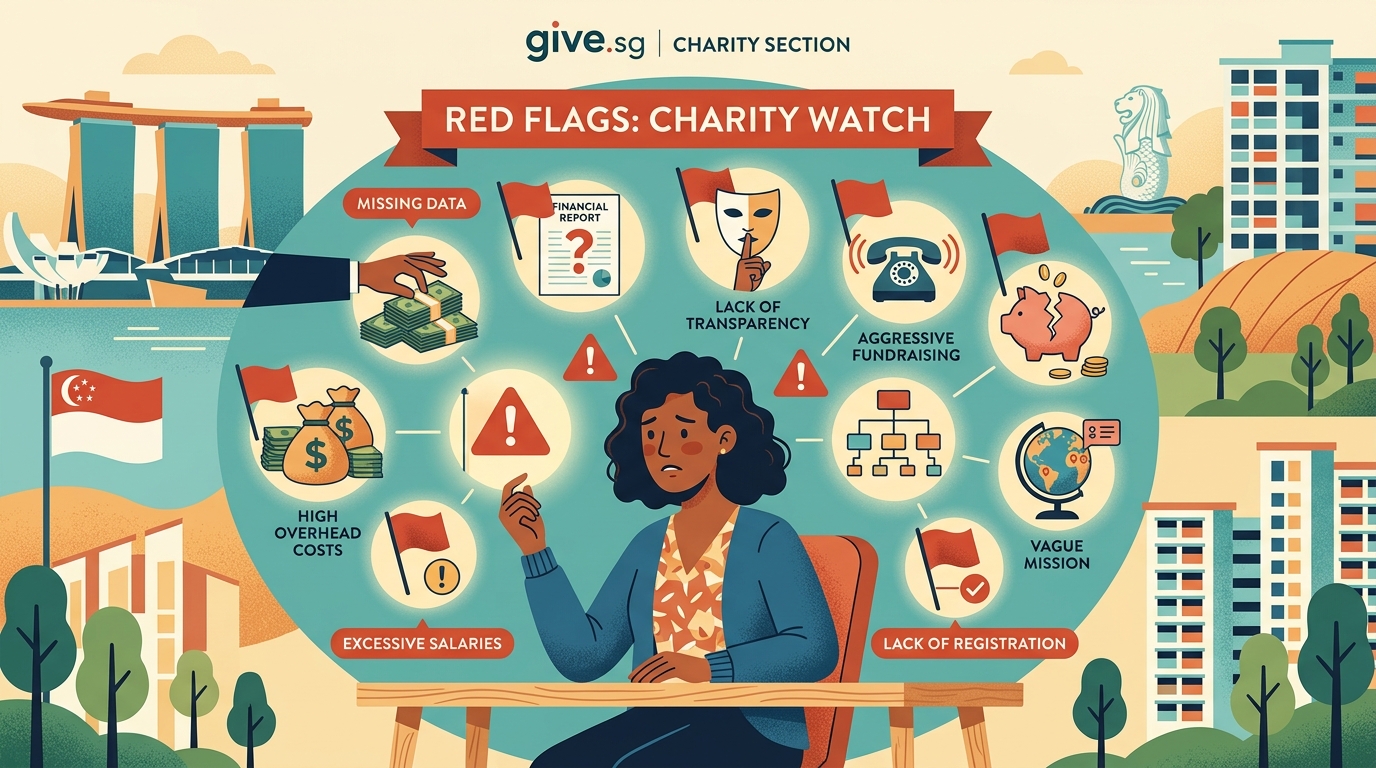
High-pressure tactics are a classic sign of charity fraud.
Scammers create artificial urgency. They tell you that children will go hungry tonight if you don’t donate immediately. They claim a matching gift expires in the next hour. They say there’s a crisis that requires your instant response.
Legitimate organizations understand that thoughtful giving takes time. They want you to research them. They encourage you to think about your donation and make an informed choice.
- Aggressive phone calls demanding immediate payment
- Emails with countdown timers creating false urgency
- Door-to-door solicitors who won’t leave until you donate
- Messages claiming your donation will be “doubled” only if you give right now
Real charities send reminders and updates, but they don’t harass you.
No Proof of Tax-Exempt Status
In most countries, legitimate charities have official tax-exempt status. In the United States, that means 501(c)(3) designation.
You can verify this status easily. The IRS maintains a searchable database of all registered nonprofits. If an organization claims to be a charity but isn’t listed, something is wrong.
Tax-exempt status matters because it means the organization has been vetted by government authorities. It also means your donation may be tax-deductible.
Scammers sometimes claim they’re “so new” they haven’t received their status yet. Or they say they operate under another organization’s umbrella. These excuses should raise red flags.
Before donating to any charity, verify their tax-exempt status through official government databases. This simple step eliminates most scams immediately.
Financial Information Is Missing or Vague
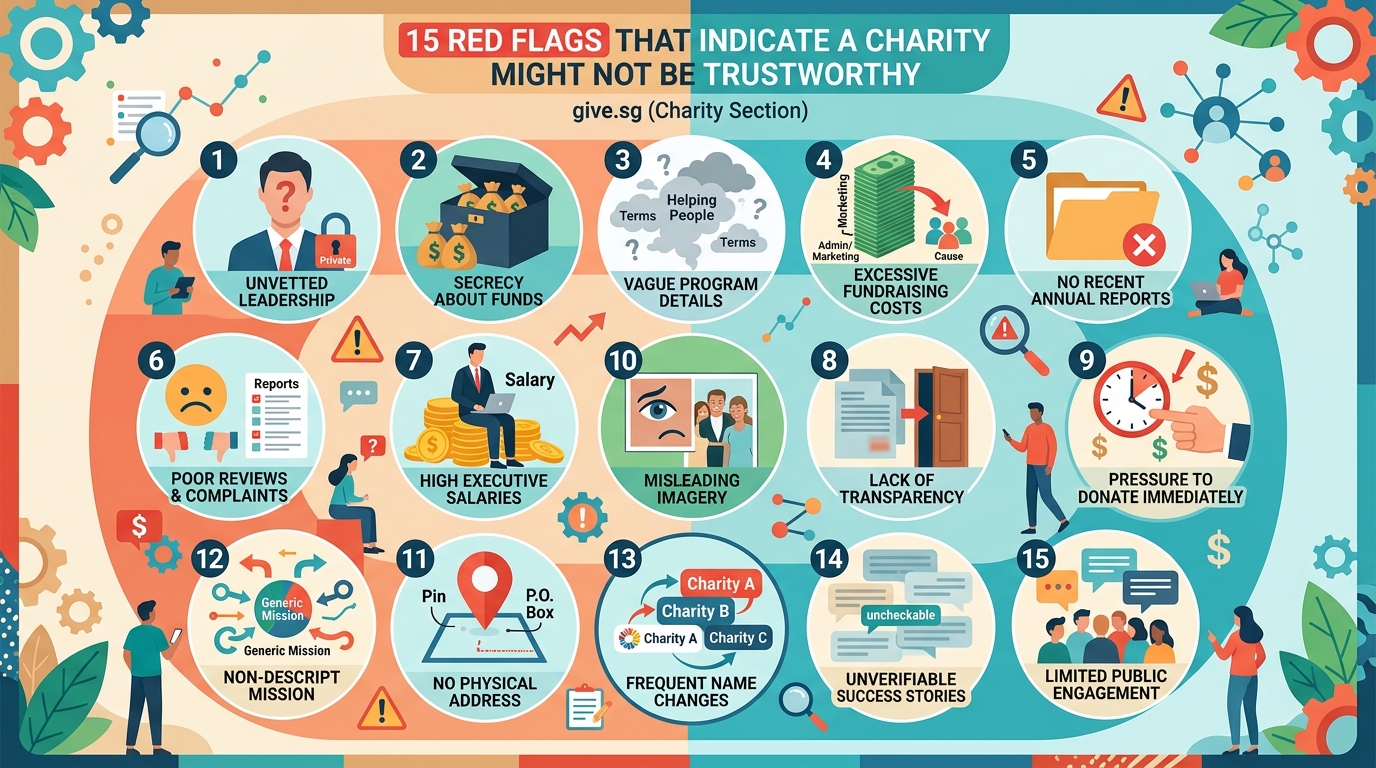
Transparency is the hallmark of trustworthy nonprofits.
Every legitimate charity should provide clear information about how they spend donations. They publish annual reports showing what percentage goes to programs versus administrative costs and fundraising.
Warning signs include:
- Refusing to share financial statements
- Claiming all financial information is “confidential”
- Providing only vague descriptions of programs
- Unable to explain how donations are used
- No mention of program outcomes or impact
Independent rating organizations analyze charity finances. They look at efficiency, accountability, and transparency. If a charity refuses to participate in these evaluations, ask why.
The Mission Statement Makes No Sense
Read the organization’s mission statement carefully. Does it actually say anything?
Scam charities often use emotional language without substance. They talk about “helping people” or “making a difference” without explaining what they actually do.
A real mission statement is specific. It names the population served, the problem addressed, and the approach used. It gives you a clear picture of the organization’s work.
Compare these examples:
| Legitimate Mission | Suspicious Mission |
|---|---|
| “We provide job training and placement services to formerly incarcerated individuals in Chicago” | “We help people in need achieve their dreams” |
| “Our mobile clinics deliver prenatal care to uninsured women in rural counties” | “We bring hope and healing to communities” |
| “We operate three food pantries serving 500 families weekly in downtown Boston” | “We fight hunger and poverty everywhere” |
Vague missions allow organizations to do almost nothing while claiming they’re fulfilling their purpose.
They Only Accept Cash, Wire Transfers, or Gift Cards
Payment method tells you a lot about an organization’s legitimacy.
Legitimate charities accept checks, credit cards, and online payments through secure platforms. These methods create a paper trail and offer donor protection.
Scammers prefer untraceable payments:
- Cash leaves no record and can’t be recovered
- Wire transfers are nearly impossible to reverse
- Gift cards are as good as cash and equally untraceable
- Cryptocurrency transactions are difficult to track
If someone asks you to donate via gift card, you’re dealing with a scam. No legitimate charity operates this way.
Credit card donations also give you recourse. If you discover fraud, you can dispute the charge with your card company.
No Independent Reviews or Ratings
Established charities have track records. They’ve been reviewed by independent watchdog organizations and rated on their effectiveness.
Organizations like Charity Navigator, GuideStar, and CharityWatch evaluate nonprofits based on financial health, accountability, and transparency. These ratings are free and publicly available.
A charity that has no ratings might be very new. Or it might be operating under the radar for a reason.
Search for the organization’s name along with words like “scam,” “complaint,” or “review.” See what others have experienced. Check the Better Business Bureau’s Wise Giving Alliance.
Be especially cautious if you find multiple complaints about aggressive tactics, unfulfilled promises, or difficulty canceling recurring donations.
The Name Sounds Just Like a Famous Charity
Name confusion is a common scam technique.
Fraudsters create organizations with names nearly identical to well-known charities. They count on donors not noticing small differences.
Examples of this tactic:
- American Cancer Society vs. American Cancer Fund
- Red Cross vs. International Red Cross Foundation
- Children’s Hospital vs. Children’s Hospital Fund
The fake organization benefits from the real charity’s reputation. Donors think they’re giving to a trusted name.
Always verify the exact legal name of the organization. Check their registration documents. Make sure you’re donating to who you think you’re donating to.
They Won’t Let You Speak to Anyone in Charge
Accessibility matters.
You should be able to reach someone knowledgeable about the organization’s work. If you have questions, someone should answer them.
Red flags include:
- Only being able to leave voicemails that go unreturned
- Email addresses that bounce back
- Staff who can’t answer basic questions about programs
- Refusal to connect you with leadership or program staff
Legitimate nonprofits want to build relationships with donors. They assign staff to donor relations. They respond to inquiries promptly and professionally.
If you can’t get straight answers, don’t donate.
Their Website Looks Thrown Together
Professional organizations present themselves professionally.
A charity’s website doesn’t need fancy graphics or expensive design. But it should be functional, informative, and free of obvious errors.
Warning signs:
- Spelling and grammar mistakes throughout
- Broken links and missing pages
- Stock photos with no real images of their work
- No information about actual programs or services
- Copyright dates from many years ago
Scammers often create websites hastily. They copy text from legitimate charities. They use generic images. They don’t invest time in making the site credible because they plan to take the money and disappear.
Check when the website domain was registered. A charity claiming decades of service shouldn’t have a website registered last month.
No Physical Address or It’s Just a Mail Drop
Where is this organization actually located?
Legitimate nonprofits operate from real offices, even if they’re small. They have a physical location where they conduct business.
A P.O. box alone is suspicious. Many scam charities use mail drops or virtual offices to create the appearance of legitimacy without maintaining an actual operation.
Try looking up the address on Google Maps. See if it’s a real office building or just a UPS Store. Check if the organization is listed at that address in public records.
Some scammers list addresses of real buildings where they have no presence. If you’re local, you could even visit. See if the organization actually operates there.
They Can’t Explain Program Outcomes
Results matter.
When you ask what a charity has accomplished, they should have concrete answers. How many people did they serve last year? What changed because of their work?
Trustworthy organizations track outcomes. They measure impact. They can tell you stories about real people they’ve helped and back those stories up with data.
Vague answers like “we’ve helped thousands” or “we’re making a real difference” don’t tell you anything. Numbers without context are meaningless.
Ask specific questions:
- How many people participated in your programs last year?
- What percentage of participants achieved the stated goal?
- How do you measure success?
- Can you share a recent impact report?
If they can’t answer these questions, they may not be doing much actual work.
Their Social Media Presence Is Suspicious
Check their social media accounts.
Legitimate charities use social media to share their work, engage supporters, and build community. They post regularly. They respond to comments. They share real photos and updates from their programs.
Red flags on social media:
- Accounts created very recently despite claims of long history
- Very few followers or engagement
- Only stock photos, never real images of their work
- Comments are disabled or heavily restricted
- Follower counts that don’t match the organization’s claimed size
Fake accounts sometimes buy followers. Look at who follows them. Are they real people or obvious bots?
Check if their social media links from their website actually work. Scammers sometimes put social media icons on their sites that don’t link anywhere.
Board Members Can’t Be Verified
Nonprofit boards provide governance and accountability.
Legitimate charities list their board members publicly. These are real people with verifiable identities and relevant experience.
Try searching for board members’ names. Do they exist? Do they have LinkedIn profiles? Can you find any information about them?
Scam organizations sometimes list fake board members or use real people’s names without permission. They’re counting on donors not to check.
Some red flags:
- Board members with no online presence at all
- Names that sound made up
- Board members who all share the same last name (family operations have their own risks)
- Refusal to provide board information
They’re Not Registered in Your State
Most states require charities that solicit donations to register with the state’s charity office.
You can check these registrations online. Each state maintains a database of registered nonprofits authorized to fundraise there.
If a charity is calling or emailing you but isn’t registered in your state, that’s illegal. They’re not authorized to solicit donations from you.
Registration requirements exist to protect donors. They ensure basic oversight and accountability. Organizations that skip this step are either ignorant of the law or deliberately avoiding scrutiny.
The Thank You Process Is Weird or Nonexistent
How an organization handles your donation tells you about their professionalism.
Legitimate charities send receipts immediately. They provide documentation for tax purposes. They thank you appropriately and give you information about their work.
Warning signs:
- No receipt or confirmation after donating
- Receipt doesn’t include required tax information
- Excessive follow-up asking for more money immediately
- Your name and information appear on multiple solicitation lists right away
Some scam operations sell donor lists. Once you give to one fake charity, suddenly you’re getting calls from several others.
Legitimate organizations respect your privacy. They have clear policies about how they use your information. They don’t bombard you with requests.
Protecting Yourself Goes Beyond Spotting Red Flags
Now you know what to watch for. But smart giving requires more than just avoiding scams.
Take time to research before you donate. Use the resources available to verify legitimacy. Ask questions. Trust your instincts. If something feels off, it probably is.
Your generosity deserves to make a real difference. By staying informed and cautious, you ensure your donations reach people who truly need help. You support organizations doing meaningful work. And you send a clear message that scammers won’t find easy targets in thoughtful donors like you.