 By chloe
Imagine donating to a cause and watching every dollar move in real time, knowing exactly when it reaches the family, school, or clinic you wanted to help. That level of clarity seemed impossible just a few years ago. Now, blockchain technology and smart contracts are making it real.
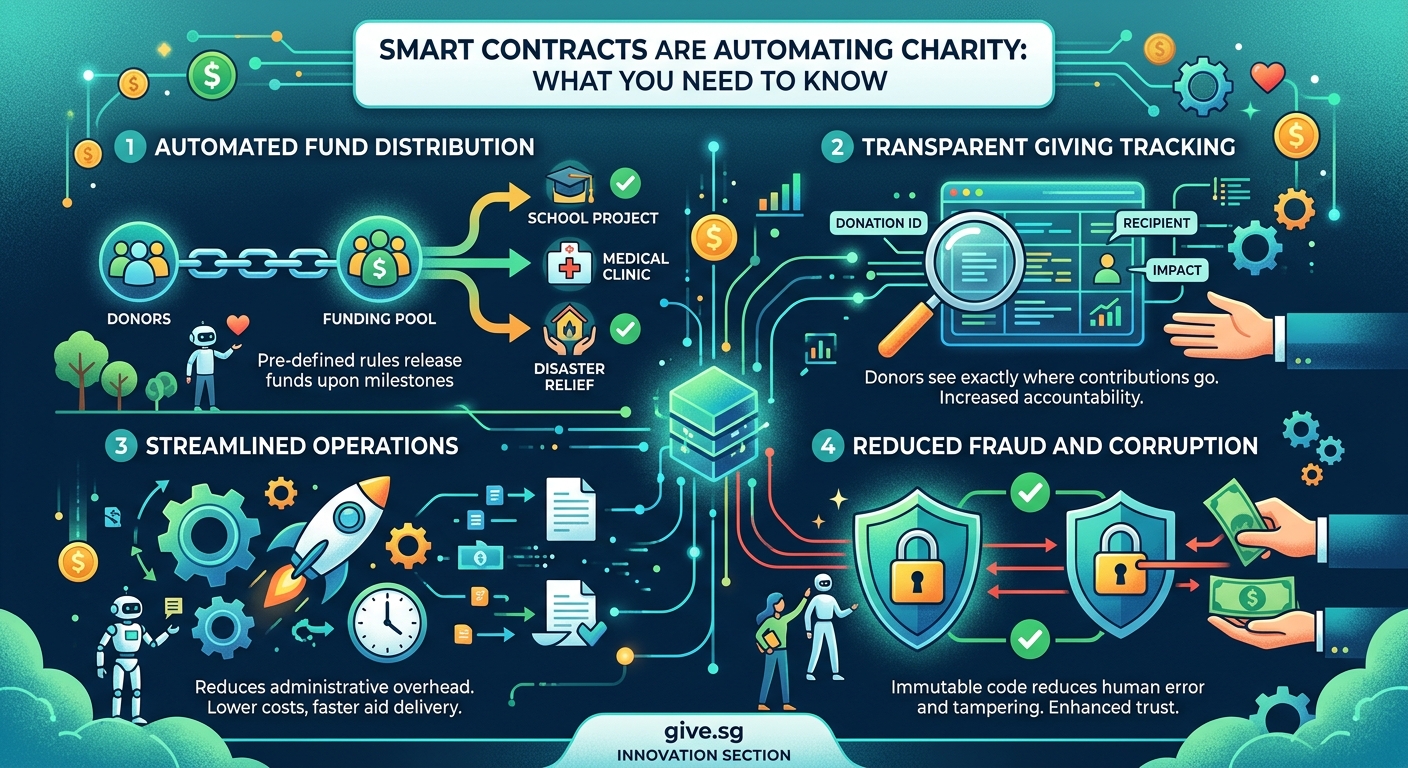
Smart contracts for charity use blockchain technology to automate donations, eliminate intermediaries, and provide transparent tracking from donor to recipient. These self-executing programs ensure funds reach intended beneficiaries while reducing administrative costs and building trust. Nonprofits and donors alike benefit from verifiable impact, instant reporting, and reduced fraud risk through immutable transaction records.
Understanding how smart contracts work in charitable giving
A smart contract is code that runs automatically when specific conditions are met. Think of it like a vending machine. You insert money, press a button, and the machine delivers your snack without needing a cashier.
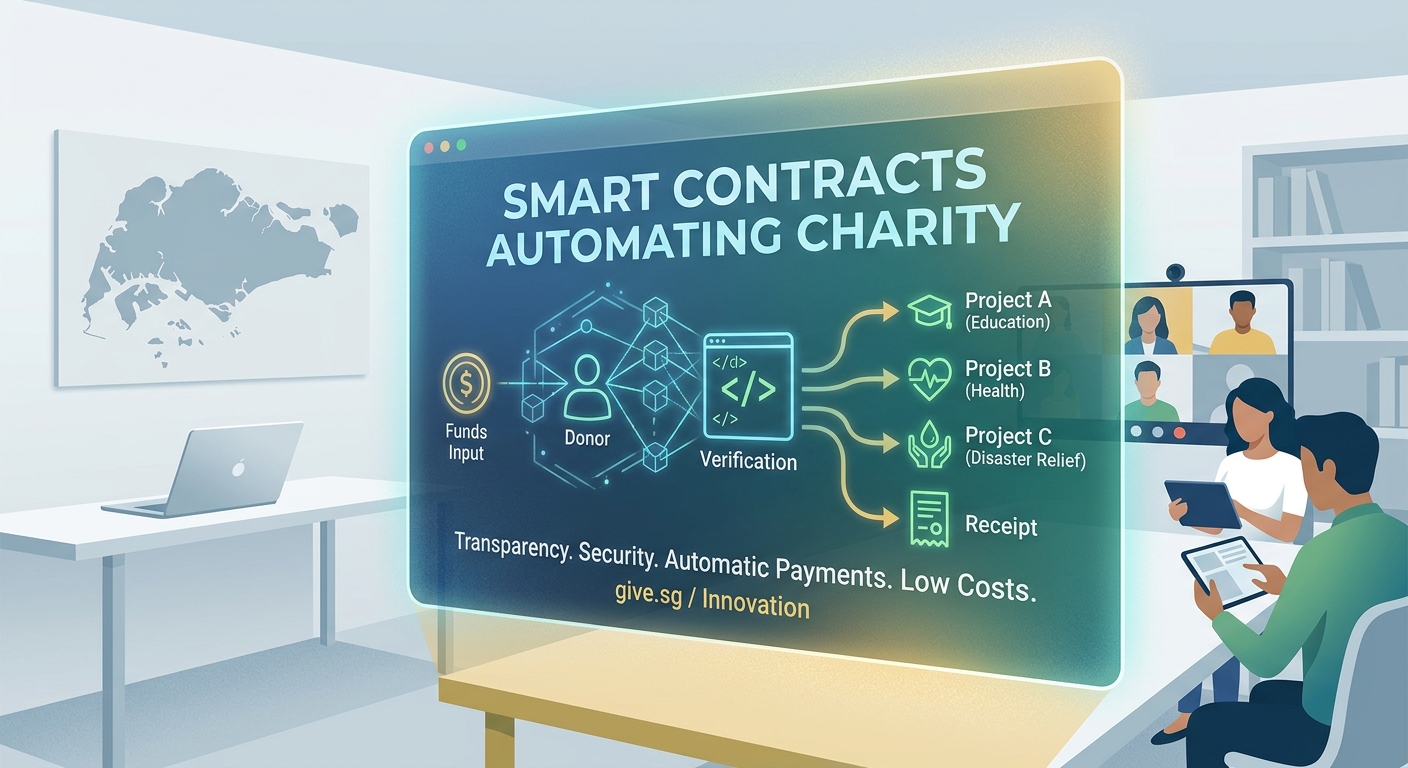
In charitable contexts, smart contracts execute on blockchain networks. When you donate cryptocurrency or tokenized funds, the contract holds that money until predefined milestones happen. Once verified, the funds release automatically to the charity or directly to beneficiaries.
The blockchain records every transaction permanently. Anyone can verify where money went, when it moved, and who received it. This creates an audit trail that traditional banking systems struggle to match.
Most charitable smart contracts run on Ethereum, though other platforms like Cardano and Polygon are gaining traction. Each platform offers different transaction speeds and costs, but the core principle remains the same: automation plus transparency.
Why nonprofits are adopting blockchain technology
Traditional charity operations involve multiple intermediaries. Payment processors, banks, regional offices, and local partners all take small cuts. By the time your $100 donation reaches a village water project, it might be worth $70.
Smart contracts eliminate many of these middlemen. The code itself enforces the rules, reducing the need for lawyers, auditors, and compliance officers. Administrative overhead drops dramatically.
Fraud becomes much harder to hide. Because blockchain transactions are public and permanent, anyone trying to redirect funds leaves a visible trail. Donors can verify that their money reached the intended recipient without filing records requests or waiting for annual reports.
Speed improves too. International wire transfers can take days and cost significant fees. Blockchain transactions often complete in minutes, regardless of borders. When disaster strikes and communities need immediate help, this speed saves lives.
Several major organizations have already tested blockchain systems:
- UNICEF launched a cryptocurrency fund in 2019, accepting Bitcoin and Ethereum donations
- The World Food Programme uses blockchain to distribute cash assistance to Syrian refugees
- The Giving Block connects nonprofits with crypto donors, processing millions in donations annually
- GiveDirectly experiments with direct cash transfers using stablecoins on blockchain networks
How donors benefit from transparent giving
You’ve probably wondered whether your donation actually helped anyone. Smart contracts answer that question with data instead of stories.
Real-time tracking shows exactly where your funds go. Some platforms even provide GPS coordinates when donations fund physical infrastructure like wells or solar panels. You can see photos uploaded by recipients, timestamped and verified on the blockchain.
Tax documentation becomes simpler. Every donation generates an immutable receipt with transaction ID, timestamp, and amount. No more searching through email for year-end statements. Your entire giving history lives on the blockchain, accessible whenever you need it.
You gain more control over how organizations use your money. Some smart contracts let you specify conditions. Your donation might release in stages as a nonprofit hits milestones, or you might fund specific projects rather than general operations.
Recurring donations become truly automated. Instead of trusting an organization to charge your card monthly, you can set up a smart contract that sends a fixed amount on schedule. You maintain full control and can cancel anytime by stopping the contract.
Setting up your first blockchain donation
Getting started requires a few technical steps, but they’re simpler than you might think.
-
Create a cryptocurrency wallet. MetaMask is popular for beginners and works as a browser extension. Download it, create a password, and save your recovery phrase somewhere secure. This phrase is the only way to recover your wallet if you forget your password.
-
Purchase cryptocurrency. Exchanges like Coinbase or Kraken let you buy Ethereum with a credit card or bank transfer. Start small while you learn. Even $20 worth of crypto is enough to test the system.
-
Find a charity that accepts crypto donations. The Giving Block maintains a directory of nonprofits ready to receive blockchain donations. Many traditional charities now accept crypto through payment processors that convert it to dollars automatically.
-
Send your donation. Copy the charity’s wallet address, paste it into your wallet’s send function, enter the amount, and confirm. Double-check the address because blockchain transactions are irreversible.
-
Save your transaction record. Your wallet will show a transaction hash. Save this for your records. You can paste it into a blockchain explorer like Etherscan to see your donation’s status and path.
The entire process takes about 15 minutes once you’re familiar with it. The first time might take an hour as you set up accounts and learn the interface.
Common concerns about crypto philanthropy
Many people worry about cryptocurrency’s environmental impact. Early blockchain networks like Bitcoin use enormous amounts of energy. However, Ethereum transitioned to a proof-of-stake system in 2022, reducing its energy consumption by over 99%. Newer platforms were designed with efficiency in mind from the start.
Price volatility is another valid concern. If you donate $100 in Bitcoin today, it might be worth $90 tomorrow. Some donors solve this by using stablecoins, cryptocurrencies pegged to the dollar. Others donate and let charities convert to cash immediately.
Technical barriers still exist. Not everyone feels comfortable managing cryptocurrency wallets or understanding gas fees. This is why many platforms now offer simplified interfaces that hide the blockchain complexity. You interact with a familiar donation form while the smart contract handles everything behind the scenes.
Regulatory uncertainty makes some nonprofits hesitant. Tax treatment of crypto donations varies by country and continues to develop. In the United States, donating appreciated cryptocurrency can actually provide better tax benefits than cash because you avoid capital gains taxes while still deducting the full market value.
“The biggest shift is moving from ‘trust us’ to ‘verify yourself.’ Donors no longer need to take our word that funds reached the right place. They can check the blockchain and see proof.” — Nonprofit technology consultant
Comparing traditional and blockchain donation methods
| Aspect | Traditional Donations | Smart Contract Donations |
|---|---|---|
| Transaction speed | 3-7 business days | Minutes to hours |
| International fees | 3-7% plus fixed charges | $1-50 depending on network |
| Transparency | Annual reports | Real-time public ledger |
| Intermediaries | Banks, processors, offices | Blockchain network only |
| Reversibility | Possible with disputes | Permanent once confirmed |
| Tax documentation | Charity provides receipt | Blockchain provides proof |
Neither method is perfect for every situation. Traditional donations work better when dealing with large institutions that haven’t adopted blockchain systems. Smart contracts shine for international giving, recurring donations, and situations where transparency matters most.
Real examples of smart contracts helping communities
A water charity in Kenya uses smart contracts to fund well construction. Donors contribute to a pool, and funds release in three stages. The first payment goes out when the charity provides GPS coordinates and photos of the drilling site. The second releases when water quality tests come back clean. The final payment arrives when community members confirm the well is operational.
This staged approach protects donors from incomplete projects while ensuring the charity has working capital. The entire process is visible on the blockchain. Donors from different countries can pool resources without needing a central bank account.
An education nonprofit in the Philippines distributes scholarships using blockchain tokens. Students receive tokens they can spend at participating schools, bookstores, and supply shops. The smart contract ensures tokens can only be used for educational purposes. Parents and donors can see exactly what students purchased and when.
During the 2020 pandemic, several mutual aid groups used smart contracts to distribute emergency funds. Community members in need could request assistance, and once verified by local coordinators, smart contracts released funds directly to their wallets. No bank account was required, helping unbanked populations access support.
What nonprofits need to implement blockchain systems
Adopting smart contracts requires investment and expertise. Small nonprofits might struggle with the initial setup costs and technical knowledge needed.
The good news is that platforms are emerging to handle the complexity. Organizations like Endaoment and The Giving Block provide turnkey solutions. Nonprofits create an account, verify their tax status, and start accepting crypto donations without writing any code.
Larger organizations building custom systems need developers familiar with Solidity or other smart contract languages. Security audits are critical because bugs in smart contracts can’t be easily fixed after deployment. Several high-profile hacks have targeted poorly written contracts, resulting in stolen funds.
Staff training matters too. Someone needs to monitor incoming donations, convert cryptocurrency to operating funds when needed, and help donors who encounter technical issues. This requires basic blockchain literacy across the organization.
Legal and compliance considerations vary by jurisdiction. Some countries welcome crypto donations and provide clear tax guidance. Others remain uncertain or restrictive. Nonprofits should consult legal experts familiar with both charity law and cryptocurrency regulations in their operating regions.
Mistakes to avoid when using smart contracts for charity
Starting too big is a common error. Test the system with small donations first. Work out technical issues and train staff before announcing a major blockchain initiative.
Ignoring security leads to disaster. Use hardware wallets for storing significant amounts of cryptocurrency. Enable two-factor authentication on all accounts. Never share private keys or recovery phrases with anyone.
Failing to communicate clearly frustrates donors. Many people remain unfamiliar with blockchain technology. Provide simple instructions with screenshots. Offer alternative donation methods for those not ready to use crypto.
Neglecting conversion strategy creates problems. Cryptocurrency prices fluctuate. Decide in advance whether you’ll hold donations as crypto or convert to stable currency immediately. Have a plan for managing price changes.
Overlooking transaction costs can eat into small donations. Ethereum gas fees sometimes exceed $20 during network congestion. Consider using layer-2 solutions or alternative blockchains with lower fees for smaller transactions.
The future of automated charitable giving
Smart contracts are still early in their development. Current systems handle basic automation well but struggle with complex conditional logic.
Future versions might integrate with artificial intelligence to verify impact automatically. Computer vision could confirm that a funded well actually exists. Natural language processing might analyze beneficiary feedback to trigger additional funding rounds.
Decentralized autonomous organizations (DAOs) represent another frontier. These are charities governed entirely by smart contracts and community voting. Token holders propose projects, vote on funding, and monitor results without traditional boards or executives.
Integration with traditional finance will likely improve. As banks and payment processors become more comfortable with blockchain, moving between crypto and fiat currency will become seamless. Donors might not even realize they’re using blockchain technology.
Regulation will mature. Clear rules will help nonprofits adopt blockchain confidently while protecting donors from fraud. Some uncertainty will remain, but the overall landscape should become more predictable.
Making giving more human through technology
The promise of smart contracts isn’t just efficiency or cost savings. It’s about rebuilding trust between donors and the causes they support.
When you can verify that your donation helped build a classroom, funded a surgery, or fed a family, giving becomes more meaningful. You’re not just writing a check and hoping for the best. You’re participating in a transparent system where impact is measurable and verified.
Smart contracts won’t replace human judgment or the essential work nonprofits do. They’re tools that handle the mechanical parts of giving, freeing up people to focus on relationships, strategy, and community building.
Start small if this technology interests you. Make a $10 donation through a blockchain platform. Watch the transaction confirm. See where your money goes. The experience might change how you think about charitable giving forever.
The technology exists today. More nonprofits are adopting it every month. The question isn’t whether blockchain will transform charity, but how quickly donors and organizations will embrace the possibilities it creates.