 By chloe
Nonprofit fundraising has changed more in the past three years than in the previous thirty. Artificial intelligence now helps organizations predict donor behavior, personalize communication at scale, and automate time-consuming tasks that once required entire teams. The technology isn’t replacing fundraisers. It’s giving them superpowers.
AI for fundraising helps nonprofits analyze donor data, personalize outreach, optimize donation forms, and automate repetitive tasks. Organizations using these tools see higher conversion rates, better donor retention, and more time for relationship building. The technology works best when it supports human connection rather than replacing it, making fundraisers more effective without losing the personal touch donors value.
What AI Actually Does for Fundraising Teams
Artificial intelligence in fundraising isn’t about robots making phone calls or chatbots replacing development directors. It’s about pattern recognition and prediction at a scale humans can’t match.
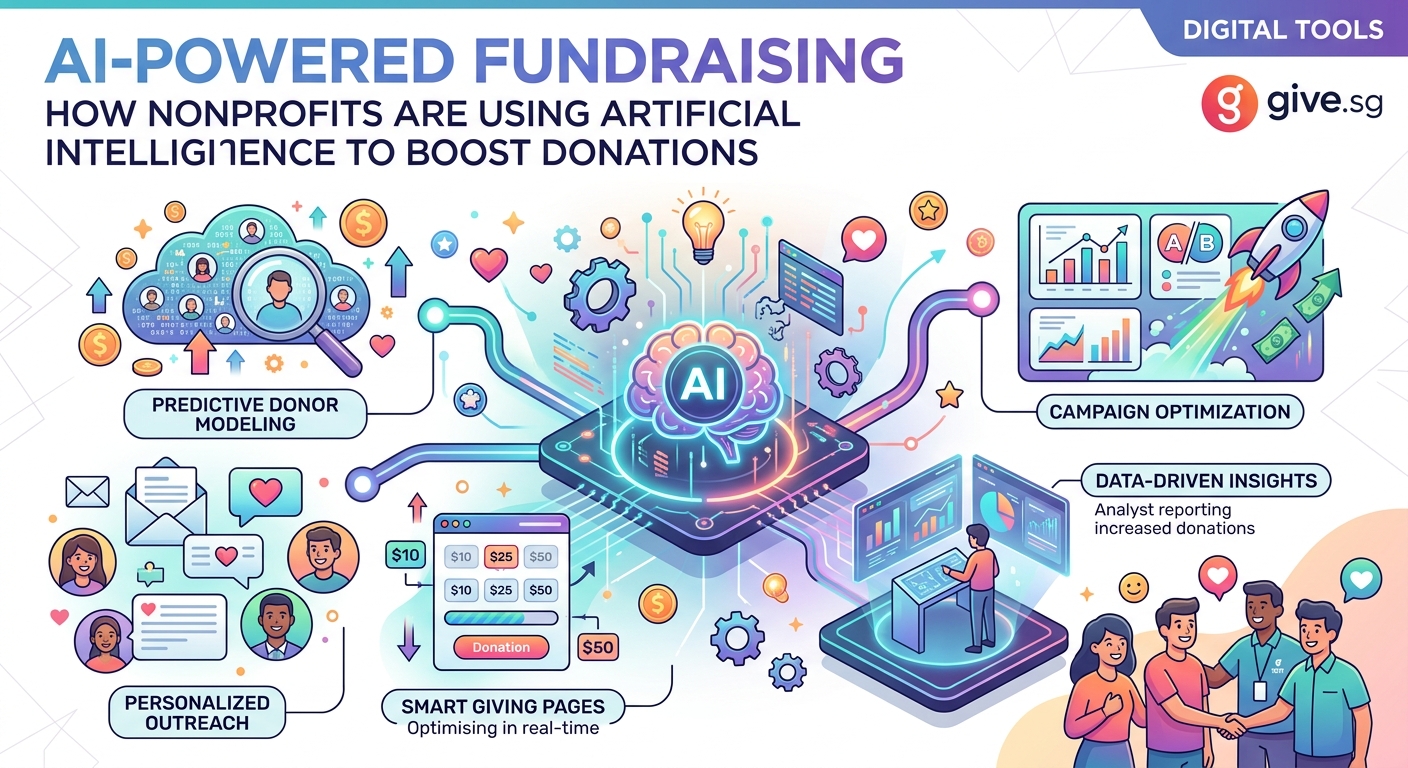
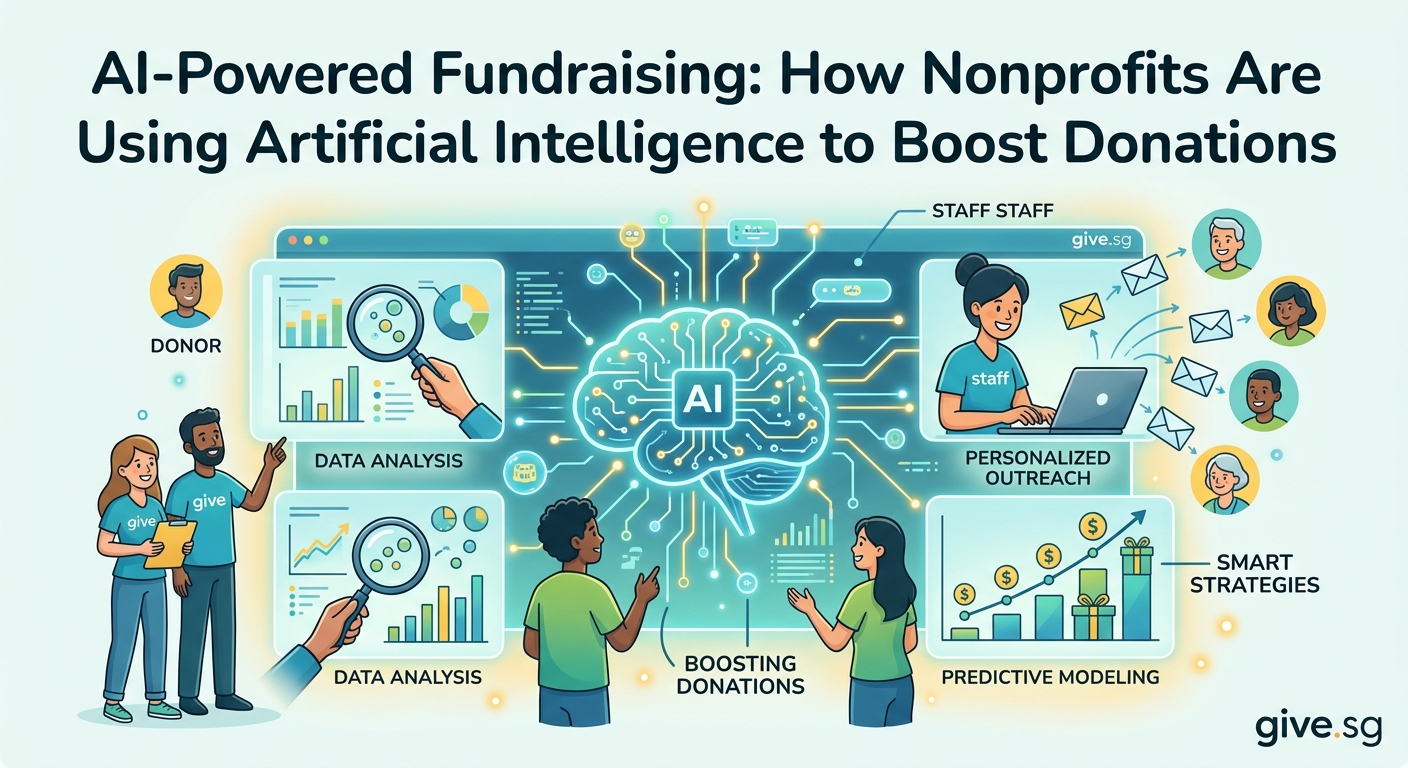
AI systems analyze thousands of data points about donor behavior. They spot patterns in giving history, email engagement, website visits, and social media activity. Then they make predictions about who’s likely to give, when they’ll give, and how much they might contribute.
A mid-sized environmental nonprofit might have 15,000 people in their database. Without AI, their three-person development team would struggle to segment that list beyond basic categories like past donors, lapsed donors, and prospects. With AI, they can identify the 200 people most likely to make a major gift in the next six months, the 500 who would respond well to a recurring donation ask, and the 1,000 who need re-engagement before they’ll give again.
The technology handles the data crunching. Fundraisers handle the relationships.
Five Ways Nonprofits Use AI Right Now
1. Predictive Scoring for Donor Prioritization
Machine learning models assign scores to every person in your database based on their likelihood to give. These scores update automatically as new data comes in.
A donor who opens three emails in a week, visits your donation page twice, and follows you on Instagram gets a higher score than someone who hasn’t engaged in six months. Your team knows exactly where to focus their energy.
2. Personalized Communication at Scale
AI writing tools help create customized emails, social media posts, and appeal letters. You provide the core message and key details. The system generates variations tailored to different audience segments.
One animal shelter used AI to create 12 different versions of their year-end appeal. Each version emphasized different aspects of their work based on what each segment had supported before. Donors who previously gave to their spay/neuter program received content about that work. Supporters who came through a rescue story heard about similar cases.
Response rates jumped 34% compared to their previous one-size-fits-all approach.
3. Donation Form Optimization
AI tests different donation amounts, suggested giving levels, and form layouts in real time. It learns which combinations work best for different types of visitors.
Someone visiting from a fundraising email might see different suggested amounts than someone coming from social media. A returning visitor gets different options than a first-time guest. The system adjusts constantly based on what converts.
4. Chatbots for Donor Questions
AI-powered chat tools answer common questions instantly. They handle queries about tax receipts, recurring donations, tribute gifts, and volunteer opportunities without human intervention.
When someone asks something the bot can’t handle, it routes them to the right team member with full context of the conversation. Your staff spends less time answering the same questions and more time having meaningful conversations.
5. Content Creation Support
Fundraisers spend hours writing appeal letters, social media posts, grant applications, and donor updates. AI tools speed up the first draft process significantly.
You input key points, target audience, and desired tone. The system generates a draft you can edit and refine. What used to take 90 minutes now takes 30.
Setting Up Your First AI Fundraising System
Getting started with AI doesn’t require a massive budget or technical expertise. Follow this process:
-
Audit your current data quality. AI only works well with clean, organized information. Spend two weeks cleaning your donor database. Remove duplicates, standardize formatting, and fill in missing information where possible.
-
Choose one specific problem to solve. Don’t try to implement everything at once. Pick your biggest pain point. Maybe it’s identifying major gift prospects, or personalizing email campaigns, or optimizing your donation page.
-
Select a tool designed for nonprofits. Many AI platforms now offer nonprofit-specific features and pricing. Look for systems that integrate with your existing CRM and don’t require coding knowledge.
-
Start with a pilot program. Test your chosen AI tool with a subset of your database or a single campaign. Measure results against your traditional approach.
-
Train your team on both the tool and the ethics. Everyone needs to understand how the AI makes decisions and what its limitations are. Create guidelines for when to use AI and when human judgment should override it.
-
Scale based on results. If your pilot works, expand gradually. If it doesn’t, adjust your approach or try a different tool.
Common AI Fundraising Tools and Their Best Uses
| Tool Type | Best For | What It Does | Typical Cost Range |
|---|---|---|---|
| Predictive analytics platforms | Major gift identification | Scores donors by likelihood to give and suggested ask amounts | $3,000 to $50,000/year |
| Email personalization tools | Donor communication | Creates customized email content for different segments | $500 to $5,000/year |
| Donation page optimizers | Online giving | Tests and adjusts form elements in real time | $1,000 to $10,000/year |
| AI writing assistants | Content creation | Generates drafts of appeals, social posts, and updates | $20 to $500/month |
| Chatbot platforms | Donor service | Answers common questions and routes complex ones | $100 to $2,000/month |
What AI Can’t Do (And Why That Matters)
Artificial intelligence has real limitations that every fundraiser needs to understand.
AI can’t build genuine relationships. It can tell you that Sarah Johnson is likely to increase her giving this year, but it can’t have the coffee meeting where you learn about her passion for your work because it reminds her of her grandmother’s values.
AI can’t handle nuance and context the way humans do. A donor might have a high propensity score but be dealing with a family crisis that makes this a terrible time to ask. Your fundraiser knows this because they talked last month. The algorithm doesn’t.
AI can’t make ethical judgments. It will optimize for whatever goal you set, even if that goal creates problems. If you tell it to maximize donations, it might suggest aggressive tactics that work short-term but damage relationships long-term.
The best fundraising happens when AI handles the data analysis and pattern recognition, freeing humans to do what they do best: listen, empathize, and build trust. Technology should make you more human, not less.
Avoiding the Biggest AI Mistakes
Many nonprofits stumble in predictable ways when adopting AI. Here’s what to watch for:
Trusting the algorithm blindly. AI makes predictions based on patterns, but patterns aren’t certainties. Always apply human judgment before acting on AI recommendations.
Ignoring data privacy. Donors trust you with their information. Make sure any AI tool you use complies with privacy regulations and your own ethical standards. Be transparent about how you use data.
Focusing on efficiency over effectiveness. AI can help you send 10,000 personalized emails in an hour. But if those emails don’t resonate because you skipped the strategic thinking, you’ve just automated failure.
Forgetting to test and measure. AI tools make bold claims about results. Verify them with your own data. Run controlled tests comparing AI-assisted campaigns to your traditional approach.
Letting it replace strategy. AI is a tool, not a strategy. You still need to understand your donors, craft compelling cases for support, and build a coherent fundraising program. Technology amplifies good strategy but can’t create it.
Making AI Work With Your Team
The biggest barrier to AI adoption isn’t usually technical. It’s human.
Some team members worry AI will replace their jobs. Others feel overwhelmed by new technology. A few resist anything that changes their established workflow.
Address these concerns directly:
-
Share the workload data. Show your team exactly how much time they spend on tasks AI could handle. Most fundraisers would happily hand off data entry and email scheduling to focus on donor meetings.
-
Involve them in tool selection. Let the people who’ll use the technology help choose it. They’ll spot practical issues you might miss and feel ownership of the decision.
-
Celebrate the wins. When AI helps close a major gift or improves campaign results, make sure everyone knows. Success builds enthusiasm.
-
Create space for learning. People need time to get comfortable with new tools. Build training and experimentation into work schedules rather than expecting everyone to figure it out on their own time.
Real Results From Organizations Using AI
A children’s hospital foundation used predictive modeling to score their 40,000-person database. They identified 800 high-potential donors who had never been personally contacted. After six months of targeted outreach to this group, they secured 23 new major gifts totaling $1.2 million.
An international relief organization implemented AI-powered email personalization across their monthly donor program. By tailoring content to each supporter’s interests and engagement patterns, they increased retention rates by 18% and average gift size by 12%.
A small arts nonprofit with just two development staff adopted an AI writing assistant for grant applications and donor communications. They cut drafting time in half, allowing them to apply for 40% more grants and send twice as many personalized donor updates. Grant revenue increased by $75,000 in the first year.
These organizations didn’t succeed because they bought expensive technology. They succeeded because they used AI to do more of what already worked.
Ethical Guidelines for AI in Fundraising
As AI becomes more powerful, nonprofits need clear ethical boundaries:
-
Transparency matters. Donors should know when they’re interacting with AI rather than a human. Don’t try to trick people.
-
Respect privacy always. Just because you can analyze certain data doesn’t mean you should. Ask whether each use of donor information serves their interests as well as yours.
-
Maintain human oversight. Every AI decision should be reviewable by a person who can override it when appropriate.
-
Watch for bias. AI systems can perpetuate existing biases in your data. Regularly audit your tools to ensure they’re not systematically excluding or disadvantaging certain groups.
-
Prioritize donor experience. The goal is better relationships, not just more money. If an AI recommendation would create a negative experience, don’t follow it.
Budget-Friendly Ways to Start
You don’t need a six-figure budget to benefit from AI. Start here:
-
Use free AI writing tools to speed up content creation. Many offer nonprofit discounts or free tiers that work well for smaller organizations.
-
Implement basic chatbots on your website using affordable platforms. Even simple bots that answer five common questions save staff time.
-
Try built-in AI features in tools you already use. Many email platforms and CRMs now include AI-powered send time optimization and subject line testing at no extra cost.
-
Focus on data quality first. Clean, well-organized data makes every tool more effective. This costs time but not money.
-
Join nonprofit AI communities. Learn from organizations already using these tools. Many are happy to share what worked and what didn’t.
When Your Organization Is Ready to Scale
After successful pilots, you can expand AI use across your fundraising program. Signs you’re ready:
- Your team consistently uses and trusts your initial AI tools
- You have clean data across your entire database
- You can clearly measure ROI from your current AI investments
- Your staff asks for more AI capabilities rather than resisting them
- You’ve established ethical guidelines everyone follows
Scaling might mean adding predictive analytics to identify planned giving prospects, implementing AI-powered direct mail personalization, or using machine learning to optimize your peer-to-peer fundraising campaigns.
The organizations seeing the biggest returns treat AI as an ongoing capability to build rather than a one-time project to complete.
Building Donor Trust in an AI World
Some donors worry about AI in fundraising. They fear becoming data points rather than people, or having their information misused.
Address these concerns proactively:
Tell stories about how AI helps you serve your mission better. “Thanks to new tools that help us identify supporters who care most about clean water projects, we can share more relevant updates and waste less time on generic outreach.”
Be specific about data use. Your privacy policy should explain in plain language what information you collect, how AI uses it, and what protections you have in place.
Keep the human touch visible. When AI helps you identify someone for outreach, make sure that outreach feels personal and genuine. The technology should be invisible to donors.
Give people control. Let donors choose how often they hear from you and what topics they want to learn about. AI can help you honor those preferences at scale.
Your Next Steps With AI and Fundraising
Start small. Pick one area where AI could save your team time or improve results. Test it thoroughly. Measure everything. Learn from what works and what doesn’t.
The nonprofits winning with AI aren’t the ones with the biggest budgets or fanciest tools. They’re the ones using technology to spend more time on what matters: understanding donors, sharing impact, and building relationships that last.
Your donors don’t care whether you use AI. They care whether you understand them, communicate clearly, and use their gifts well. If artificial intelligence helps you do those things better, it’s worth your time.