 By chloe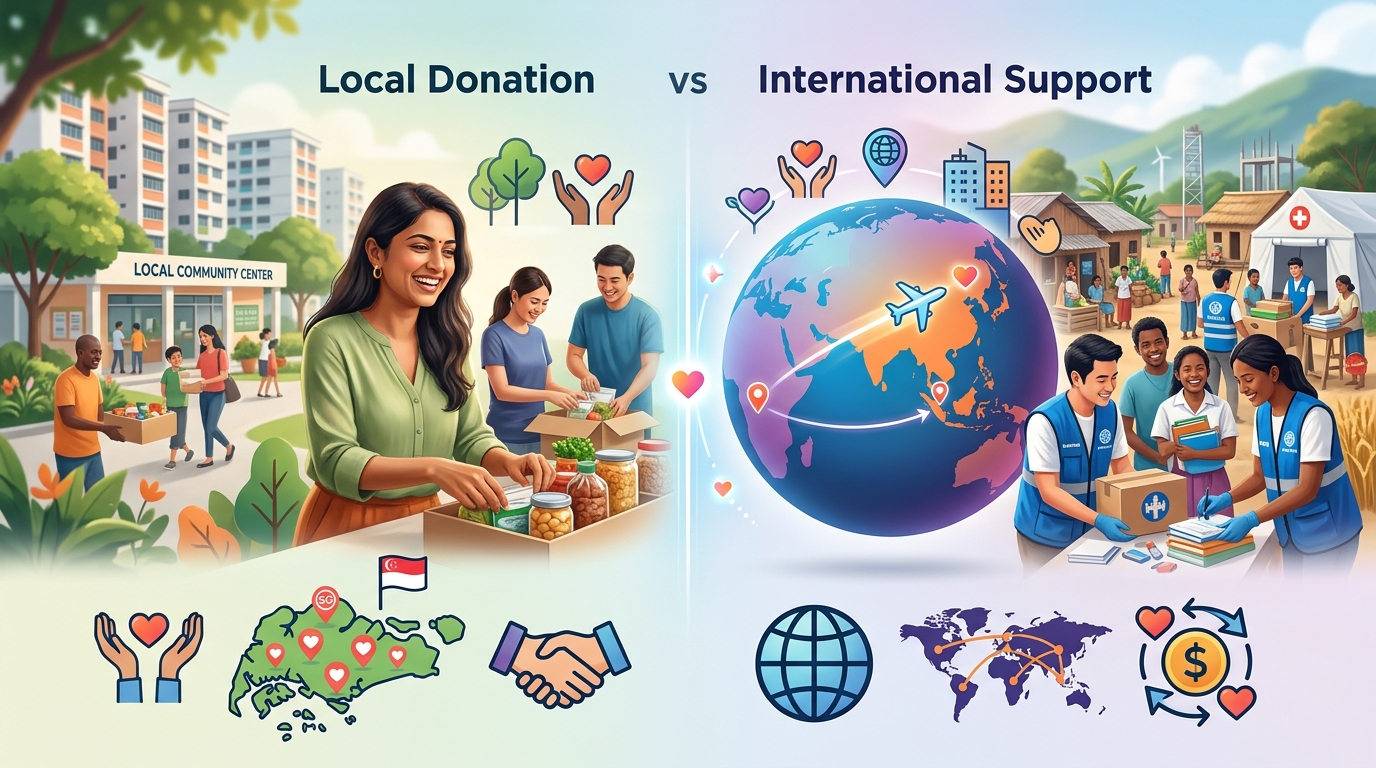
You want your donation to matter. That’s not a small thing. But the question of whether to give close to home or send help across the ocean can feel paralyzing. Both choices are good. Both create change. The trick is figuring out which one fits your values, your budget, and the impact you want to see.
Choosing between local and global giving depends on your priorities, not a universal right answer. Local donations offer visible community impact and personal connection, while global giving can address urgent needs where your dollar stretches further. The most effective approach combines understanding cost effectiveness, transparency, and alignment with causes that genuinely move you. Many donors find success supporting both spheres strategically.
Understanding the real difference between local and global giving
Local charities operate in your backyard. They run food banks, youth programs, homeless shelters, and community health clinics. You can visit them. You might know someone who volunteers there or benefits from their services.
Global charities tackle issues that cross borders. They fight malaria, provide clean water in rural villages, support refugees, and fund education in countries where schools lack basic supplies.
The fundamental difference isn’t just geography. It’s about scale, cost effectiveness, and measurability.
A donation to a local food bank might feed 20 families this week. That same amount sent to a global nutrition program could provide therapeutic food for 100 malnourished children in Sub-Saharan Africa. The math can be stark.
But numbers don’t tell the whole story. Local giving strengthens the fabric of your own community. It builds relationships. It creates visible change you can witness on your morning commute.
Why local donations create immediate community impact
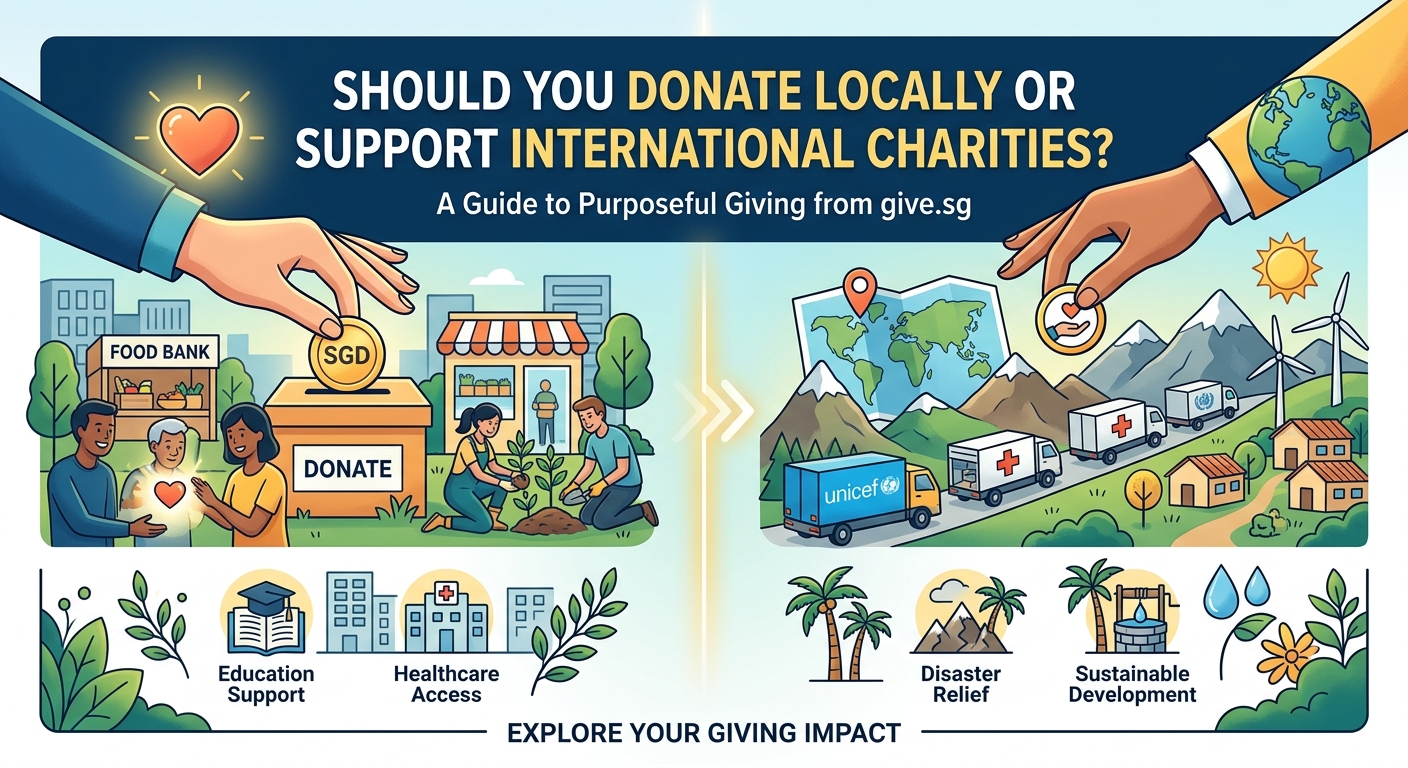
Local charities respond to needs you see every day. Homelessness on your street corner. Kids going to school hungry. Seniors isolated in their apartments.
When you give locally, you often get:
- Direct visibility into how funds are used
- Opportunities to volunteer alongside your donation
- Personal relationships with staff and beneficiaries
- Faster response to emerging community crises
- Support for causes that affect your neighbors directly
Local organizations also tend to have lower overhead in some cases because they operate on smaller scales and rely heavily on volunteers. A neighborhood food pantry might run entirely on community labor with minimal administrative costs.
There’s something deeply human about helping someone you might encounter at the grocery store. That connection matters. It builds empathy and civic engagement in ways that writing a check to a distant cause sometimes doesn’t.
Consider Sarah, a middle-income teacher who donates $50 monthly to her local youth center. She sees the basketball court they refurbished. She knows three kids in her class who go there after school. That tangible connection keeps her giving consistently.
The case for global giving and cost effectiveness
Global charities often work in places where needs are more severe and resources are scarcer. Your dollar can accomplish more in absolute terms.
Here’s why:
The cost of saving a life through malaria prevention in certain African countries is estimated around $3,000 to $5,000 by some effective altruism researchers. Compare that to health interventions in developed countries, where costs run exponentially higher.
A water well in a rural village might serve 500 people for a decade. That same investment in a wealthy country might fund a few months of a single program.
Global giving also addresses problems that won’t get solved without international support. Local communities in extreme poverty lack the tax base and infrastructure to tackle their own challenges. Your donation becomes the difference between intervention and nothing.
“The question isn’t whether local needs are real. They absolutely are. But when we look at where suffering is most acute and where our resources can prevent the most harm, global health and poverty interventions often come out ahead.” — Effective altruism perspective
This doesn’t make local giving wrong. It just means the impact per dollar can vary dramatically based on context.
How to evaluate charities in both categories
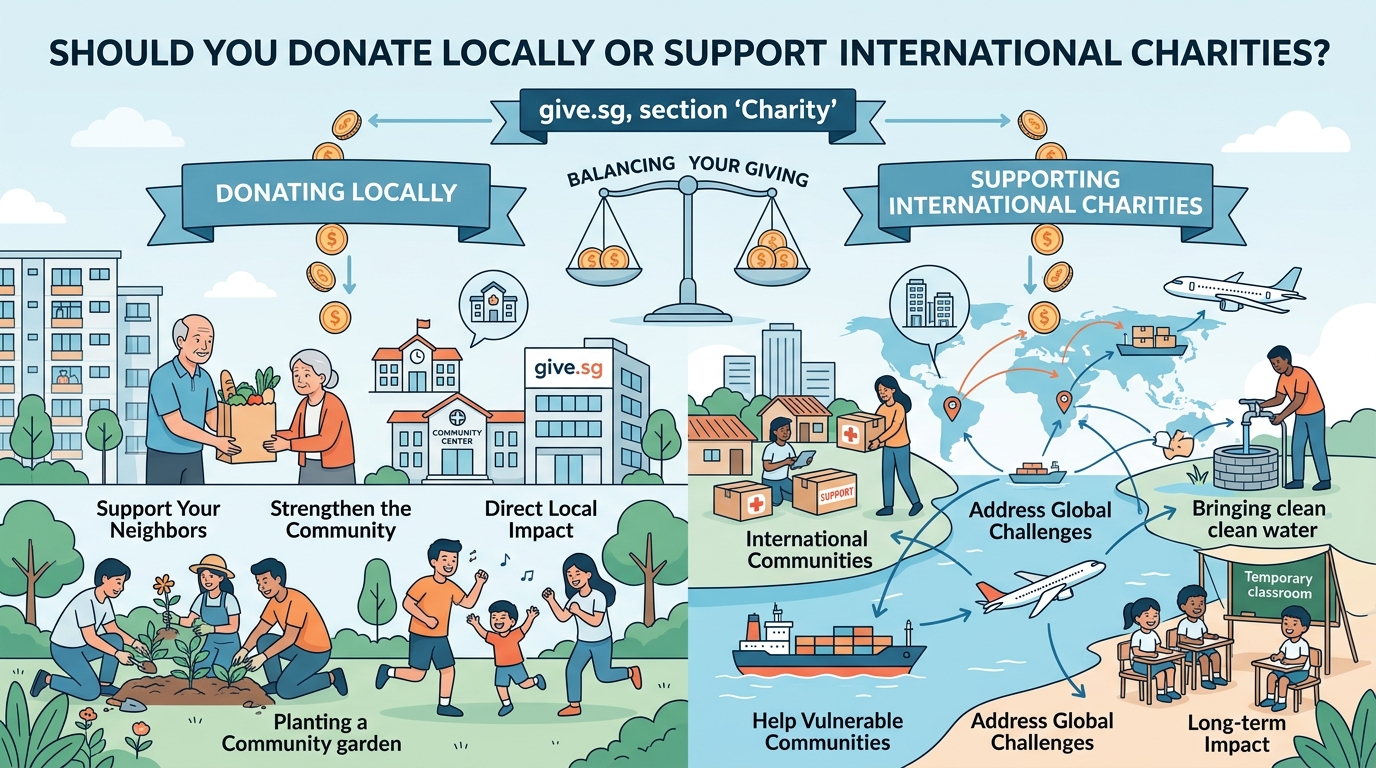
Whether you choose local or global, you need to know your money is being used well. Here’s a practical framework:
- Check the organization’s financial transparency. Look for annual reports, IRS Form 990 for U.S. charities, and clear budget breakdowns.
- Research their track record. How long have they operated? What measurable outcomes do they report?
- Understand their overhead ratio. While some administrative costs are necessary, you want most of your donation reaching beneficiaries.
- Read independent evaluations. Sites like Charity Navigator, GiveWell, and local charity watchdogs provide ratings.
- Talk to people involved. For local charities, ask volunteers and community members about their experiences.
| Evaluation Factor | Local Charities | Global Charities |
|---|---|---|
| Transparency | Often easier to verify in person | Requires research through third-party evaluators |
| Measurable outcomes | May be anecdotal or community-based | Often use rigorous impact studies |
| Overhead costs | Can vary widely; volunteer-heavy orgs may be very efficient | Established ones typically publish detailed financials |
| Personal verification | You can visit, volunteer, see results | Must rely on reports, photos, independent audits |
Don’t assume local automatically means trustworthy or that global means bureaucratic. Both require due diligence.
Common mistakes donors make when choosing
Many people give based on emotion alone. A compelling story, a tragic photo, a friend’s fundraising page. Emotion is a valid motivator, but it shouldn’t be the only one.
Mistake one is giving to whoever asks first. You get an appeal in the mail, you write a check. No research, no strategy. Your giving becomes reactive instead of intentional.
Mistake two is spreading donations too thin. Giving $10 to twenty different organizations means each one spends resources processing your gift and sending you updates. Consolidating to fewer, well-chosen charities often creates more impact.
Mistake three is ignoring effectiveness data. Some programs work better than others. Cash transfers to people in poverty, for instance, have strong evidence behind them. Other well-intentioned programs show minimal results.
Mistake four is the “overhead myth.” Donors often want 100% of their gift to go to programs, but charities need skilled staff, technology, and infrastructure to function well. A charity with 20% overhead that achieves strong outcomes beats one with 5% overhead that accomplishes little.
Mistake five is never revisiting your choices. Charities change leadership, shift focus, or lose effectiveness. Review your giving annually.
Combining local and global giving strategically
You don’t have to choose just one approach. Many thoughtful donors split their charitable budget.
One common strategy: give 70% to high-impact global charities where your dollar goes furthest, and 30% to local causes that matter to you personally. This balances effectiveness with community connection.
Another approach: alternate. Support local causes during community giving campaigns or when specific needs arise, like disaster relief. Schedule regular global donations monthly or quarterly.
You might also align giving with your skills and interests. If you volunteer locally at an animal shelter, your time is the local contribution. Your financial donations can then go to global health or education.
Some donors use matching opportunities strategically. If your employer matches local donations, maximize that benefit. Use unmatched funds for global causes.
The key is intentionality. Decide what percentage of your charitable budget serves which purpose, then stick to that plan instead of giving randomly.
What your values say about where to give
Your giving should reflect what you care about most. There’s no universal right answer.
If community cohesion matters deeply to you, local giving makes sense. If reducing the most suffering possible drives you, global giving to evidence-based charities might fit better.
Ask yourself:
- Do I want to see the direct results of my donation?
- Am I more moved by helping neighbors or helping those in the greatest need regardless of location?
- Do I value personal connection with beneficiaries?
- How important is maximizing lives saved or improved per dollar?
- Do I want to support systemic change or immediate relief?
Your answers aren’t right or wrong. They’re yours.
Someone who grew up in a tight-knit community might feel a deep obligation to give back locally. Someone who traveled extensively and witnessed extreme poverty might prioritize global causes. Both are valid.
The mistake is giving without examining these questions, then feeling unsatisfied with your charitable impact.
Tax considerations and practical logistics
In the United States, donations to registered 501(c)(3) organizations are tax-deductible whether they’re local or global, as long as they’re U.S.-based entities. Many international charities operate through U.S. foundations to offer this benefit.
Direct donations to foreign organizations often aren’t deductible for U.S. taxpayers. If tax benefits matter to you, verify the charity’s status before giving.
For local giving, you might have more options beyond cash:
- Donating goods directly to shelters or food banks
- Offering professional services pro bono
- Organizing fundraising events
- Volunteering time alongside financial support
Global giving typically works best as financial donations. Shipping goods internationally is expensive and inefficient. Cash allows organizations to purchase supplies locally, supporting local economies and avoiding logistical nightmares.
Set up recurring donations when possible. Monthly giving helps charities plan budgets and reduces processing costs. It also makes your giving automatic, so you don’t forget or skip months.
Measuring your personal impact over time
Track your giving. Use a simple spreadsheet or app to record where you donate, how much, and when.
After a year, review:
- Did you give to causes that still align with your values?
- Do you feel satisfied with the impact you supported?
- Did any charities disappoint you or excel beyond expectations?
- How much did you give in total?
- What percentage went to local versus global causes?
This reflection helps you refine your strategy. Maybe you realize you gave to too many organizations. Maybe you discover you care more about education than you thought. Maybe you find that volunteering locally while donating globally feels right.
Measuring impact isn’t always about numbers. Sometimes it’s about how giving makes you feel connected to something larger than yourself.
But when charities provide concrete outcomes, pay attention. “We distributed 10,000 mosquito nets” is more meaningful than “We’re fighting malaria.” “We housed 50 families this year” tells you more than “We’re addressing homelessness.”
Making your decision with confidence
The question of should I donate locally or globally doesn’t have a single answer that works for everyone. Your financial situation, values, community ties, and impact goals all shape the right choice for you.
Start by identifying one or two causes that genuinely move you. Research charities in those areas, both local and global. Compare their effectiveness, transparency, and alignment with your values.
Make a decision. Commit to it for at least a year. Then evaluate and adjust.
Remember that giving anything is better than giving nothing. Don’t let the perfect become the enemy of the good. Even if you later realize you could have chosen differently, your donation still helped someone.
The most important thing is that you give thoughtfully, consistently, and in ways that feel meaningful to you. Whether that help goes to a neighbor or someone across the world, it matters.
Your giving journey starts with one choice
You now have a framework for making this decision. You understand the trade-offs, the evaluation methods, and the common pitfalls.
Pick one organization this month. Research it thoroughly. Make a donation that feels significant to you, whether that’s $25 or $2,500. Notice how it feels.
Then do it again next month, or next quarter. Build a giving practice that reflects who you are and what you want to see in the world.
Your charitable impact grows not from one perfect decision, but from consistent, thoughtful giving over time. Start where you are. Give what you can. Adjust as you learn. That’s how conscientious donors create real change, whether in their own neighborhood or halfway around the globe.