 By chloe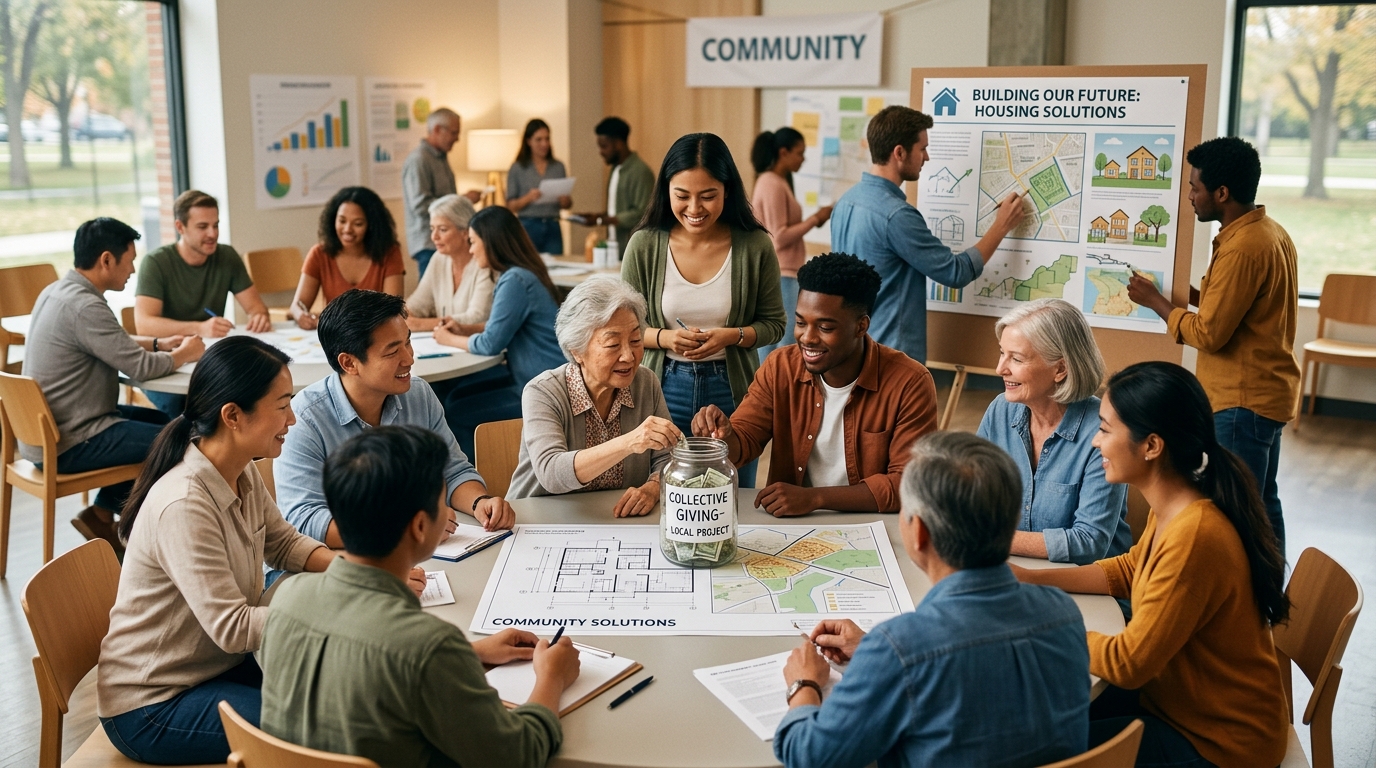
When a group of neighbors in Detroit noticed their local library struggling to stay open, they didn’t wait for a single wealthy donor to save it. Instead, 47 families each committed $20 a month. Within six months, they raised enough to keep the doors open and fund new programs for kids. That’s the power of collective giving communities in action.
Collective giving communities bring together individuals who pool financial resources, time, and expertise to address local challenges. By combining smaller contributions from many people, these groups create meaningful impact that rivals traditional philanthropy while building stronger social connections and democratic decision making around charitable priorities. The model makes philanthropy accessible to everyone, not just wealthy donors.
What Makes Collective Giving Communities Different
Traditional philanthropy often centers on large donations from wealthy individuals or foundations. Collective giving flips that model.
Instead of one person deciding where money goes, groups of people contribute what they can afford. Then they work together to choose which causes to support.
The amounts vary widely. Some groups ask for $100 per year. Others request $1,000 or more. What matters is the collaborative approach.
Members don’t just write checks. They research nonprofits, visit organizations, meet community leaders, and vote on funding decisions. This hands-on involvement creates deeper understanding of local needs.
The model also builds community. Members form relationships with people they might never have met otherwise. They learn from each other’s perspectives and experiences.
How These Communities Actually Work
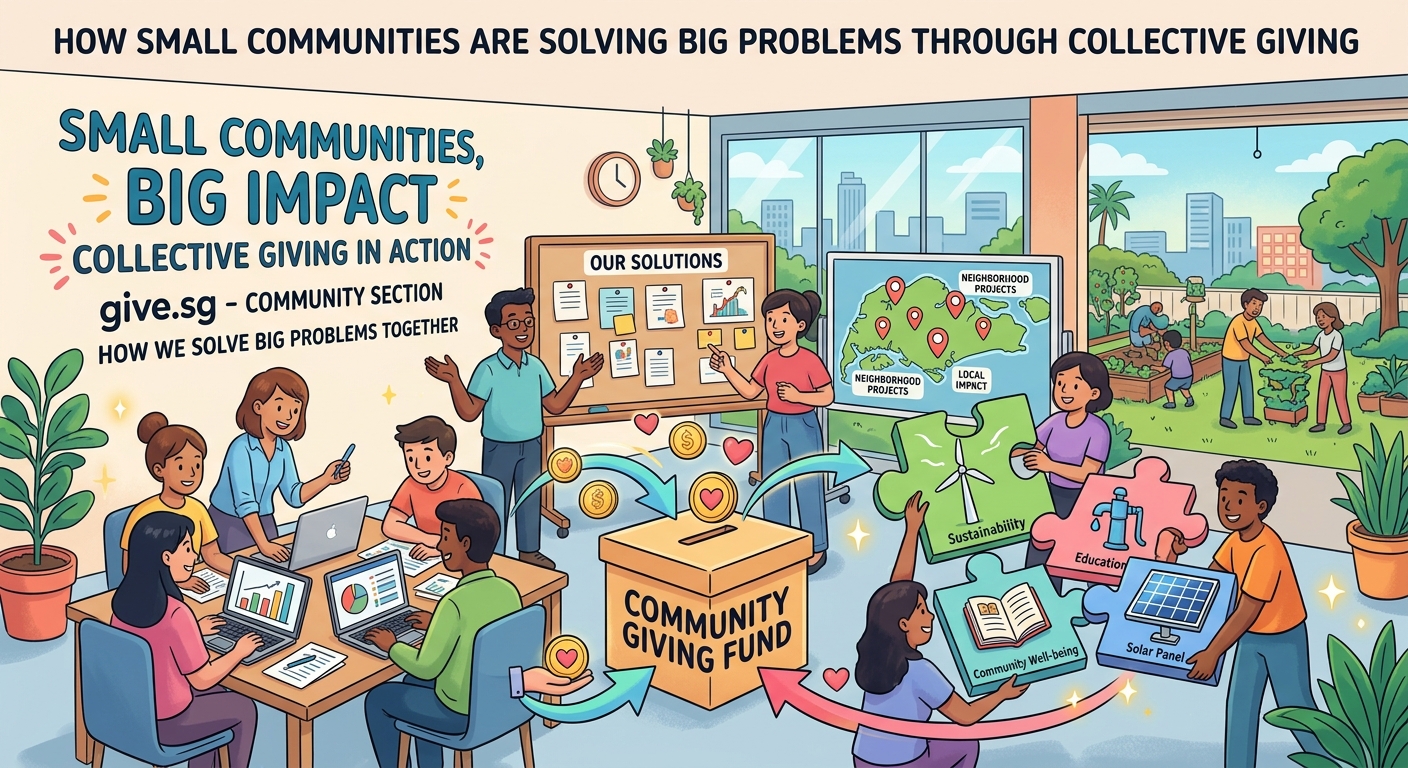
Most collective giving communities follow a similar structure, though details vary.
-
A group forms around shared values or geographic area. This might be women supporting education, young professionals addressing homelessness, or residents of a specific neighborhood.
-
Members commit to regular contributions. Some groups collect monthly, others annually. The key is predictable funding that organizations can count on.
-
The community establishes a decision making process. This usually involves research committees, site visits, and democratic voting. Some groups require unanimous consent, while others use majority rule.
-
Funds are distributed to chosen organizations. Most communities make multiple grants each cycle rather than putting everything in one place.
-
Members stay engaged with funded organizations. They volunteer, attend events, and track progress. This ongoing relationship distinguishes collective giving from simple donations.
The process takes time and effort. But that investment creates better outcomes than passive giving.
Real Examples of Communities Making Impact
A group of 120 women in Portland pools $1,000 each year. Over a decade, they’ve granted more than $1.2 million to local nonprofits serving women and children.
Their funding helped a domestic violence shelter expand services. It supported job training programs for single mothers. It enabled a girls’ coding camp to triple enrollment.
In Austin, young professionals under 40 contribute $500 annually. They focus on education equity. Last year, they funded after-school programs reaching 800 students.
The group doesn’t just give money. Members tutor students, mentor teachers, and help organizations with marketing and technology challenges.
A faith-based collective in Chicago brings together members from different religious traditions. Their shared commitment to housing justice has funded emergency shelters, legal aid for tenants, and home repair programs for elderly homeowners.
These examples show the diversity of collective giving models. There’s no single right way to structure a community.
Building Your Own Collective Giving Community
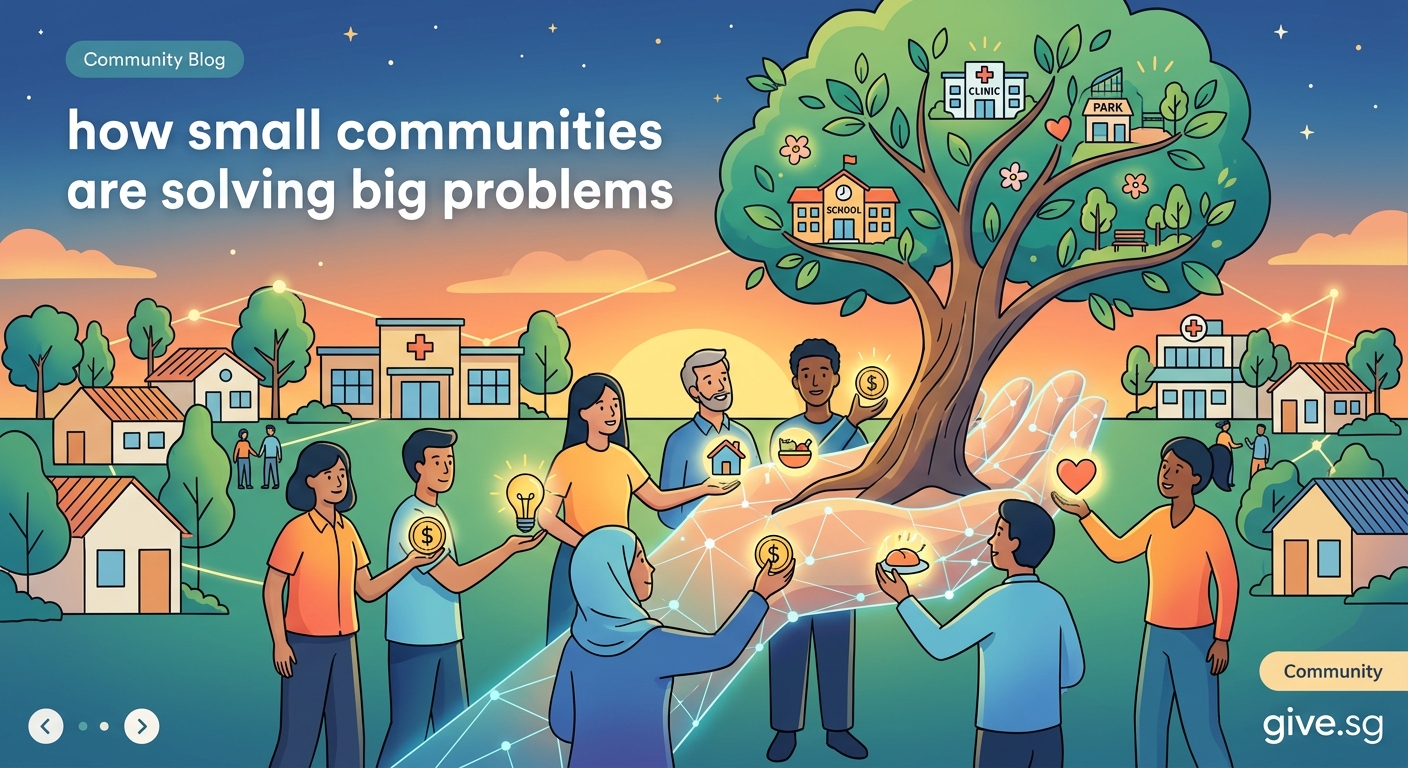
Starting a collective giving community requires planning, but the process is straightforward.
First, identify your focus. Will you address a specific issue like hunger or education? Target a geographic area? Serve a particular population?
Clear focus helps attract committed members and makes decision making easier.
Next, recruit founding members. Start with people you know who share your values. Aim for at least 10 to 15 people to create momentum.
Establish contribution levels that work for your group. Consider your members’ financial situations. The amount matters less than consistent participation.
Create decision making guidelines. How will you research organizations? Who can vote? What percentage is needed to approve grants?
Document these processes in writing. Clear rules prevent conflicts later.
Set up financial infrastructure. You’ll need a bank account and tax structure. Many groups partner with community foundations to handle administrative tasks.
Plan your first funding cycle. Give yourselves enough time to research thoroughly. Most communities take three to six months for their initial grants.
Common Challenges and How to Address Them
| Challenge | Why It Happens | Solution |
|---|---|---|
| Member dropout | Life changes, lost interest | Keep members engaged through regular events and clear communication |
| Decision gridlock | Different priorities among members | Establish clear voting procedures and focus areas upfront |
| Limited organizational capacity | Too few volunteers for research and administration | Divide tasks into manageable pieces and rotate responsibilities |
| Difficulty finding worthy recipients | Information overload or lack of local knowledge | Partner with community foundations or local nonprofit networks |
| Measuring impact | Unclear metrics or unrealistic expectations | Set specific, achievable goals and collect regular updates from grantees |
The most successful communities anticipate these challenges and build systems to handle them.
They also stay flexible. What works in year one might need adjustment by year three.
The Role of Technology in Modern Collective Giving
Digital tools have made collective giving communities easier to organize and manage.
Online platforms handle contribution collection, member communication, and voting. This reduces administrative burden significantly.
Social media helps communities share their impact and recruit new members. A single post about a successful grant can attract dozens of interested people.
Video calls enable participation from members who move away or have scheduling conflicts. Geographic boundaries matter less than they once did.
But technology shouldn’t replace human connection. The best communities use digital tools to enhance relationships, not substitute for them.
In-person gatherings, site visits, and face-to-face conversations remain essential. They build trust and deepen commitment in ways screens cannot.
Who Benefits Most from This Model
Collective giving communities create value for multiple stakeholders.
Nonprofit organizations receive flexible funding with fewer restrictions than traditional grants. They also gain passionate advocates who spread the word about their work.
The unrestricted nature of many collective gifts allows organizations to address emerging needs rather than fitting work into predetermined categories.
Community members develop philanthropy skills and nonprofit sector knowledge. They build networks and friendships. Many report feeling more connected to their communities.
The broader community benefits from increased charitable dollars and more strategic giving. When donors research carefully and stay engaged, their money goes further.
“Collective giving democratizes philanthropy. It says you don’t need to be wealthy to make a difference. You just need to care and show up.” – Community foundation director with 15 years of experience supporting giving circles
Maximizing Your Community’s Impact
Strategic approaches multiply the effectiveness of collective giving.
Focus your efforts on specific issues or populations. Trying to solve everything dilutes impact. Choose one or two areas and go deep.
Build relationships with other funders. Coordinating with foundations or government programs can amplify your grants. A $10,000 gift becomes more powerful when it unlocks matching funds.
Think beyond money. Your members bring professional skills, networks, and time. Connect grantees with members who can provide pro bono services.
Commit to multi-year support when possible. One-time grants help, but sustained funding allows organizations to plan and grow.
Measure what matters. Work with grantees to identify meaningful metrics. Track changes over time rather than expecting overnight transformation.
Share your learning. Document what works and what doesn’t. Other communities benefit from your experience.
Different Models for Different Goals
Collective giving communities take many forms. Understanding the options helps you choose the right structure.
Affinity-based groups organize around shared identity. Women’s giving circles, LGBTQ+ funds, and communities of color pooling resources to support their populations.
These groups often prioritize causes that mainstream philanthropy overlooks. They bring lived experience to funding decisions.
Geographic communities focus on specific neighborhoods, cities, or regions. Members share commitment to improving where they live.
Local knowledge helps these groups identify needs and evaluate organizations effectively.
Issue-focused collectives target specific problems like climate change, criminal justice reform, or arts access. Members unite around shared passion for a cause.
Specialized focus allows deep expertise development. Members become knowledgeable advocates as well as funders.
Workplace giving communities bring together employees who want to support causes collectively. Companies sometimes match contributions, multiplying impact.
These groups build workplace culture while addressing community needs.
Youth and family funds teach next generations about philanthropy through hands-on participation. Young people research organizations, present findings, and vote on grants.
This model builds lifelong giving habits and civic engagement.
Legal and Tax Considerations
Understanding the financial and legal framework protects your community and maximizes tax benefits.
Most collective giving communities operate in one of three ways:
- As a program of an existing nonprofit or community foundation
- As an independent 501(c)(3) organization
- As an informal group without tax-exempt status
Working with an established foundation offers simplicity. They handle tax receipts, grant processing, and compliance. Members get tax deductions without forming a separate entity.
Creating an independent nonprofit provides complete control but requires significant administrative work. You’ll file for tax-exempt status, maintain financial records, and submit annual reports.
Informal groups avoid paperwork but members cannot claim tax deductions. This works for small groups focused on direct assistance rather than grants to organizations.
Consult an attorney or accountant familiar with nonprofit law. The right structure depends on your size, goals, and resources.
Growing and Sustaining Participation
Keeping members engaged over years requires intentional effort.
Celebrate wins together. When a grant makes a difference, share the story. Invite grantees to present results at member meetings.
Recognition matters. People want to know their contributions create change.
Create meaningful roles. Beyond voting on grants, offer opportunities to lead site visits, manage communications, or coordinate events.
Ownership increases commitment.
Onboard new members thoughtfully. Pair them with experienced members who can answer questions and help them feel welcome.
Strong onboarding reduces early dropout.
Survey members regularly. Ask what’s working and what needs improvement. Act on feedback to show you value their input.
Plan social events beyond business meetings. Dinners, volunteer days, and informal gatherings strengthen relationships that sustain the community.
Connecting Individual Action to Systemic Change
Some critics argue that collective giving addresses symptoms rather than root causes. They have a point.
A grant to a food bank feeds hungry people today but doesn’t fix the economic systems that create food insecurity.
The best collective giving communities recognize this limitation and work to address it.
They fund organizations doing advocacy and policy work alongside direct service. They educate members about systemic issues. They use their collective voice to support legislative changes.
Some communities reserve a portion of funds for higher-risk, systems-change work that traditional funders avoid.
This both-and approach meets immediate needs while working toward long-term solutions.
Your community can start with direct service and gradually incorporate advocacy as members develop understanding and appetite for policy work.
Why This Movement Keeps Growing
Collective giving communities have expanded dramatically over the past two decades.
Several trends drive this growth.
People want more meaningful engagement with causes they support. Writing a check feels disconnected. Collective giving offers hands-on involvement.
Trust in institutions has declined. People prefer supporting organizations they know personally rather than relying on foundation staff to make decisions.
Younger generations value experiences and community over individual achievement. Collective giving aligns with these values.
Technology makes organizing easier. What once required extensive infrastructure now happens through simple online platforms.
The model works. Communities see real results from their efforts, which attracts more participants.
As wealth inequality grows, collective giving offers a way for people of moderate means to create philanthropic impact previously reserved for the wealthy.
Turning Shared Values into Shared Action
Collective giving communities prove that you don’t need a trust fund to change your community.
You need commitment, collaboration, and willingness to learn.
Start small if you need to. Three friends pooling $50 a month can support a local organization. That’s $1,800 a year making a difference.
As you grow, you’ll attract others who share your values. Your impact will expand.
The relationships you build matter as much as the money you grant. You’ll develop friendships, learn about your community, and discover the joy of solving problems together.
Whether you join an existing community or start your own, you’re participating in a movement that’s reshaping philanthropy from the ground up.
Your contribution counts. Your voice matters. Your community needs what you and your neighbors can accomplish together.