 By chloe
The world doesn’t stop needing help just because you’re stuck at home. Whether you’re juggling a full-time job, caring for family, or living miles away from traditional volunteer centers, you can still create meaningful change. Virtual volunteering lets you contribute your skills and time to causes that matter without leaving your couch.
Virtual volunteering opportunities let you make real impact from anywhere with internet access. From tutoring students to designing graphics for nonprofits, remote roles match your skills and schedule. Most positions require just a few hours weekly and provide training, making it easy to start helping causes you care about today.
What Makes Virtual Volunteering Different
Traditional volunteering asks you to show up somewhere at specific times. Virtual volunteering flips that script entirely.
You work on your schedule. You choose projects that match your actual skills. You help organizations across the globe without spending a dime on gas or parking.
The flexibility matters for real reasons. Maybe you work night shifts. Maybe you’re caring for aging parents. Maybe you just moved to a new city and don’t know the local nonprofit scene yet. Remote volunteer work fits around these realities instead of forcing you to rearrange your life.
Organizations benefit too. They get access to specialized skills they couldn’t find locally. A small animal rescue in rural Montana can get graphic design help from someone in Singapore. A literacy program in Detroit can connect with tutors from five different time zones.
Types of Remote Roles That Need You Right Now

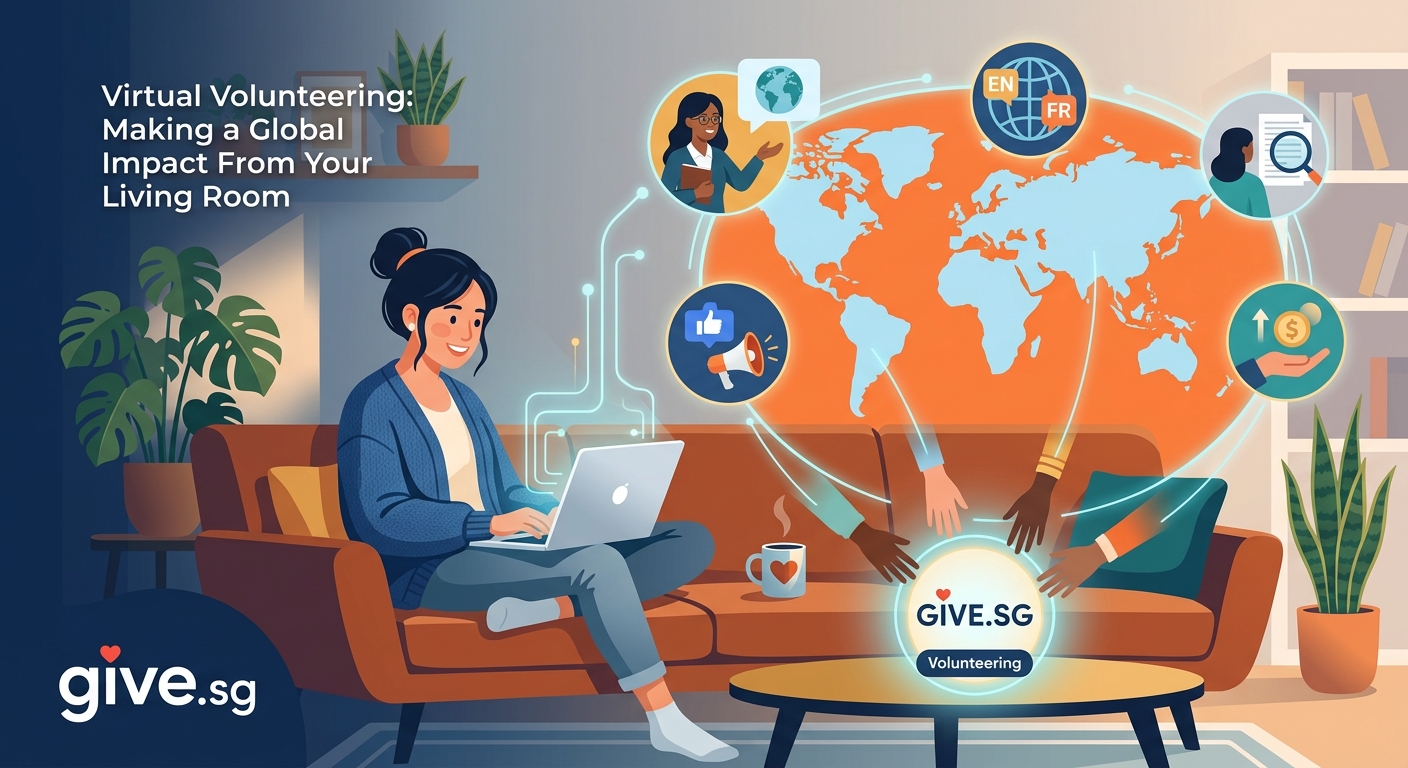
Virtual volunteering spans way more categories than most people realize. Here are the main areas where organizations desperately need help:
Skills-based opportunities:
– Web development and coding for nonprofit websites
– Graphic design for social media campaigns and fundraising materials
– Writing and editing for blog posts, grant applications, and newsletters
– Translation services for multilingual communities
– Accounting and bookkeeping for small organizations
– Legal consulting for policy work and compliance issues
– Marketing strategy and social media management
Direct service roles:
– Online tutoring for students in underserved areas
– Crisis text line counseling and support
– Virtual mentoring for young professionals or at-risk youth
– Teaching English to non-native speakers via video calls
– Career coaching for job seekers
– Tech support for seniors learning digital tools
Advocacy and awareness:
– Social media amplification for campaigns
– Petition signing and email campaigns
– Virtual event hosting and moderation
– Research and data analysis for policy work
– Community management for online support groups
The best part? Most of these roles need just two to five hours per week. You’re not signing up for a second job.
How to Find Legitimate Virtual Volunteering Opportunities
Not all volunteer platforms are created equal. Some post outdated listings. Others connect you with organizations that lack proper structure or support.
Here’s how to find roles that actually make a difference:
-
Start with established volunteer matching platforms. Look for sites that verify their nonprofit partners and provide reviews from past volunteers. Read what other people say about their experiences before committing.
-
Check directly with causes you already support. If you donate to an organization or follow their work, visit their website and look for a volunteer page. Many groups list remote opportunities but don’t advertise them widely.
-
Use your professional networks. LinkedIn and industry-specific groups often share volunteer needs. Professional associations frequently partner with nonprofits looking for skilled volunteers.
-
Consider international organizations. Groups like the United Nations Volunteers program post thousands of remote assignments. These roles often involve more structured commitments but provide excellent experience.
-
Filter by time commitment upfront. Be honest about how many hours you can give. A three-hour monthly commitment you actually keep helps more than a ten-hour weekly promise you can’t maintain.
“The most successful virtual volunteers are those who treat their commitment like a real appointment. Block the time on your calendar. Show up consistently. The flexibility of remote work doesn’t mean it matters less.” — Sarah Chen, Volunteer Coordinator at Global Literacy Project
Matching Your Skills to the Right Opportunities
You don’t need fancy credentials to volunteer virtually. But you do need to be realistic about what you can offer.
Think about skills you use at work or in daily life. Can you write clear emails? That’s valuable for communications roles. Do you troubleshoot tech problems for family members? Organizations need that patience and knowledge.
Here’s a practical framework for matching yourself to opportunities:
| Your Background | Best Fit Opportunities | Time Investment |
|---|---|---|
| Student or recent grad | Tutoring, social media support, research assistance | 2-4 hours weekly |
| Creative professional | Design work, content creation, photography editing | Project-based, 3-6 hours monthly |
| Business background | Strategic planning, fundraising strategy, board service | 4-8 hours monthly |
| Tech industry | Website maintenance, database management, cybersecurity | Project-based or ongoing |
| Retired professional | Mentoring, consulting, teaching, administrative support | Flexible, 5-10 hours weekly |
| Healthcare worker | Telehealth support, health education, crisis counseling | 3-5 hours weekly |
Don’t overlook soft skills either. Empathy, reliability, and good communication often matter more than technical expertise.
Common Mistakes That Sabotage Virtual Volunteers
People start virtual volunteering with great intentions. Then they disappear after two weeks. Here’s what goes wrong and how to avoid it:
Overcommitting from the start. You feel excited and sign up for ten hours a week. Then reality hits. Start small. You can always increase your commitment later.
Treating it like it doesn’t count. Remote work feels less “real” to some people. But organizations depend on you just like they would an in-person volunteer. If you commit to a Tuesday afternoon tutoring session, a kid is waiting for you.
Ignoring time zones. You’re in California helping an organization based in New York. Their 9am meeting is your 6am. Check time differences before agreeing to synchronous work.
Skipping the onboarding. Training videos feel boring. But they prevent mistakes and help you actually contribute instead of just taking up space.
Not asking questions. You’re confused about a task but don’t want to bother anyone. So you guess. Then you do it wrong. Organizations want you to ask. It saves everyone time.
Building Real Connections Through a Screen
One concern people have about virtual volunteering: Will it feel meaningful? Can you actually connect with people and causes through a computer?
The answer depends on how you approach it.
Turn your camera on during video calls. Use people’s names. Share appropriate personal details that help others see you as a real person, not just a username.
Join optional social events if the organization offers them. Virtual coffee chats or end-of-project celebrations help you feel part of a team.
Ask for feedback regularly. Don’t wait for formal reviews. Check in with your coordinator: “Is this helpful? Should I approach it differently?”
Share what you’re learning. Post about your volunteer work on social media if you’re comfortable. Tell friends about it. Talking about the experience reinforces your own commitment and might inspire others.
Stay longer than three months if possible. The first month is learning. The second month is contributing. The third month and beyond is where you see real impact and build lasting relationships.
What Organizations Actually Need From Virtual Volunteers
Understanding what nonprofits value helps you contribute more effectively. Here’s what makes volunteer coordinators grateful versus frustrated:
They need reliability above everything. Flaky volunteers create more work than no volunteers. If you say you’ll do something, do it. If you can’t, tell them as soon as possible.
They appreciate people who follow instructions. Nonprofits often have specific brand guidelines, writing styles, or processes. These aren’t arbitrary. They maintain consistency and quality.
They value volunteers who take initiative within boundaries. Notice a typo? Fix it. Have an idea for improvement? Share it respectfully. But don’t completely redesign their website without asking.
They need people who understand capacity limits. Small organizations run lean. Your coordinator might take two days to respond to emails. That’s not personal. They’re juggling a hundred things.
They want volunteers who care about the mission, not just the resume line. Yes, volunteering builds your skills and looks good professionally. But organizations can tell when someone’s just checking a box versus actually caring about the work.
Making Virtual Volunteering Work With Your Actual Life
Theory is easy. Practice is harder. Here’s how to maintain your volunteer commitment when life gets complicated:
Schedule it like a doctor’s appointment. Put it on your calendar with alerts. Treat it as non-negotiable unless there’s a real emergency.
Create a dedicated workspace. Even if it’s just a specific corner of your kitchen table, having a “volunteering spot” helps you mentally shift into that mode.
Batch your volunteer tasks. If you’re doing administrative work, knock out several tasks in one sitting rather than spreading them across the week. This is more efficient and helps you stay focused.
Communicate proactively about schedule changes. Summer vacation coming up? New project at work? Tell your coordinator a few weeks ahead. They can plan around it.
Set boundaries from day one. If you can give four hours monthly, say four hours. Don’t let guilt push you into eight. Sustainable volunteering beats burnout every time.
Track your impact. Keep a simple note of what you’ve accomplished. “Tutored three students for a total of 12 hours. Saw reading levels improve by one grade.” This keeps you motivated during slower periods.
The Unexpected Benefits You’ll Actually Experience
People start virtual volunteering to help others. They stick with it because of what they gain personally.
You’ll learn new skills faster than you expect. Nonprofits often let volunteers try things they wouldn’t get to do at their day jobs. Want to learn email marketing? Social media strategy? Grant writing? Volunteer roles offer hands-on practice.
Your network expands in surprising directions. You’ll meet people from different industries, countries, and backgrounds. These connections often lead to friendships, job opportunities, or collaborations you never anticipated.
Your perspective shifts. Spending time with people facing different challenges than yours builds empathy and understanding. It makes you a better colleague, friend, and community member.
You’ll feel more connected during isolating times. Remote work and life can feel lonely. Regular volunteer commitments give you something to look forward to and people who count on you.
Your resume gets stronger, but not in the way you might think. Yes, volunteer experience demonstrates skills. But more importantly, it shows character. It proves you care about something beyond your paycheck.
Getting Started This Week
You’ve read about virtual volunteering. Now it’s time to actually do it.
Pick one cause area that genuinely matters to you. Not what sounds impressive. Not what your friends are doing. What actually makes you angry or sad or hopeful when you think about it?
Search for organizations working on that issue. Visit three to five websites. Read their volunteer pages. Look at what they need.
Choose one opportunity that matches your available time. Not your ideal time. Your actual, realistic time right now.
Fill out the application. Most are simple. They ask about your skills, availability, and why you’re interested.
Then follow through. Show up for the orientation. Complete the first task. Send the first email. Make the first call.
The world needs what you can offer. Your location doesn’t matter. Your schedule doesn’t disqualify you. Your skills, whatever they are, can help someone somewhere.
Start small. Stay consistent. Watch what happens when you show up.