 By chloe
Choosing where to send your money matters more than you think. A donation made to the right organization can fund medical research, feed families, or protect endangered species. But send it to the wrong place and your hard-earned cash might disappear into administrative overhead or ineffective programs.
Selecting the right charity requires examining mission alignment with your values, reviewing financial transparency and spending ratios, verifying tax-exempt status, reading independent ratings, understanding program effectiveness, and starting small with test donations. Smart donors research organizations thoroughly before committing to recurring support, ensuring their contributions create measurable impact rather than funding excessive overhead or questionable practices.
Start with what matters to you
Your donation should reflect what keeps you up at night or what lights you up during the day.
Maybe you care deeply about education because you grew up without access to good schools. Perhaps animal welfare tugs at your heart after adopting a rescue pet. Or climate change feels urgent because you’ve watched weather patterns shift in your own backyard.
Write down three causes that genuinely move you. Not what sounds impressive at dinner parties. Not what your friends support. What actually matters to you.
This personal connection keeps you engaged long after the initial donation. You’ll read updates, attend events, and understand the work being done. That engagement makes you a better donor because you’ll notice when something feels off or celebrate when real progress happens.
Think about the scale of impact you want too. Local food banks serve your neighbors directly. National organizations tackle systemic issues. International groups work across borders. None of these approaches is better than the others. They just serve different goals.
Check the financial health and transparency
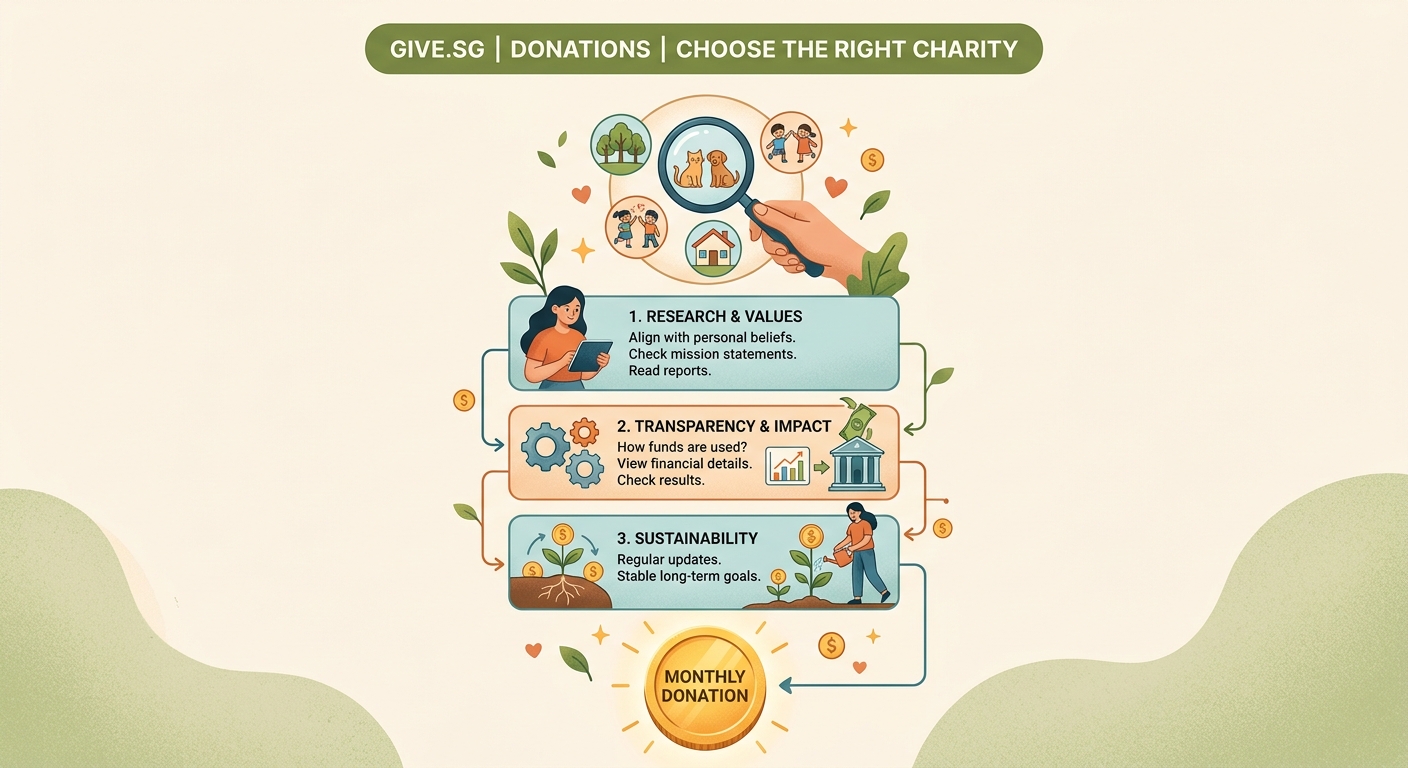
Money tells the truth about how organizations operate.
Start by looking at how charities spend donations. A good rule of thumb: at least 75% of total expenses should go toward programs rather than fundraising or administration. Some exceptional organizations hit 90% or higher.
But context matters here. Newer organizations might spend more on infrastructure as they grow. Advocacy groups need different spending ratios than direct service providers. A homeless shelter buying beds and hiring counselors looks different financially than a policy organization funding research and lobbying.
Here’s what to examine in financial documents:
- Program expense ratio: Percentage spent on actual mission work
- Fundraising efficiency: How much it costs to raise each dollar
- Administrative costs: Overhead for operations and management
- Revenue sources: Mix of individual donors, grants, and other funding
- Reserve funds: Money saved for emergencies or future projects
- Executive compensation: Salaries for top leadership
You can find this information on charity rating websites, annual reports, and IRS Form 990 filings. Every tax-exempt organization must file a Form 990, which becomes public record. These forms show revenue, expenses, salaries, and program descriptions.
Red flags include refusing to share financial information, inconsistent numbers across different documents, or dramatic year-to-year swings without explanation.
Verify legitimacy and tax status
Not every organization calling itself a charity actually qualifies as one.
Legitimate charities register with the IRS as 501(c)(3) organizations. This designation means your donations are tax-deductible and the organization meets specific legal requirements for charitable work.
Check the IRS Tax Exempt Organization Search tool online. Type in the organization name and confirm its status. This takes two minutes and prevents donation regret.
Watch out for sound-alike names. Scammers create fake charities with names similar to well-known organizations. They count on donors not checking carefully. The American Red Cross is real. The American Red Cross Foundation might be fake.
State charity regulators also track organizations. Most states require charities to register before soliciting donations. Search your state attorney general’s website for charity registration databases.
Ask these verification questions:
- Does the organization have 501(c)(3) status?
- Is it registered in states where it fundraises?
- How long has it been operating?
- Can you find independent information about its work?
- Does it have a physical address and working phone number?
- Are board members listed publicly?
Legitimate organizations answer these questions easily. Sketchy ones dodge or deflect.
Read ratings and reviews from independent evaluators

Several organizations exist solely to evaluate charities for donors.
Charity Navigator rates nonprofits on financial health, accountability, and transparency. GiveWell focuses on cost-effectiveness and evidence-based interventions. CharityWatch examines governance and spending. BBB Wise Giving Alliance checks if organizations meet comprehensive standards.
Each rating system uses different criteria. Charity Navigator emphasizes financial metrics. GiveWell prioritizes measurable impact per dollar. CharityWatch looks at efficiency and governance.
Don’t rely on just one rating. Check multiple sources to build a complete picture.
“The best charity for you isn’t necessarily the one with the highest rating. It’s the one doing work you care about, doing it well, and operating with integrity. Ratings help you narrow the field, but your values make the final choice.”
Reading donor reviews adds another perspective. Look for patterns in complaints or praise. One negative review might be an outlier. Ten reviews mentioning poor communication suggests a real problem.
Social media and news searches reveal how organizations handle crises or criticism. Do they respond professionally? Do they take responsibility for mistakes? How they behave under pressure shows their true character.
Understand program effectiveness and impact
Spending money efficiently doesn’t guarantee creating real change.
An organization might have perfect financial ratios but run programs that don’t actually help anyone. You need to look beyond the numbers to see if the work produces results.
Ask what outcomes the charity measures. Strong organizations track specific metrics: number of meals served, students graduating, acres of forest protected, animals adopted. They report these numbers regularly and honestly.
Look for evidence-based approaches. Does the charity use methods proven to work? Do they cite research or studies? Do they adjust strategies based on results?
Here’s a comparison of strong versus weak impact reporting:
| Strong Impact Reporting | Weak Impact Reporting |
|---|---|
| Specific numbers and outcomes | Vague statements about “helping people” |
| Year-over-year comparisons | No historical data or trends |
| Third-party evaluations | Only self-reported success stories |
| Clear logic connecting activities to results | Unclear how programs create change |
| Honest about challenges and failures | Only positive news and highlights |
| Measurable goals with timelines | General aspirations without deadlines |
Some causes are harder to measure than others. Preventing something bad from happening doesn’t create visible success stories. Advocacy work might take years to show results. Cultural preservation defies simple metrics.
But even in complex areas, good organizations explain their theory of change. They articulate how their activities logically lead to their mission goals.
Test the relationship before committing
You wouldn’t marry someone after one date. Don’t commit to monthly donations without testing the relationship first.
Make a small one-time donation. See what happens next.
Do you receive a thank-you note? How long does it take? Is it personalized or generic? Does the organization ask for feedback or just for more money?
Watch how they communicate over the following months. Good organizations send meaningful updates about their work. They share stories, data, and challenges. They treat donors like partners, not ATMs.
Bad organizations bombard you with donation requests. They sell your information to other charities. They send manipulative appeals designed to guilt you into giving more.
Sign up for the newsletter. Follow social media accounts. Attend a virtual event if they offer one. You’re getting to know the organization’s personality and priorities.
Try contacting them with questions. How quickly do they respond? Are answers helpful and complete? Can you reach an actual human if needed?
This testing phase reveals whether you want a long-term relationship. Some organizations feel right immediately. Others seem fine on the surface but grow annoying over time.
Consider different giving strategies
Monthly donations aren’t your only option, even though they help charities plan budgets.
Annual gifts let you reassess each year. You can increase, decrease, or redirect based on changing circumstances and priorities. This flexibility matters if your financial situation fluctuates.
Matching gifts double your impact if your employer offers them. Check whether your company matches charitable donations. Many do, but most employees never use the benefit.
Donor-advised funds let you bunch donations in high-income years for tax benefits, then distribute grants to charities over time. You get the deduction immediately but can support organizations for years.
Volunteering time complements financial support. You see the work firsthand, meet staff and other supporters, and contribute skills beyond money. This deeper involvement often leads to smarter giving decisions.
Estate gifts through your will or beneficiary designations create lasting impact without affecting current cash flow. Even modest estates can make meaningful bequests.
Different strategies serve different goals:
- Monthly giving: Steady support, easy budgeting, strong donor relationships
- Annual gifts: Flexibility, easier to adjust, can time for tax benefits
- Major gifts: Significant impact, potential for naming opportunities, deeper engagement
- Planned giving: Legacy creation, tax advantages, no immediate cash needed
- Volunteer time: Personal connection, skill sharing, firsthand knowledge
Watch for warning signs and red flags
Some organizations look good on paper but hide serious problems.
High-pressure tactics are a major red flag. Legitimate charities give you time to decide. They don’t demand immediate payment or use scare tactics. They don’t threaten that children will suffer if you don’t donate right now.
Refusing to provide information suggests something to hide. Every real charity should willingly share financial statements, program descriptions, and impact data. Hesitation or excuses mean walk away.
Vague descriptions of work indicate the organization doesn’t actually do much. Specific charities explain exactly what they do, where they do it, and who they serve. Generic mission statements hide lack of real programs.
Excessive executive compensation relative to organization size raises questions. Leaders deserve fair pay, but salaries should match the organization’s budget and sector norms. A small charity paying its director $500,000 deserves scrutiny.
Lack of independent board oversight creates risk. Boards should include people unrelated to staff and with relevant expertise. Family-run organizations where the founder controls everything often have problems.
Constant crisis appeals suggest either poor planning or manipulation. Real emergencies happen, but organizations shouldn’t lurch from crisis to crisis every week.
Make your decision and commit
You’ve done the research. You’ve tested the relationship. You’ve verified legitimacy and effectiveness.
Now decide and act.
Start with an amount that feels sustainable. Monthly giving works best when you barely notice the payment. If $25 monthly feels easy, start there. You can always increase later.
Set up automatic payments through the charity’s website or your bank. Automation ensures you keep your commitment even during busy months.
Mark your calendar to review the donation in six months. Check if you’re still happy with the relationship. Read the updates they’ve sent. Assess whether the organization still aligns with your values.
Tell the charity why you’re supporting them. Organizations love hearing what motivated donors to give. Your feedback helps them understand what resonates and what doesn’t.
Consider telling friends and family about organizations you support. Word-of-mouth recommendations from trusted sources carry more weight than advertising. You might inspire others to support causes they care about.
Remember that you can change your mind. Stopping a donation to one organization frees resources for another. Your giving should evolve as you learn more about effective philanthropy and as your circumstances change.
Your money can change the world
Choosing a charity takes effort, but it’s effort well spent.
Your donation, even if modest, combines with thousands of others to fund real work. It pays for medicine, teachers, habitat restoration, legal advocacy, and countless other activities that make the world slightly better.
The difference between a random donation and a strategic one is enormous. Random giving might help. Strategic giving definitely does. You’ve learned how to be strategic: check finances, verify legitimacy, assess impact, test relationships, and commit thoughtfully.
Start today with one organization that speaks to your values. Research it thoroughly. Make that first donation. See how it feels. Then build from there, adding more organizations as you learn what kind of donor you want to be.
Your generosity matters most when it’s directed wisely. Now you know how to make that happen.