 By chloe
Running a nonprofit feels like steering a ship through constantly changing waters. You’re managing today’s programs while planning for next year’s budget, all while wondering if your organization will still be here in five years.
The truth is, most charitable organizations struggle with sustainability. They survive on short fundraising cycles, reactive planning, and hoping donors renew their commitments. But the nonprofits that thrive for decades? They approach sustainability differently.
Nonprofit sustainability long term requires diversified revenue streams, strong financial reserves, adaptive governance structures, and operational systems that scale. Organizations achieve lasting impact by building resilient infrastructure, investing in staff development, measuring outcomes consistently, and maintaining transparent relationships with stakeholders. Financial stability emerges from strategic planning rather than reactive fundraising, enabling nonprofits to weather economic shifts while fulfilling their mission over decades.
Why Most Nonprofits Struggle with Long-Term Viability
Many charitable organizations operate in perpetual survival mode. They chase grants with tight deadlines, run annual campaigns that barely cover operating costs, and defer critical investments in infrastructure.
This pattern creates vulnerability. When a major donor leaves or a grant expires, the entire organization scrambles. Staff members burn out from constant uncertainty. Programs get cut mid-cycle because funding disappeared.
The problem isn’t dedication or mission clarity. Most nonprofit leaders care deeply about their cause. The challenge is building systems that support sustained operations regardless of external shocks.
Economic downturns happen. Donor priorities shift. Government funding changes. Sustainable organizations prepare for these realities instead of hoping they won’t occur.
Building Multiple Revenue Streams That Last
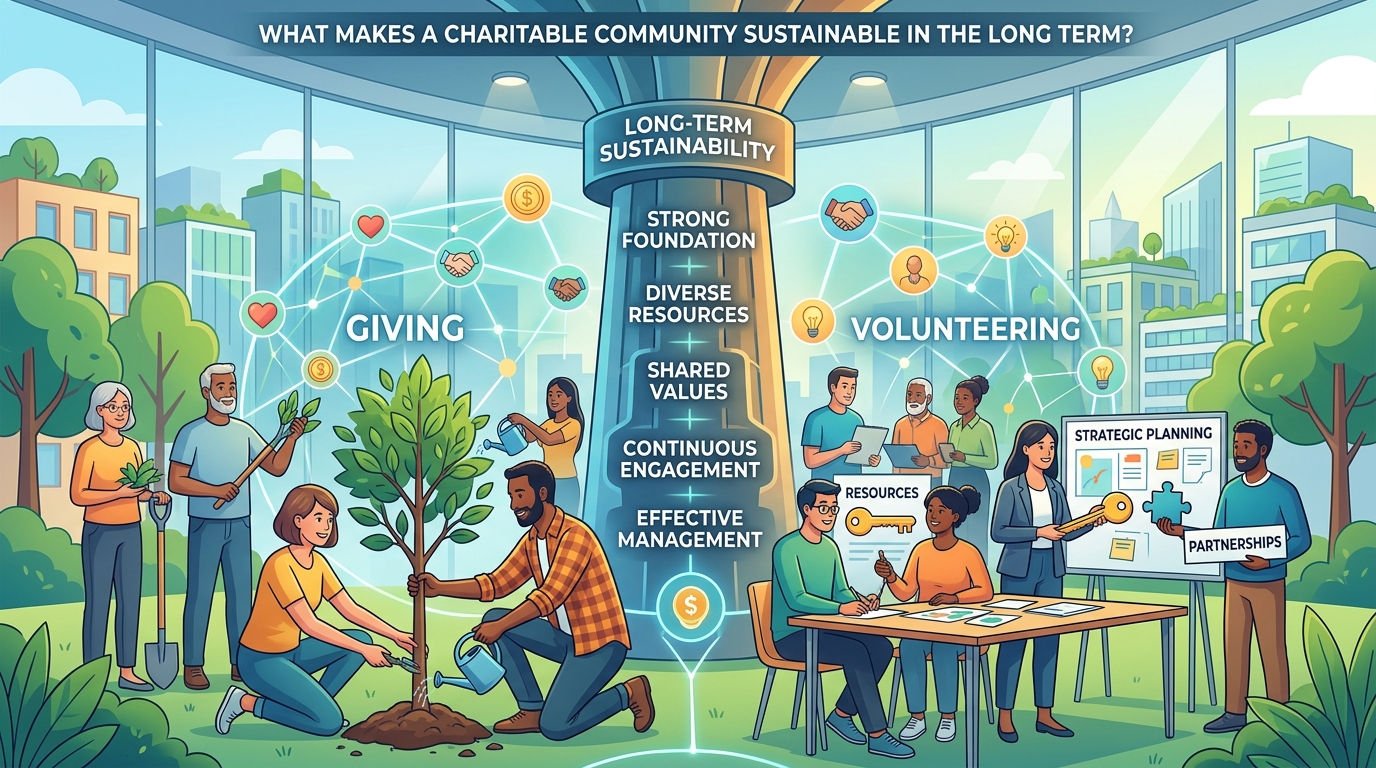
Financial sustainability starts with diversification. Relying on one or two major funding sources puts your entire operation at risk.
Consider these revenue categories:
- Individual donations from recurring monthly donors
- Corporate partnerships with multi-year commitments
- Foundation grants aligned with long-term strategic goals
- Earned income from fee-based services or social enterprises
- Planned giving programs that build future endowment
- Government contracts with renewable terms
No single stream should represent more than 40% of your annual budget. When one source declines, others compensate.
A youth mentoring nonprofit in Seattle learned this lesson the hard way. They received 70% of their funding from a single foundation. When that foundation shifted priorities after five years, the organization nearly closed. They survived by rapidly diversifying, but it took three years to stabilize.
Start building new revenue streams before you need them. Launching a monthly giving program takes 12 to 18 months to generate significant income. Planned giving requires even longer to mature.
Creating Predictable Income Through Recurring Donations
Monthly donors provide the most reliable foundation for sustainability. They give smaller amounts consistently, creating predictable cash flow you can budget around.
A recurring giving program requires:
- Clear value proposition explaining why monthly giving matters
- Simple sign-up process with multiple payment options
- Regular communication showing impact of sustained support
- Appreciation strategy that makes donors feel valued
- Retention plan addressing why donors might cancel
One environmental nonprofit increased their monthly donor base from 200 to 1,400 over three years. This shift provided 35% of their annual budget through predictable monthly income, allowing them to plan programs confidently.
The key was treating monthly donors as partners rather than transactions. They received exclusive updates, invitations to special events, and personal thank-you calls from program staff.
Financial Reserves and Rainy Day Planning
Sustainable nonprofits maintain operating reserves equal to three to six months of expenses. This buffer allows you to weather funding gaps without cutting programs or laying off staff.
Building reserves feels impossible when you’re barely covering current costs. But it’s essential for long-term survival.
“We started setting aside 2% of every donation into our reserve fund. It seemed insignificant at first, but after four years we had enough reserves to continue operations when our largest corporate sponsor ended their partnership unexpectedly. Those reserves bought us time to find replacement funding without panic.” — Director of a homeless services nonprofit
Start small. Even setting aside 1% of revenue creates momentum. As your financial position strengthens, increase the percentage.
Some organizations create restricted reserve funds that can only be accessed under specific circumstances: natural disasters, sudden loss of major funding, or economic recession. This prevents reserves from being spent on non-emergency needs.
Governance Structures That Support Longevity
Your board of directors plays a critical role in sustainability. A strong board provides strategic oversight, fundraising support, and succession planning.
Many nonprofit boards focus solely on immediate operational needs. Sustainable organizations ensure their boards think long-term.
Effective boards include members with diverse skills:
- Financial expertise for budget oversight and investment strategy
- Fundraising experience and donor networks
- Legal knowledge for compliance and risk management
- Program expertise related to your mission
- Community connections to populations you serve
Board terms should be staggered so institutional knowledge doesn’t disappear when multiple members leave simultaneously. A typical structure includes three-year terms with the option to renew once, ensuring regular turnover while maintaining continuity.
Succession Planning for Leadership Transitions
Executive director transitions represent one of the highest-risk moments for nonprofit sustainability. Organizations often lose donors, staff, and momentum during leadership changes.
Planning for succession before it’s needed protects your organization. This doesn’t mean your current leader is leaving soon. It means you’re prepared if they do.
A succession plan includes:
- Documentation of executive director responsibilities and relationships
- Identification of potential internal candidates for leadership development
- Emergency interim leadership plan if departure is sudden
- Board committee responsible for managing transition process
- Financial reserves to support recruitment and onboarding
One arts nonprofit maintained a confidential succession plan that identified three potential interim directors and outlined a six-month transition process. When their executive director accepted a position at a larger organization with only four weeks notice, the board activated their plan smoothly. Donors barely noticed the transition because systems were already in place.
Investing in Staff Development and Retention
Your people are your most valuable asset. High staff turnover destroys institutional knowledge, damages donor relationships, and increases recruitment costs.
Sustainable nonprofits invest in their teams even when budgets are tight. This includes:
- Competitive salaries benchmarked against similar organizations
- Professional development opportunities and training
- Clear career pathways showing advancement possibilities
- Work-life balance policies that prevent burnout
- Benefits packages including retirement contributions
The nonprofit sector often asks staff to accept below-market compensation out of dedication to the mission. This approach isn’t sustainable. Talented people leave for organizations that value their contributions appropriately.
A community development nonprofit increased their average staff tenure from 18 months to 4.5 years by implementing annual salary reviews, creating a professional development budget, and offering flexible work arrangements. Staff retention saved them approximately $85,000 annually in recruitment and training costs.
Measuring Impact for Continuous Improvement
You can’t sustain what you can’t measure. Organizations that track outcomes consistently can demonstrate their value to funders, adjust programs based on evidence, and communicate impact clearly.
Many nonprofits collect data but don’t use it strategically. They report numbers to satisfy grant requirements without analyzing what those numbers reveal about program effectiveness.
| Measurement Approach | Sustainability Impact | Common Mistakes |
|---|---|---|
| Output tracking | Shows activity volume but not outcomes | Counting participants without measuring change |
| Outcome measurement | Demonstrates actual change in beneficiaries | Choosing outcomes too difficult to measure |
| Impact evaluation | Proves long-term community transformation | Requiring resources beyond nonprofit capacity |
| Cost-effectiveness analysis | Shows efficiency of resource use | Ignoring qualitative benefits that matter |
Start with simple, meaningful metrics. A literacy program might track reading level improvements rather than just counting tutoring hours. A food bank might measure food security status changes instead of only pounds distributed.
Share these results with donors, board members, and community partners regularly. Transparent impact reporting builds trust and demonstrates why sustained funding matters.
Technology and Systems That Scale
Sustainable organizations invest in infrastructure that supports growth without proportional cost increases. The right technology systems allow you to serve more people without hiring exponentially more staff.
Essential systems include:
- Donor management software that tracks relationships and automates communications
- Financial management tools providing real-time budget visibility
- Program management platforms measuring outcomes efficiently
- Communication systems reaching stakeholders at scale
- Data security protecting sensitive beneficiary information
A youth services nonprofit serving 300 young people annually wanted to expand to 800. They realized their paper-based intake process and spreadsheet tracking wouldn’t scale. They invested $15,000 in a cloud-based management system that automated reporting, tracked outcomes, and reduced administrative time by 60%. This investment enabled growth without adding three staff positions they initially thought necessary.
Technology investments feel expensive in the moment but pay dividends over years. Calculate the staff time saved, improved data quality, and enhanced donor communication when evaluating these decisions.
Building Community Partnerships That Strengthen Everyone
No nonprofit operates in isolation. Sustainable organizations build strategic partnerships with other nonprofits, government agencies, businesses, and community groups.
Effective partnerships create mutual benefit. You might share office space with another nonprofit, reducing costs for both. Or collaborate on programs that address related issues more comprehensively than either organization could alone.
A homeless services nonprofit partnered with a job training organization and a mental health clinic. Together they created an integrated support model where clients received housing assistance, employment preparation, and counseling simultaneously. This collaboration improved outcomes while reducing duplication of services.
Partnerships also strengthen fundraising. Funders increasingly prefer supporting collaborative efforts that address complex problems holistically rather than funding isolated programs.
Adapting to Changing Community Needs
The problems you address today might look different in ten years. Sustainable nonprofits balance mission consistency with programmatic flexibility.
A nonprofit founded to provide computer training in 1995 recognized that basic computer literacy became less relevant as technology became ubiquitous. They evolved their mission to focus on digital equity and advanced tech skills for underserved populations. The core values remained constant, but programs adapted to changing needs.
Regular community needs assessments help you stay relevant. Talk to the people you serve. Survey community stakeholders. Monitor demographic and economic trends affecting your service area.
This doesn’t mean chasing every new funding opportunity or abandoning your mission. It means ensuring your programs address current realities rather than yesterday’s problems.
Financial Management Beyond Basic Bookkeeping
Sustainable nonprofits treat financial management as strategic rather than purely administrative. This means:
- Multi-year budget projections that inform strategic planning
- Cash flow forecasting preventing unexpected shortfalls
- Program-level cost analysis showing true expense of each service
- Investment policies for reserve funds and endowments
- Regular financial reporting to board and leadership team
Many nonprofit leaders avoid financial details, viewing them as the treasurer’s responsibility. But understanding your financial position is essential for sustainable decision-making.
A social services nonprofit discovered through cost analysis that one of their programs cost $47 per client served while generating only $22 in revenue and in-kind support. This program required $180,000 in annual subsidy from other revenue sources. Armed with this information, they redesigned the program to reduce costs and sought targeted funding to cover the gap. Without this analysis, they were unknowingly subsidizing an unsustainable program.
Transparent Communication with All Stakeholders
Trust forms the foundation of sustainability. Donors, board members, staff, volunteers, and beneficiaries all need to trust that your organization operates with integrity and effectiveness.
Transparency builds trust. This includes:
- Annual reports showing financial health and program outcomes
- Regular updates on challenges as well as successes
- Clear communication about how donations are used
- Honest assessment of programs that didn’t work as planned
- Accessible financial statements and IRS Form 990
When you make a mistake or face a setback, address it directly rather than hiding it. Stakeholders respect honesty and are more likely to support organizations that acknowledge challenges while showing how they’re addressing them.
A disaster relief nonprofit faced criticism after a slow response to a major flood. Instead of deflecting, they published a detailed analysis of what went wrong, the systemic issues that caused delays, and specific changes they implemented to improve future responses. This transparency actually strengthened donor confidence because it demonstrated organizational learning and accountability.
Creating a Culture of Sustainability Throughout Your Organization
Sustainability isn’t just about finances and governance. It’s a mindset that permeates your entire organization.
Staff at all levels should understand how their work contributes to long-term viability. The program coordinator who tracks outcomes carefully provides data that wins grants. The development associate who thanks donors promptly improves retention rates. The finance manager who forecasts cash flow prevents crises.
Make sustainability a regular topic in staff meetings and board discussions. Celebrate milestones like reaching reserve fund goals or achieving donor retention targets.
One environmental nonprofit created a “sustainability dashboard” visible to all staff showing key indicators: months of operating reserves, donor retention rate, program cost coverage, and staff tenure. This transparency helped everyone understand organizational health and their role in maintaining it.
Planning for Growth Without Losing Your Soul
Many nonprofits fear that focusing on sustainability means becoming too corporate or losing sight of mission. This is a false choice.
Sustainable practices enable you to serve your mission more effectively over time. Strong financial management means more resources for programs, not less. Efficient systems free staff to focus on beneficiaries rather than administrative chaos. Diversified revenue reduces desperation that might lead to mission drift.
Growth should be intentional and mission-aligned. Just because you could expand doesn’t mean you should. Some organizations maximize impact by going deep in one community rather than spreading thin across many.
A literacy nonprofit turned down several expansion opportunities that would have tripled their budget but required serving populations outside their expertise. Instead, they deepened their work in their target community, achieving better outcomes and building expertise that attracted mission-aligned funding.
Legal Compliance and Risk Management
Sustainable organizations protect themselves through proper legal compliance and risk management. This isn’t exciting work, but it’s essential.
Key areas include:
- Annual tax filing and maintaining 501(c)(3) status
- Employment law compliance including proper classification of workers
- Insurance coverage for liability, directors and officers, and property
- Data privacy policies protecting beneficiary information
- Contracts with clear terms for partnerships and vendors
One nonprofit lost their tax-exempt status after failing to file their Form 990 for three consecutive years. Reinstating the status took 18 months and significant legal fees. During that time, they couldn’t receive tax-deductible donations, causing their fundraising to plummet.
Assign someone responsibility for compliance tracking. Create a calendar of filing deadlines, insurance renewals, and required reviews. This prevents small oversights from becoming organizational crises.
Learning from Organizations That Have Lasted Decades
The nonprofits celebrating 50 or 100-year anniversaries share common characteristics. They adapted to changing times while maintaining core values. They built financial reserves during good years to weather difficult periods. They invested in leadership development ensuring smooth transitions.
Study organizations in your sector that have achieved longevity. What practices enabled their sustainability? How did they navigate major challenges?
A homeless services nonprofit founded in 1978 survived multiple recessions, funding cuts, and leadership changes. Their secret? They maintained an endowment that grew to cover 20% of annual operating costs, providing stability during funding gaps. They also created a leadership development program ensuring qualified candidates were ready when executive transitions occurred.
You don’t need to replicate their exact approach, but understanding how others achieved sustainability provides valuable lessons.
Making Sustainability a Strategic Priority Starting Now
Building nonprofit sustainability long term doesn’t happen accidentally. It requires intentional decisions, consistent effort, and sometimes difficult trade-offs.
Start by assessing your current position honestly. How many months could you operate if your largest funder disappeared tomorrow? Do you have succession plans for key leadership? Are your revenue sources diversified or concentrated?
Identify the three most critical sustainability gaps in your organization. Maybe you need to build reserves, diversify funding, or invest in technology infrastructure. Focus on those priorities rather than trying to address everything simultaneously.
Create a multi-year sustainability plan with specific milestones. Share it with your board and staff. Review progress quarterly and adjust as needed.
Sustainability isn’t a destination you reach and then forget about. It’s an ongoing practice of building resilience, measuring what matters, investing in your people and systems, and maintaining the financial health that allows you to fulfill your mission year after year.
The communities you serve need you to be here not just today but ten years from now. The work you do matters too much to risk on reactive planning and financial fragility. Building sustainability takes time and discipline, but it’s the foundation that allows your organization to create lasting change in the world.