 By chloe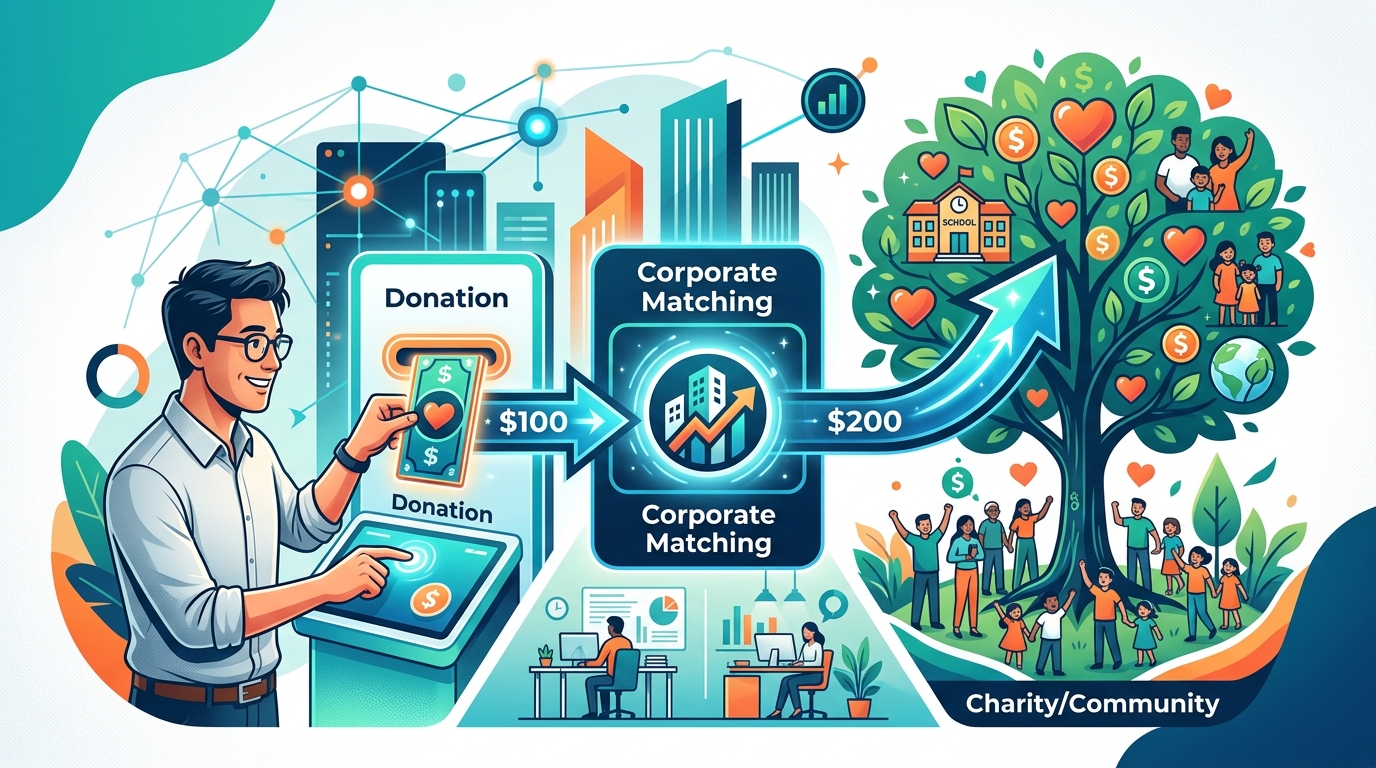
Thousands of donors give to charity each year without realizing their employer will match their contribution dollar for dollar. That’s free money left on the table, and it happens more often than you’d think.
Corporate matching gift programs allow companies to financially match employee donations to [eligible nonprofits](https://www.irs.gov/charities-non-profits/charitable-organizations), often doubling or tripling charitable impact. These programs represent billions in unclaimed donations annually. Understanding eligibility requirements, submission processes, and promotion strategies helps nonprofits and donors maximize this overlooked funding source while strengthening [corporate social responsibility](https://en.wikipedia.org/wiki/Corporate_social_responsibility) initiatives and employee engagement in meaningful causes.
Understanding how matching gifts actually work
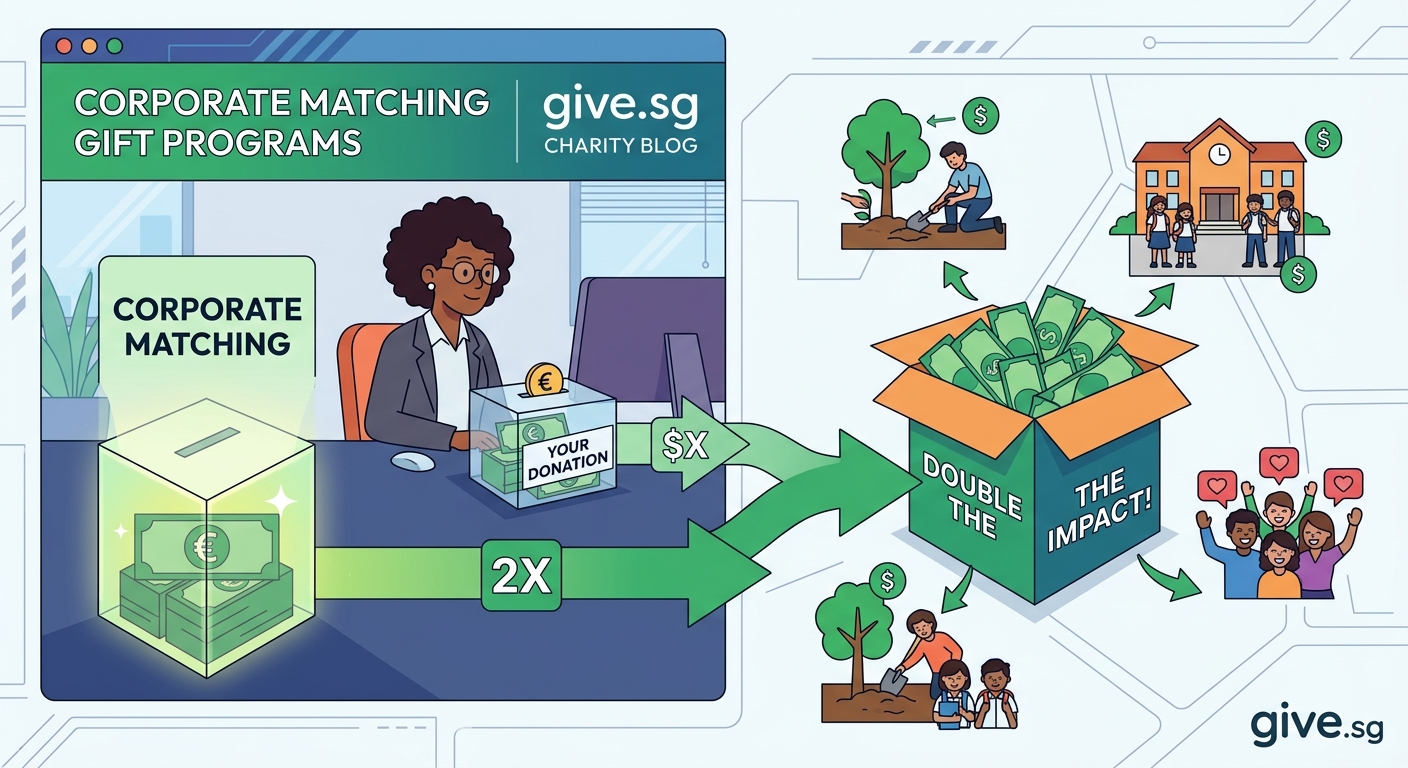
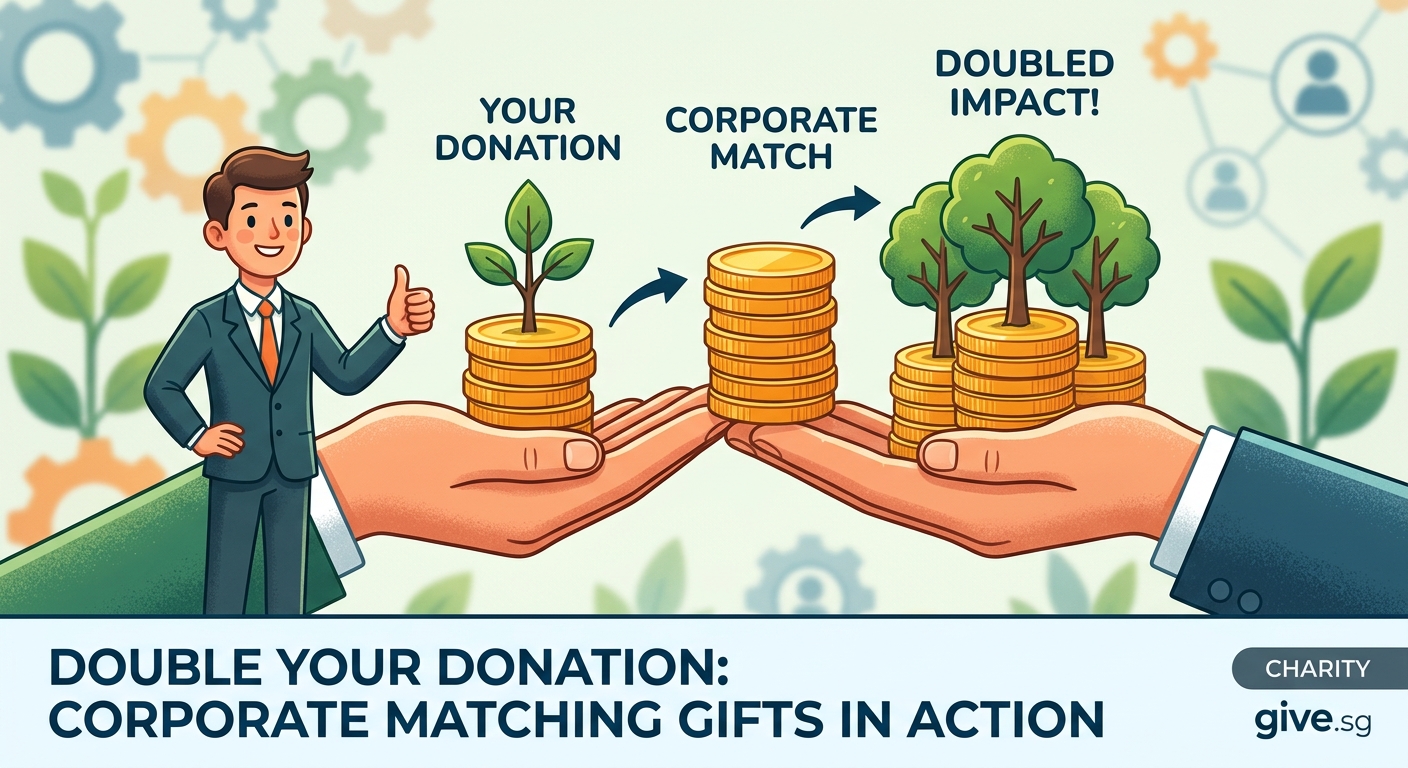
A corporate matching gift program is straightforward. An employee makes a personal donation to a nonprofit. The employer then contributes an equal amount to the same organization.
Some companies match at different ratios. A 2:1 match means the company gives two dollars for every dollar the employee donates. A few generous employers even offer 3:1 matches.
The process typically starts after the employee makes their donation. They submit a matching gift request through their company’s designated platform or HR department. The nonprofit confirms receipt of the original donation. The company then processes the match and sends a separate check or electronic transfer.
Most programs set minimum and maximum amounts. An employer might match donations between $25 and $10,000 per employee per year. These limits vary widely by company.
Matching gifts aren’t limited to cash donations either. Many companies now match volunteer hours, converting time into monetary contributions. An employee volunteers for four hours, and the company donates $100 to that nonprofit.
Companies leading the way in matching programs
Major corporations have established some of the most generous matching gift programs in the world. Understanding which companies offer these benefits helps nonprofits target their outreach and helps donors know what to ask about.
Technology companies often lead with impressive ratios:
- Microsoft matches employee donations up to $15,000 annually
- Google offers dollar-for-dollar matching up to $10,000 per employee
- Apple matches both donations and volunteer time at competitive rates
- Intel provides 2:1 matches for higher education donations
Financial institutions maintain robust programs:
- Bank of America matches up to $5,000 per employee yearly
- Wells Fargo supports education-focused nonprofits with enhanced matching
- JPMorgan Chase emphasizes community development organizations
- Goldman Sachs offers generous limits for qualifying charities
Retail and consumer goods companies participate actively:
- The Home Depot Foundation matches employee giving
- Starbucks supports causes aligned with company values
- Nike emphasizes youth sports and education programs
- Coca-Cola focuses on environmental and community initiatives
Thousands of smaller companies also offer matching programs. The key is asking. Many employees never check whether their employer participates.
Which nonprofits qualify for matching gifts
Not every organization qualifies for every matching program. Companies set specific eligibility criteria based on their values and legal requirements.
501(c)(3) status forms the foundation. Nearly all corporate matching programs require nonprofits to hold this IRS designation. Organizations must provide their tax ID number when confirming donations.
Educational institutions receive the broadest support. Universities, colleges, and K-12 schools qualify for most programs. Some companies even offer enhanced matching ratios for their alma maters.
Health and human services organizations rank high on eligibility lists. Hospitals, medical research foundations, food banks, and homeless shelters typically qualify without issue.
Arts and cultural organizations find support from many corporate programs. Museums, theaters, symphonies, and public broadcasting stations often meet eligibility requirements.
Environmental groups qualify with most programs, though some companies exclude advocacy organizations that lobby for specific legislation.
Religious organizations face mixed acceptance. Some companies match gifts to churches, synagogues, and mosques. Others exclude religious institutions from their programs entirely.
Political organizations and candidates are universally excluded. Matching programs cannot support political campaigns or partisan advocacy groups due to tax regulations.
The biggest mistake nonprofits make is assuming they don’t qualify. Always check. Many organizations miss out on substantial funding because they never asked their donors about employer matching.
Breaking down the submission process
The matching gift process involves three parties: the donor, the nonprofit, and the employer. Each plays a specific role.
Step 1: The donor makes their contribution
Give to your chosen nonprofit through any accepted method. Keep your receipt. You’ll need proof of donation for the matching request.
Step 2: The donor initiates the match request
Log into your employer’s matching gift portal or contact HR. Most companies use third-party platforms like Benevity, YourCause, or Cybergrants. Enter the nonprofit’s information and donation details.
Step 3: The nonprofit receives a confirmation request
The company sends an email or form to the nonprofit asking them to verify the donation. Response time matters here. Delays can cause matches to expire.
Step 4: The nonprofit confirms the gift
Organizations should respond within a few business days. Confirmation typically requires entering the donation amount, date, and donor information into the company’s system.
Step 5: The company processes the match
After verification, the employer reviews and approves the match. Processing times range from two weeks to three months depending on the company.
Step 6: The nonprofit receives the matching funds
The company sends payment directly to the nonprofit. This arrives as a separate transaction from the original donation, often with documentation explaining the match.
Common roadblocks and how to avoid them
Matching gift programs come with frustrating obstacles. Knowing these ahead of time saves headaches.
| Challenge | Why it happens | Solution |
|---|---|---|
| Donor doesn’t know program exists | Employers communicate poorly | Nonprofits should educate donors about matching |
| Nonprofit isn’t in company database | Database outdated or incomplete | Register organization proactively with major platforms |
| Confirmation emails go to spam | Filtering issues | Check spam folders regularly, whitelist matching platforms |
| Deadlines expire | Donors wait too long to submit | Submit requests within 30 days of donation |
| Nonprofit name doesn’t match exactly | Legal name differs from common name | Use exact legal name on all documentation |
| Volunteer hour tracking incomplete | No formal logging system | Implement simple volunteer hour tracking |
Timing creates one of the biggest problems. Many matching programs require submission within 60 or 90 days of the original donation. A donor who gives in January but waits until April to request the match may find their window closed.
Incomplete information kills matches too. Missing donation dates, incorrect amounts, or wrong nonprofit names cause rejections. Double-checking details before submission prevents these issues.
Strategies for nonprofits to boost matching revenue
Smart nonprofits don’t wait for matching gifts to appear. They actively promote and facilitate the process.
Make matching gift information visible everywhere. Add a matching gift search tool to your donation confirmation page. Include reminders in thank-you emails. Feature matching information prominently on your website.
Segment your donor database by employer. Identify which supporters work for companies with generous matching programs. Target these donors with specific outreach about their matching opportunities.
Respond to confirmation requests immediately. Set up alerts so matching gift confirmations never sit unnoticed. Fast responses improve completion rates significantly.
Register your organization with major matching platforms ahead of time. Don’t wait for a donor to trigger the process. Proactive registration in databases like Benevity and YourCause speeds up future matches.
Train your development team on matching gift best practices. Everyone who processes donations should understand how matching works and what information to communicate to donors.
Highlight matching success in donor communications. Share stories about how matching gifts doubled the impact of specific campaigns. This encourages other donors to check their eligibility.
Create a dedicated matching gift page on your website. Explain the process in simple terms. Include a search tool where donors can look up their company. Provide step-by-step instructions with screenshots.
Follow up with donors who work at matching companies. If someone from Microsoft makes a $500 donation, send a personalized email reminding them about Microsoft’s matching program and offering to help with the submission.
How donors can maximize their charitable impact
Individual donors hold more power than they realize. A few simple actions can double or triple your giving without spending more money.
Start by checking whether your employer offers a matching program. Ask your HR department directly or search your company name in a matching gift database. Many employers list this information in benefits portals.
Read your company’s matching guidelines carefully. Note the minimum and maximum amounts, eligible organization types, and submission deadlines. Some programs match donations made by retirees or spouses too.
Keep organized records of all charitable giving. Save receipts, confirmation emails, and donation dates. You’ll need these details when submitting match requests.
Submit matching requests promptly after making donations. Don’t wait until year end. Processing takes time, and you don’t want to miss deadlines.
Consider timing large donations strategically. If your company has an annual matching limit, you might split a major gift across two calendar years to maximize the total match.
Ask about volunteer grant programs separately. These convert volunteer hours into corporate donations. Track your volunteer time and submit those hours for matching too.
Encourage the nonprofits you support to make matching easy. If an organization doesn’t promote their matching gift process, suggest they add information to their website and donation receipts.
The numbers behind unclaimed matching funds
The scale of missed matching opportunities is staggering. Studies estimate that between $4 billion and $7 billion in matching gift funds go unclaimed each year.
Why does this happen? Three main reasons stand out.
Lack of awareness tops the list. Roughly 78% of donors don’t know if their employer offers a matching program. Companies often bury this information in benefits documentation that employees rarely read.
Process friction discourages participation. Even aware donors find the submission process confusing or time-consuming. Multiple steps, unfamiliar platforms, and unclear instructions create abandonment.
Nonprofit silence compounds the problem. Many organizations never mention matching gifts in their fundraising materials. They miss the chance to guide donors through the process.
The average matching gift size hovers around $500. That’s substantial money for nonprofits operating on tight budgets. A small organization receiving 100 matched donations annually could gain an extra $50,000 in funding.
Completion rates tell an interesting story. When nonprofits actively promote matching and assist with submissions, completion rates jump from around 30% to over 70%. Simple interventions create massive results.
Building a matching gift culture in your organization
Whether you run a nonprofit or manage corporate giving, creating a culture around matching maximizes participation and impact.
For nonprofits, integration is everything. Matching shouldn’t be an afterthought mentioned once a year. Build it into every touchpoint with donors.
Add matching reminders to donation receipts automatically. Include a simple message: “Does your employer match charitable gifts? You could double your impact today.”
Train board members and volunteers to talk about matching. When they ask friends to donate, they should also mention checking for employer matches.
Celebrate matching success publicly. Share statistics in annual reports. Thank companies that matched employee gifts. Recognition encourages continued participation.
For companies, clarity and simplicity drive engagement. Employees won’t use programs they don’t understand or that feel burdensome.
Communicate matching benefits during onboarding. Make it part of the standard benefits presentation new hires receive.
Send periodic reminders throughout the year. Don’t just mention matching during the December giving season. Regular communication keeps the program top of mind.
Simplify the submission platform. The easier the process, the higher the participation. Consider auto-matching for donations made through payroll deduction.
Share impact stories internally. Show employees how their matched donations supported specific causes or projects. Connection to impact motivates continued giving.
Emerging trends reshaping matching programs
Corporate matching continues to change. New approaches are making these programs more flexible and inclusive.
Instant matching is gaining traction. Instead of the traditional submit-and-wait process, some platforms now trigger matches automatically when employees donate through integrated systems. The donor sees the match happen in real time.
Expanded eligibility opens doors for more organizations. Companies increasingly match donations to DAFs (donor-advised funds), international charities, and even crowdfunding campaigns for specific causes.
Volunteer grants are growing rapidly. Converting volunteer hours into monetary donations appeals to employees who give time rather than money. Standard rates range from $10 to $25 per hour volunteered.
Matching during crises has become more common. When disasters strike, companies often suspend normal limits and match employee disaster relief donations without caps.
Simplified verification reduces friction. Some companies now accept donation receipts directly from employees rather than requiring nonprofit confirmation. This speeds up processing significantly.
Year-round campaigns replace traditional giving seasons. While December still sees spikes, companies now promote matching throughout the year, connecting programs to various awareness months and causes.
Enhanced ratios for strategic causes let companies emphasize specific priorities. A company might offer 1:1 matching generally but 2:1 for environmental organizations or education initiatives.
Making every donation count
Corporate matching gift programs represent one of the most underutilized resources in philanthropy. The money exists. The mechanisms work. The only missing piece is awareness and action.
Donors should ask about matching every time they give. Nonprofits should promote matching as aggressively as they promote the initial donation. Companies should make their programs as visible and accessible as possible.
The impact is real. A $100 donation becomes $200. A $1,000 gift becomes $2,000. Multiply that across thousands of donors and millions of transactions, and you’re talking about transformational funding for causes that matter.
Check if your employer offers matching today. If you run a nonprofit, add matching information to your website this week. If you manage corporate giving, review your program’s accessibility and promotion. Small steps unlock enormous potential.