 By chloe
You want your donation to make a real difference. But before you click that donate button, you’re probably wondering how much of your money actually reaches the people who need it. The answer isn’t always straightforward, and it varies wildly from one organization to another.
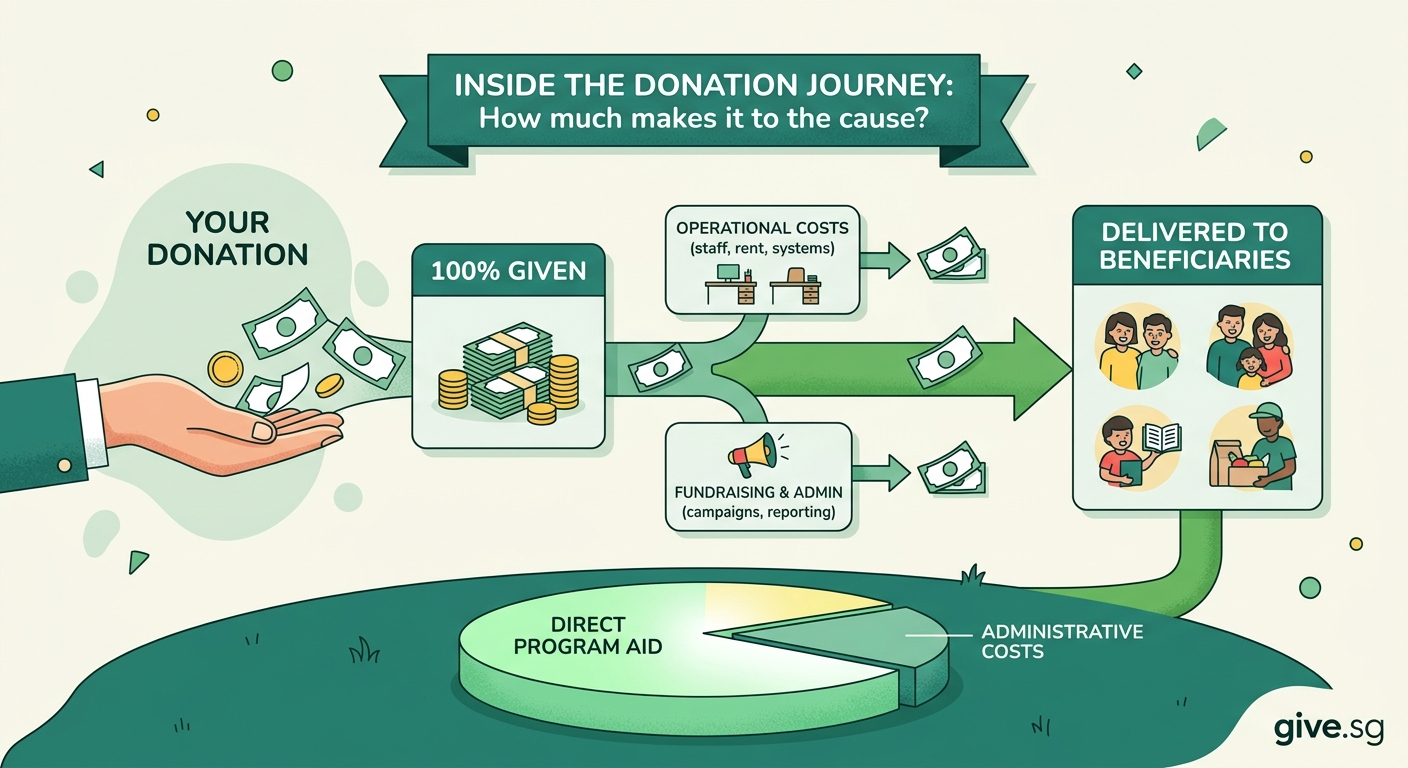
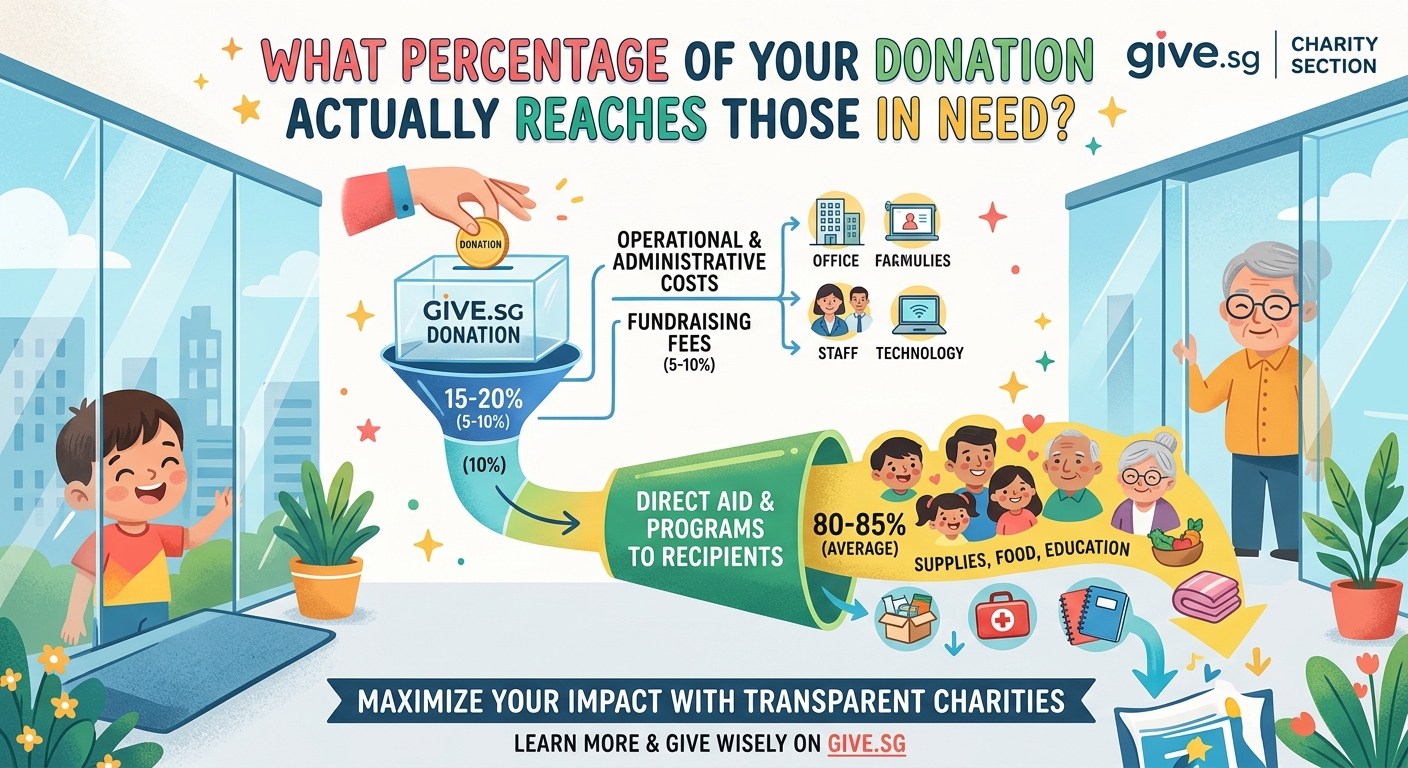
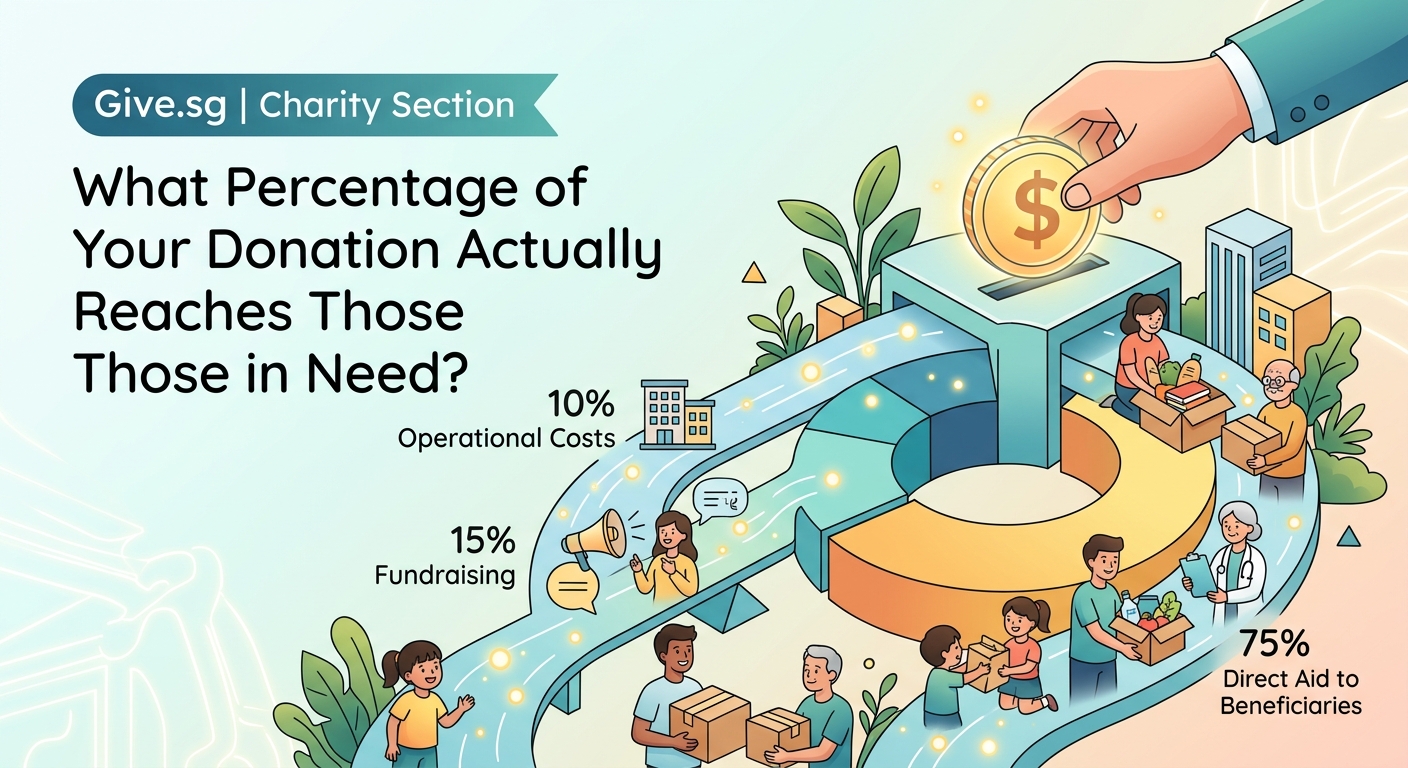
Most effective charities direct 75% to 90% of donations toward programs, with 10% to 25% covering overhead and fundraising. However, percentages alone don’t tell the full story. A charity spending 30% on overhead might achieve greater impact than one spending only 10% if those investments build sustainable systems. Focus on outcomes, transparency, and program effectiveness rather than overhead ratios alone when choosing where to give.
Understanding charity overhead and program spending
Every nonprofit has expenses beyond direct program delivery. Staff salaries, office rent, accounting services, and technology infrastructure all cost money. These operational costs are often called overhead or administrative expenses.
Program spending refers to money that goes directly toward the charitable mission. For a food bank, that’s purchasing and distributing meals. For an education charity, it’s funding teachers and learning materials.
The percentage split between these categories matters, but not in the way most donors think.
The overhead myth that misleads donors
Many people believe the best charities spend 90% or more on programs and less than 10% on overhead. This sounds logical. More money toward programs means more impact, right?
Not necessarily.
A charity that invests in skilled staff, robust financial systems, and strategic planning often delivers better results than one that starves itself of operational resources. Underpaying employees leads to high turnover. Outdated technology creates inefficiencies. Weak financial controls invite fraud.
The obsession with low overhead has actually hurt the nonprofit sector. Organizations feel pressured to underreport administrative costs or avoid necessary investments in infrastructure.
Typical overhead percentages across different charity types
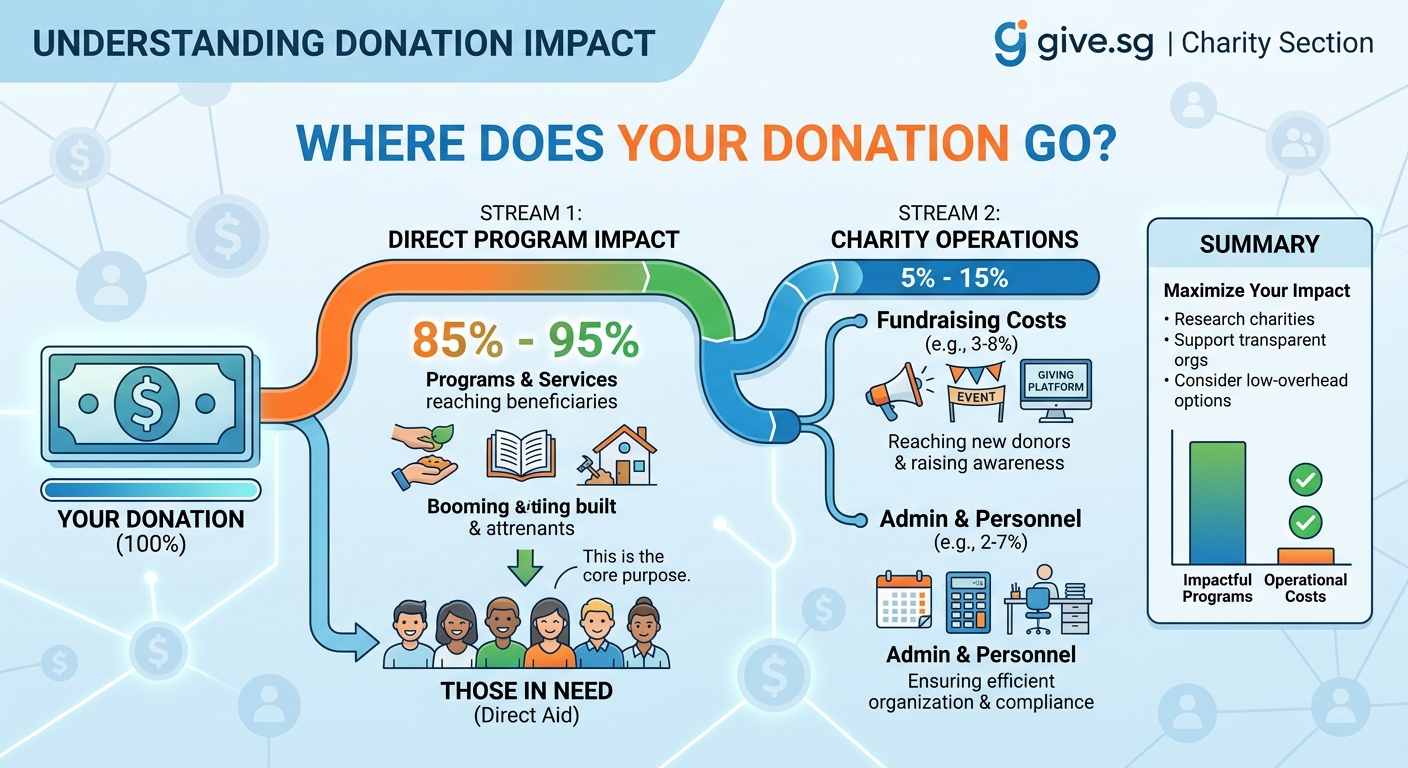
Different types of charities have different cost structures. Understanding these patterns helps you set realistic expectations.
| Charity Type | Typical Program % | Typical Overhead % | Why It Varies |
|---|---|---|---|
| Food banks | 85-95% | 5-15% | Direct distribution of goods requires minimal admin |
| International relief | 70-85% | 15-30% | Complex logistics, multiple countries, security costs |
| Medical research | 65-80% | 20-35% | Lab equipment, specialized staff, regulatory compliance |
| Advocacy groups | 60-75% | 25-40% | Policy work, communications, coalition building |
| Community foundations | 75-85% | 15-25% | Grant management, donor services, investment oversight |
These ranges represent well-run organizations. Numbers outside these ranges deserve closer examination, but they’re not automatic red flags.
What counts as program spending
Charities have some flexibility in how they categorize expenses. A staff member who splits time between program delivery and fundraising might have their salary allocated across multiple categories.
This creates gray areas. Is a social media post about the charity’s work a program expense or marketing? What about training for volunteers who support programs?
Different accounting methods can make identical organizations look very different on paper. That’s why you need to look beyond the percentages.
How to evaluate charity efficiency the right way
Smart donors use multiple metrics to assess where their money will do the most good. Here’s a practical framework.
1. Start with the program expense ratio
Check what percentage goes to programs. You can find this information on charity evaluator websites or in the organization’s Form 990 tax filing.
A healthy range for most charities is 75% to 85% toward programs. Below 65% deserves scrutiny. Above 90% might indicate underinvestment in necessary infrastructure.
2. Look at fundraising efficiency
How much does the charity spend to raise each dollar? Effective organizations typically spend $0.05 to $0.20 per dollar raised.
New organizations or those investing in donor acquisition might spend more temporarily. Established charities with loyal donor bases should have lower fundraising costs.
3. Examine financial health indicators
- Working capital: Does the charity have enough reserves to handle unexpected challenges?
- Revenue growth: Is funding stable or declining?
- Donor concentration: Does one funder provide most of the budget, creating vulnerability?
4. Assess actual outcomes
This is the most important step and the hardest to measure. What results does the charity achieve?
A homeless shelter should track how many people find permanent housing, not just how many meals it serves. A literacy program should measure reading improvement, not just attendance numbers.
The best charities measure their impact rigorously and adjust their programs based on evidence. They’re transparent about both successes and failures. Look for organizations that can articulate specific, measurable outcomes and show you the data.
Red flags that should make you pause
Certain warning signs indicate a charity might not use your donation effectively.
- Excessive CEO compensation: While nonprofit leaders deserve fair pay, salaries far above sector norms suggest misplaced priorities.
- Lack of transparency: Organizations that don’t readily share financial information or program details have something to hide.
- High turnover: Constant staff changes indicate internal problems.
- Vague mission statements: Charities that can’t clearly explain what they do probably aren’t doing it well.
- Aggressive fundraising tactics: Persistent phone calls, emotional manipulation, or misleading appeals signal desperation or poor ethics.
- No independent board: The board should include members with no financial relationship to the organization.
Where to research charity performance
You don’t need to become an accountant to make informed giving decisions. Several trusted resources do the heavy lifting for you.
Charity Navigator rates nonprofits on financial health, accountability, and transparency. Their four-star system provides an easy starting point.
GiveWell conducts deep analysis of charities working on global health and poverty. They focus intensely on cost-effectiveness and evidence of impact.
CharityWatch assigns letter grades based on financial efficiency and governance. They’re particularly tough on overhead ratios.
Guidestar provides access to Form 990 tax documents and other financial data. It’s more raw information and less analysis.
Each evaluator uses different methodologies. Check multiple sources for a complete picture.
Common mistakes donors make
Avoid these pitfalls when evaluating where to give.
-
Choosing based solely on overhead percentages: This oversimplifies a complex decision and can lead you toward less effective organizations.
-
Ignoring smaller, local charities: National watchdog groups focus on larger organizations. Your local food pantry might be incredibly effective but lack ratings.
-
Falling for emotional appeals: Heart-wrenching stories matter, but they shouldn’t replace due diligence.
-
Spreading donations too thin: Giving $10 each to twenty charities generates more administrative work than impact. Concentrate your giving.
-
Neglecting unrestricted gifts: Donations for specific programs limit flexibility. General operating support lets charities use funds where they’re needed most.
-
Assuming newer is better: Established organizations have proven track records. Startups have higher failure rates.
Making your donation go further
Beyond choosing efficient charities, you can maximize your impact through smart giving strategies.
Give unrestricted funds. These gifts provide the flexibility charities need to respond to changing circumstances and invest in infrastructure.
Consider multi-year commitments. Predictable funding lets organizations plan strategically rather than lurching from crisis to crisis.
Match your values to charity strengths. If you care about innovation, support organizations trying new approaches. If you value scale, give to proven programs serving large populations.
Time your gifts strategically. Year-end donations help charities meet budget goals, but giving earlier in the year provides cash flow when they need it most.
Leverage employer matching. Many companies double employee donations. That’s an instant 100% return on your contribution.
Donate appreciated assets. Giving stocks, real estate, or other assets that have increased in value saves you capital gains taxes while providing full deductions.
Questions to ask before you donate
Use these conversation starters when contacting a charity directly.
- What specific outcomes do you track, and what were your results last year?
- How do you measure success beyond counting participants or dollars distributed?
- What percentage of your budget comes from individual donors versus grants or government funding?
- Can you share examples of how you’ve adapted programs based on evidence?
- What are your organization’s biggest challenges right now?
- How do you ensure accountability and prevent fraud?
Strong organizations welcome these questions. Evasive answers or irritation at your inquiry suggests problems.
When higher overhead makes sense
Some situations justify above-average administrative spending.
Building new programs requires upfront investment in planning, staffing, and systems before serving anyone.
Operating in challenging environments increases costs. Delivering aid in conflict zones or remote areas demands security, logistics, and coordination expenses.
Advocating for policy change involves research, lobbying, coalition building, and communications work that doesn’t fit neatly into “program” categories but creates systemic impact.
Investing in technology can dramatically improve efficiency over time, but requires initial spending that temporarily raises overhead ratios.
Conducting rigorous evaluation costs money but ensures programs actually work. This spending pays dividends through improved effectiveness.
Context matters. A charity spending 30% on overhead while pioneering solutions to complex problems might deliver better results than one spending 10% on overhead while running inefficient programs.
Your role as a thoughtful donor
You have more power than you realize. Your donation decisions shape which organizations thrive and which struggle.
By looking beyond simplistic overhead ratios and asking tough questions about impact, you push the entire sector toward greater effectiveness. You reward transparency and evidence-based practice.
Your thoughtful approach also protects you from wasting money on ineffective or fraudulent organizations. The few minutes you spend researching can mean the difference between changing lives and funding administrative bloat.
Start with one charity you care about. Look up their financials. Read their impact reports. Ask questions. Then make your decision based on the full picture, not just one percentage.
The people and causes you care about deserve donors who think critically about where money will do the most good. That’s exactly what you’re becoming.