 By chloe
Imagine putting on a headset and suddenly standing in a refugee camp, hearing children’s voices around you, feeling the heat of the sun on makeshift tents. You look down and see dusty ground where a family sleeps. This is virtual reality’s promise: to transport us into someone else’s lived experience and fundamentally change how we feel about their struggles.
Virtual reality can create empathy by immersing users in perspective-taking experiences, but the effect depends heavily on design quality, narrative authenticity, and user engagement. Research shows mixed results: some studies demonstrate lasting attitude changes while others find only temporary emotional responses. Nonprofits must balance technological investment with proven storytelling methods to maximize donor connection and avoid empathy fatigue.
What the Research Actually Says About VR and Empathy
Scientists have been testing whether virtual reality can genuinely shift how we feel about others for over a decade now. The results paint a more complex picture than early enthusiasts predicted.
Stanford’s Virtual Human Interaction Lab conducted groundbreaking studies where participants experienced homelessness through VR. Compared to reading text or watching videos about the same topic, people who used VR showed more positive attitudes toward homeless individuals two months later. They also signed petitions supporting affordable housing at higher rates.
But other research tells a different story. A 2023 study published in a peer-reviewed psychology journal found that while VR experiences produced immediate emotional responses, these feelings didn’t translate into sustained behavioral changes. Participants felt moved during the experience but donated at similar rates to control groups who watched traditional documentary footage.
The difference often comes down to design. VR experiences that let users make meaningful choices, interact with virtual characters, and see consequences of their actions tend to produce stronger empathy effects than passive 360-degree videos labeled as “VR.”
How Virtual Reality Builds Emotional Connection
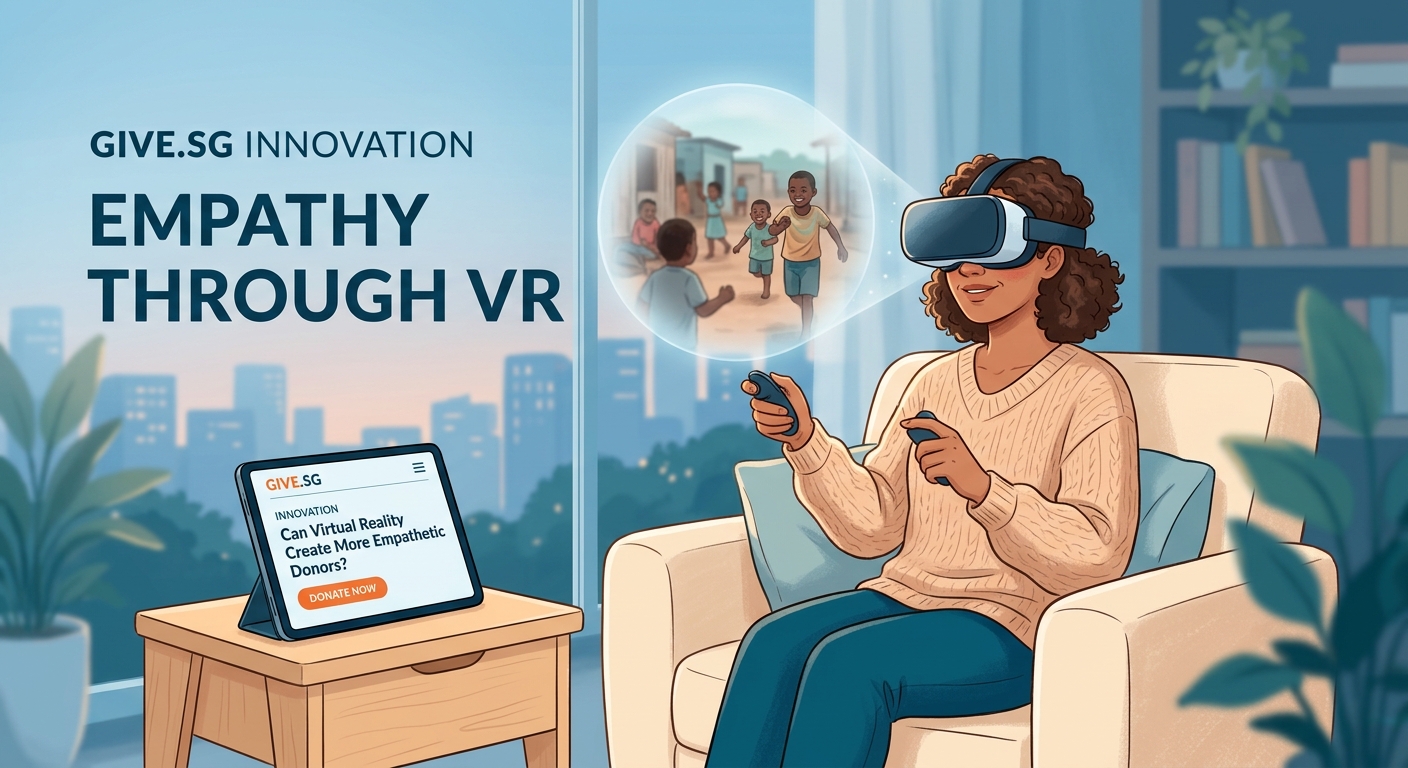
The mechanism behind VR’s empathy potential lies in embodied cognition. When you wear a headset, your brain processes the virtual environment as if it’s real. Your heart rate changes. Your palms might sweat. This physical response creates what researchers call “presence,” the feeling of actually being somewhere else.
Traditional media asks you to imagine someone else’s situation. VR places you inside it. You’re not watching a refugee’s story. You’re standing in their shoes, literally seeing the world from their eye level, hearing sounds in spatial audio that mimics real-world acoustics.
This matters for nonprofits because emotional distance is one of the biggest barriers to giving. Donors often intellectually understand that people suffer, but that knowledge doesn’t always trigger the visceral response that motivates action. VR can bridge that gap.
Consider these documented effects:
- Increased perspective-taking ability that persists weeks after the experience
- Stronger emotional recall compared to reading or watching videos
- Greater willingness to help the specific population featured in the VR experience
- Reduced implicit bias in some carefully designed interventions
- Higher engagement time compared to traditional fundraising materials
However, the technology also carries risks. Some users experience what researchers call “empathy collapse,” where the intensity of the experience becomes overwhelming and they emotionally shut down rather than opening up.
Practical Steps for Nonprofits Considering VR
If your organization wants to test virtual reality for donor engagement, follow this implementation framework:
-
Start with your story, not the technology. Identify which aspect of your mission genuinely benefits from immersion. Not every cause needs VR. If your goal is simply to show statistics or explain a process, traditional media works fine and costs far less.
-
Partner with experienced VR storytellers who understand nonprofit work. The best VR experiences for empathy building come from collaborations between technologists and people who deeply know the community being represented. Avoid extractive storytelling where outside creators parachute in, film, and leave.
-
Test with small groups before major investment. Create a minimum viable experience, even if it’s just high-quality 360-degree video rather than full interactive VR. Measure not just emotional responses but actual behavior changes like volunteer signups or donation increases.
-
Build in reflection time after the experience. Research shows that guided discussion following VR exposure significantly strengthens empathy effects. Don’t just hand someone a headset and walk away.
-
Plan for accessibility and scale. VR headsets remain expensive and not everyone can use them comfortably. Consider how the experience fits into your broader engagement strategy rather than replacing proven methods.
The Design Elements That Actually Matter
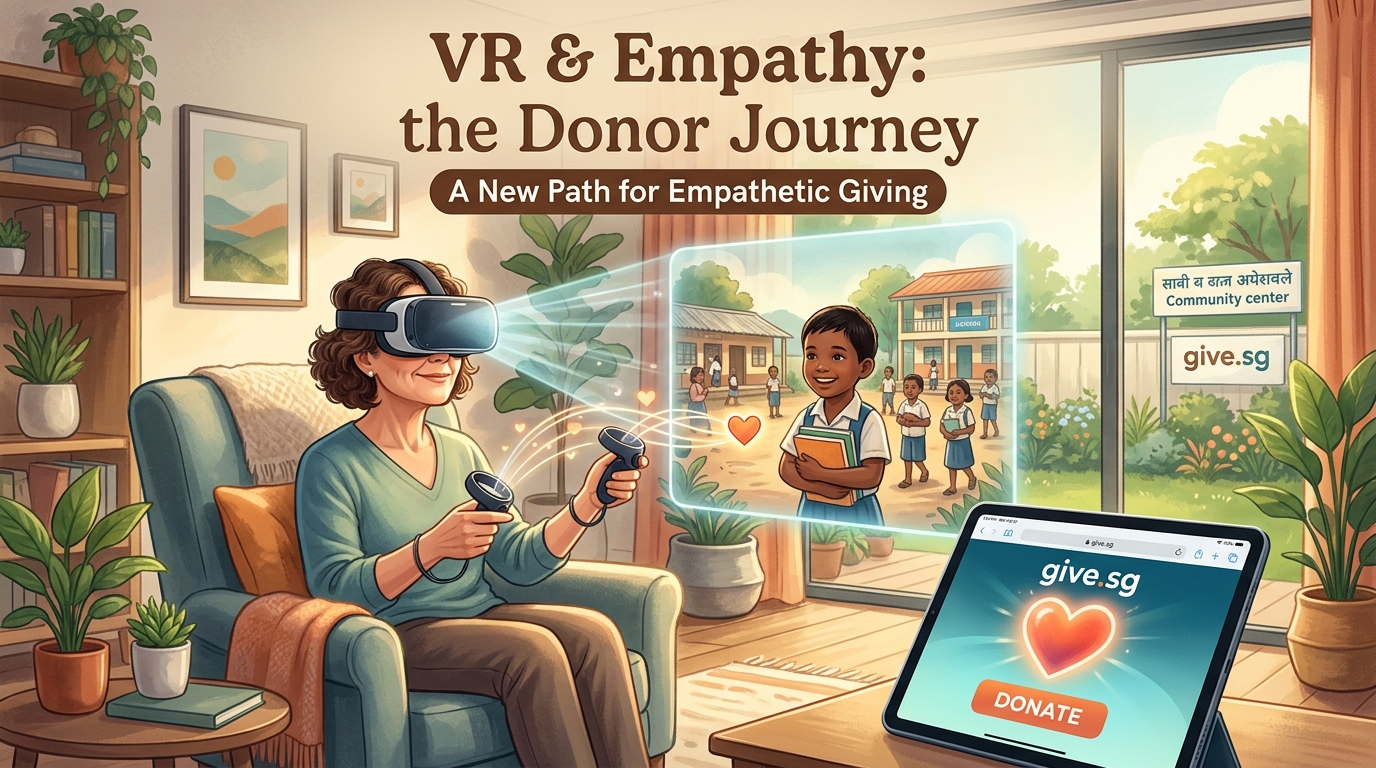
Not all VR experiences produce equal empathy outcomes. Specific design choices make the difference between a gimmick and genuine connection.
| Design Element | Empathy-Building Approach | Common Mistake |
|---|---|---|
| Point of view | First-person perspective with agency | Passive observation without interaction |
| Narrative structure | User makes meaningful choices | Linear story with no input |
| Character development | Deep focus on one person’s journey | Overwhelming statistics about many people |
| Audio design | Spatial sound that responds to head movement | Flat narration over generic footage |
| Duration | 8-15 minutes with clear arc | Too long causing fatigue or too short lacking depth |
| Call to action | Specific, achievable next step | Vague request to “help” |
The United Nations created a VR film called “Clouds Over Sidra” that followed a 12-year-old Syrian girl in a refugee camp. The experience succeeded partly because it focused on one child’s specific daily routine rather than trying to represent all refugees. Viewers remembered her name, her siblings, her hopes. That specificity created lasting emotional connection.
Contrast this with VR experiences that show rapid cuts between multiple locations and many faces. Users report feeling overwhelmed rather than connected. The brain needs time to process and attach to individuals, even virtual ones.
When VR Works Better Than Traditional Media
Virtual reality shines in specific scenarios where other media falls short. Understanding these use cases helps nonprofits make smart investment decisions.
Geographic and cultural distance presents one clear advantage. When your donors live thousands of miles from your program sites, VR can transport them in ways that photos cannot. A healthcare nonprofit working in rural villages can let urban donors experience the challenges of accessing medical care over difficult terrain.
Complex spatial relationships also benefit from VR. Environmental organizations use it to show scale, like standing next to a glacier and watching it calve, or swimming through a coral reef to see bleaching up close. These experiences communicate urgency that graphs and charts miss.
Stigmatized populations gain dignity through well-designed VR. People with disabilities, mental health conditions, or those experiencing homelessness often get reduced to stereotypes in traditional media. VR can present their full humanity, showing daily life, relationships, humor, and resilience alongside challenges.
“The most powerful VR experiences for empathy don’t focus on suffering. They show people in their full complexity, making choices, caring for family, finding moments of joy even in difficult circumstances. That’s what builds real connection.” (Composite insight from multiple VR researchers and nonprofit technology directors)
The Cost Reality and Alternatives
High-quality VR production runs between $50,000 and $200,000 for a professional experience. Smaller nonprofits understandably balk at these numbers.
Several middle-ground options exist. Basic 360-degree video costs significantly less, sometimes under $10,000 if you work with film students or emerging creators. While not as immersive as full VR, it still provides perspective-taking benefits beyond traditional video.
Some nonprofits share production costs by creating experiences together. Three organizations working on related issues might split expenses for a VR piece that features all their work. This approach also provides donors with broader context.
Equipment costs have dropped substantially. Standalone headsets now cost around $300, making it feasible to bring VR experiences to events rather than requiring donors to own hardware. Some nonprofits maintain a small library of headsets that travel to donor gatherings, volunteer orientations, and community events.
Free platforms let organizations distribute VR content widely. YouTube supports 360-degree video. Facebook allows VR uploads. Once you create the content, distribution costs approach zero.
Measuring Impact Beyond the Wow Factor
The novelty of VR creates a measurement problem. People might engage simply because the technology feels new and interesting, not because it genuinely shifted their empathy or commitment.
Smart nonprofits separate technology enthusiasm from mission impact by tracking these metrics:
- Donation conversion rates comparing VR viewers to other engagement methods
- Volunteer application rates following VR experiences
- Longitudinal attitude surveys at one month, three months, and six months post-experience
- Qualitative feedback about what users remember and how it changed their perspective
- Comparison groups who receive the same narrative through different media
One homeless services organization found that VR experience participants donated at rates 23% higher than video viewers, but the difference disappeared after six months. They adjusted their strategy to use VR as an entry point followed by ongoing storytelling through other channels, which maintained elevated giving long-term.
Another environmental nonprofit discovered their VR piece performed beautifully with major donors but confused community volunteers who wanted more practical information about programs. This led them to create multiple versions: an emotional immersive piece for fundraising and an educational walkthrough for volunteer training.
Avoiding Empathy Fatigue and Ethical Pitfalls
Virtual reality’s intensity cuts both ways. The same immersive quality that builds connection can also overwhelm and exhaust viewers emotionally.
Empathy fatigue happens when people encounter so much suffering that they become numb rather than motivated. VR can accelerate this process because experiences feel more real and therefore more draining. Nonprofits must design with psychological safety in mind.
Build in moments of hope and agency. Show not just problems but also solutions and the difference donors make. Let users see positive outcomes, meet people who benefited from programs, witness community strength and resilience.
Respect the dignity of people featured in VR experiences. Extractive poverty tourism, where privileged viewers gawk at others’ suffering, violates ethical standards even if it raises money short-term. Involve the communities you’re representing in the creation process. Compensate people fairly for sharing their stories. Give them approval rights over how they’re portrayed.
Consider the psychological impact on viewers. Provide content warnings for intense experiences. Offer support resources for people who find the content triggering. Train staff who facilitate VR experiences to recognize signs of distress and provide appropriate follow-up.
The Future of Immersive Storytelling for Social Good
Technology continues evolving rapidly. What works today might look outdated in two years. Smart nonprofits stay flexible and focus on principles rather than specific platforms.
Augmented reality, which overlays digital content onto the real world rather than replacing it entirely, shows promise for certain applications. Imagine pointing your phone at your own neighborhood and seeing data about local poverty, or visualizing how climate change might affect familiar landmarks.
Haptic feedback, which adds physical sensations to virtual experiences, remains expensive but could deepen empathy effects. Feeling the texture of materials, the temperature of an environment, or the physical effort of manual labor might enhance perspective-taking.
Artificial intelligence may enable personalized VR experiences that adapt to individual viewers, emphasizing aspects most likely to resonate with their specific values and concerns. This raises both opportunities and ethical questions about manipulation versus genuine connection.
The core question remains constant regardless of technological advances: does this tool genuinely help people understand and care about others, or does it simply dazzle them with innovation? The best nonprofit technology serves the mission rather than showcasing itself.
Making Virtual Reality Work for Your Mission
Virtual reality offers genuine potential for building donor empathy, but it’s not magic. Success requires thoughtful design, authentic storytelling, ethical implementation, and realistic expectations about costs and outcomes.
Start by asking whether immersion truly serves your story better than other media. If the answer is yes, invest in quality production that respects both your audience and the people you serve. Measure impact rigorously. Stay focused on behavior change, not just emotional response.
The technology will keep changing. Your commitment to connecting people across difference and inspiring meaningful action should remain steady. VR is one tool among many. Use it wisely, and it might help transform how donors see the world and their place in making it better.