 By chloe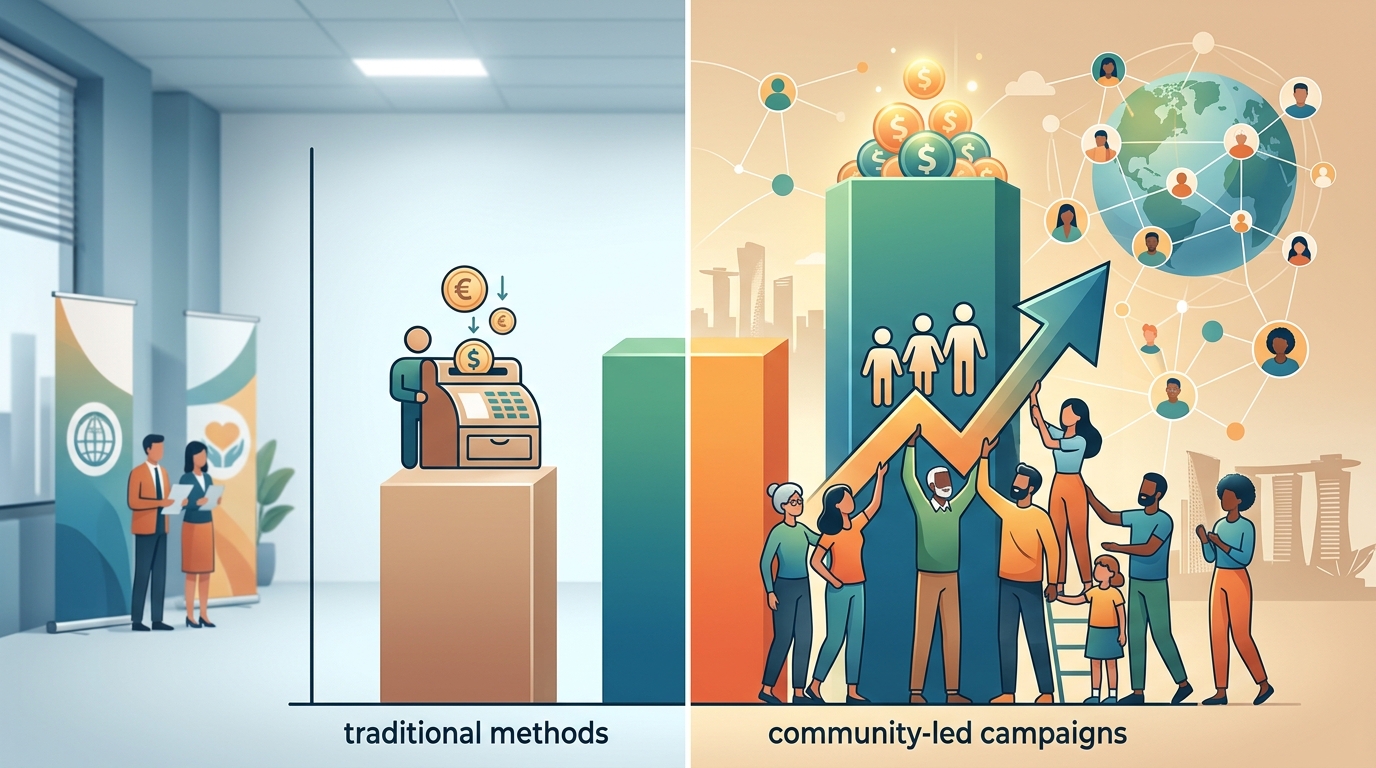
Traditional fundraising methods have served nonprofits for decades. Direct mail. Gala dinners. Phone banks. These approaches built countless organizations and funded important missions. But something fundamental has shifted. Donors today want more than a solicitation letter. They want connection, participation, and proof their contributions create real change. Community led fundraising answers that call by turning supporters into active campaign leaders rather than passive checkbook holders.
Community led fundraising empowers supporters to create and run their own campaigns for your cause, generating higher engagement and donations than traditional methods like direct mail or events. By providing tools, training, and creative freedom, nonprofits multiply their reach through authentic peer networks while reducing overhead costs and building sustainable donor relationships that last beyond single transactions.
What Makes Community Led Fundraising Different
Community led fundraising flips the traditional model on its head. Instead of your organization asking for money directly, you equip passionate supporters with tools to fundraise on your behalf. They create personal campaigns. Share stories that matter to them. Tap into their own networks of friends, family, and colleagues.
Traditional fundraising keeps control centralized. Your team writes the appeals. Your staff manages every touchpoint. Your budget determines campaign scale. This approach works, but it has clear limits. You can only reach people already on your list. Your voice, no matter how compelling, remains institutional.
Community led campaigns distribute that power. A supporter who survived cancer might raise funds for medical research. A teacher could launch a campaign for classroom supplies. A parent might organize peers around youth programs. Each campaign carries authentic personal investment that no professional copywriter can manufacture.
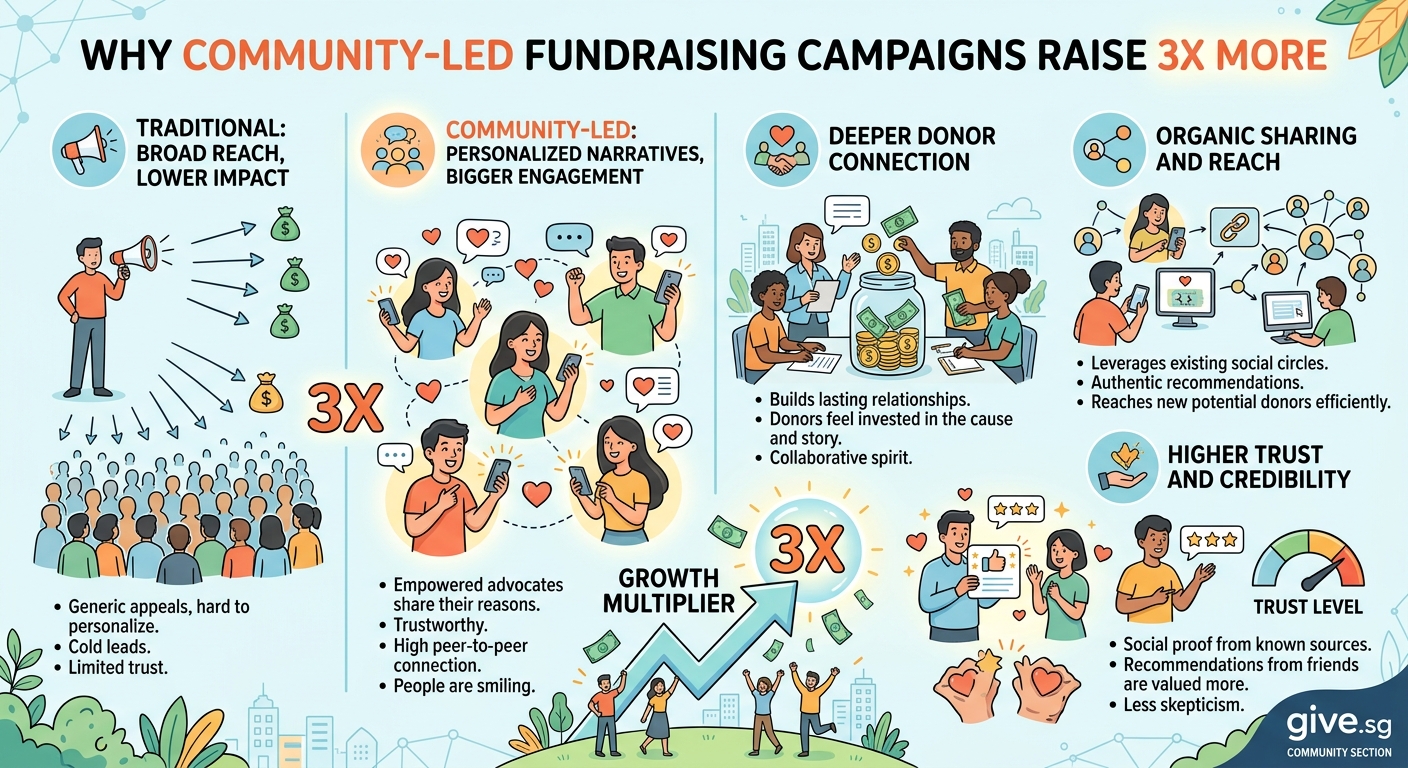
The numbers tell a compelling story. Organizations using community led approaches report donation increases of 200% to 300% compared to traditional methods. Why? Because people trust recommendations from friends more than messages from organizations. A personal ask from someone you know carries weight that a branded email never will.
The Traditional Fundraising Playbook
Before examining why community led methods outperform older approaches, we need to understand what traditional fundraising actually involves.
Classic traditional methods include:
- Direct mail campaigns with personalized letters and reply envelopes
- Annual gala events with tickets, auctions, and sponsorship packages
- Phone banking with trained callers working through donor lists
- Grant writing focused on institutional funders and foundations
- Major gift programs targeting high net worth individuals through personal visits
These methods built the nonprofit sector. They work. Many organizations still rely heavily on them. But each comes with significant constraints.
Direct mail response rates have dropped below 1% for most organizations. Production costs eat into net revenue. Younger donors rarely respond to postal appeals at all.
Gala events generate excitement and community, but they demand enormous staff time. Venue costs, catering, entertainment, and logistics consume 40% to 60% of gross revenue. One rainy night can devastate attendance.
Phone banking faces donor fatigue and regulatory restrictions. Call blocking technology makes reaching people harder each year. Many donors find unsolicited calls intrusive rather than welcome.
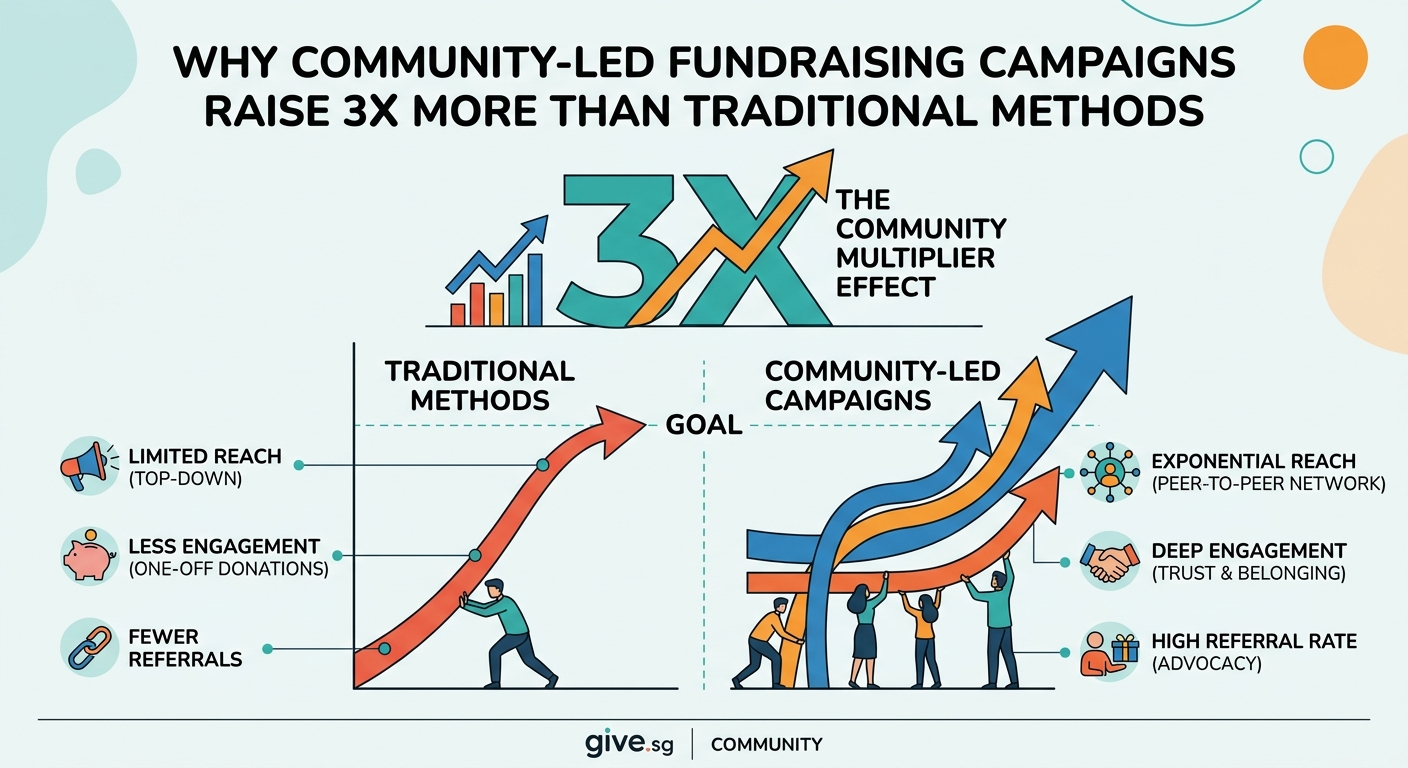
Traditional methods also share a common limitation. They scale linearly with your budget and staff capacity. Want to reach more people? Hire more staff. Mail more letters. Rent a bigger venue. Growth requires proportional resource increases.
How Community Led Fundraising Works
Community led fundraising operates on peer influence and distributed networks. Here’s how successful nonprofits implement this approach.
1. Provide campaign tools and templates
Give supporters easy ways to create personal fundraising pages. Modern platforms let anyone launch a campaign in minutes. No technical skills required. Supporters choose a goal, add their story, upload photos, and share.
Your organization provides the infrastructure. Campaign page templates. Payment processing. Tax receipts. Progress tracking. Supporters provide the personal connection and network access.
2. Offer training and resources
Most people have never run a fundraising campaign. They need guidance. Create simple training materials that cover:
- How to write a compelling personal story
- Best practices for social media sharing
- Email templates for reaching out to friends
- Tips for following up with donors
- Ways to thank supporters meaningfully
Video tutorials work better than lengthy manuals. Show real examples from past successful campaigns. Make supporters feel confident they can succeed.
3. Create campaign occasions and themes
Some supporters will launch campaigns spontaneously. Most need a reason or occasion. Smart nonprofits create multiple campaign opportunities throughout the year.
Birthday fundraisers let people ask for donations instead of gifts. Memorial campaigns honor lost loved ones. Challenge events tie fundraising to marathons, bike rides, or other activities. Awareness months provide natural hooks for themed campaigns.
4. Build community among fundraisers
Supporters raising money for your cause form a special community. Nurture it. Create private groups where they can share tips, celebrate milestones, and encourage each other. Host virtual meetups. Recognize top performers. Make fundraisers feel like valued team members, not just transaction sources.
5. Measure and optimize continuously
Track which campaign types perform best. Which supporters raise the most? What stories resonate? Which sharing methods drive donations? Use data to refine your approach and share successful tactics with all fundraisers.
Performance Comparison Table
| Factor | Traditional Fundraising | Community Led Fundraising |
|---|---|---|
| Average cost per dollar raised | $0.25 to $0.50 | $0.05 to $0.15 |
| Typical response rate | 0.5% to 2% | 15% to 35% |
| Donor acquisition cost | $50 to $150 | $10 to $30 |
| Campaign setup time | 4 to 12 weeks | 1 to 3 days |
| Scalability | Linear with budget | Exponential with supporters |
| Donor retention after first gift | 20% to 30% | 45% to 65% |
| Staff time per campaign | 100+ hours | 10 to 20 hours |
These numbers come from organizations that have implemented both approaches. The differences stem from fundamental structural advantages in community led models.
Why Community Led Campaigns Raise More Money
The performance gap between these approaches has clear causes.
Trust and social proof matter more than ever. People receive hundreds of marketing messages daily. They’ve developed sophisticated filters. Institutional appeals get ignored. But a personal request from a friend breaks through. When someone you know asks you to support their campaign, you pay attention. Their endorsement provides social proof that the cause matters.
Reach expands exponentially instead of linearly. Traditional campaigns reach your existing list. Community led campaigns tap into every supporter’s network. If 100 supporters each reach 50 people in their networks, you’ve suddenly accessed 5,000 new potential donors. Many of those people have never heard of your organization.
Personal stories create emotional connection. Your organization’s mission statement explains what you do. A supporter’s personal story shows why it matters. Someone sharing how your food bank fed their family during hardship creates visceral impact. Someone running a marathon in memory of a parent lost to disease makes your research feel urgent and personal.
Lower overhead means more money reaches programs. Traditional campaigns carry heavy costs. Printing, postage, venue rental, catering, staff time. Community led campaigns eliminate most of these expenses. Supporters volunteer their time. Social media sharing costs nothing. Digital tools handle logistics automatically.
Campaigns run continuously, not episodically. Traditional methods happen in bursts. You mail appeals quarterly. Host one or two events per year. Community led fundraising happens year-round. Supporters launch campaigns whenever occasions arise. Birthdays happen every day. Someone always has a reason to fundraise.
“We spent $40,000 on our annual gala and netted $65,000 after expenses. The next year, we invested $5,000 in a community fundraising platform and supporter training. Our 200 volunteer fundraisers brought in $180,000. The math changed everything about our strategy.” – Development Director at a regional food bank
Common Mistakes When Shifting Approaches
Organizations moving from traditional to community led fundraising often stumble in predictable ways.
Mistake one: Maintaining too much control. Some nonprofits treat community campaigns like traditional appeals with different distribution. They write the stories. Dictate the messaging. Require approval for everything. This defeats the purpose. Authenticity comes from letting supporters use their own voice.
Mistake two: Providing insufficient support. The opposite error also causes problems. Launching a platform and expecting supporters to figure everything out rarely works. People need training, templates, and ongoing encouragement. Balance freedom with support.
Mistake three: Ignoring small campaigns. Not every supporter will raise thousands. Some campaigns bring in $200 or $500. Traditional thinking dismisses these as too small to matter. But small campaigns still expand your network. They build relationships. They identify future major donors. Celebrate every campaign regardless of size.
Mistake four: Failing to recognize fundraisers. Supporters volunteering their time and social capital deserve recognition. Thank them publicly. Share their stories. Create special perks for active fundraisers. Make them feel valued beyond the money they raise.
Mistake five: Treating this as a replacement instead of an addition. Community led fundraising works best alongside traditional methods, not instead of them. Major donors still appreciate personal cultivation. Events still build community. Grants still fund programs. Use community campaigns to supplement and enhance your existing strategy.
Getting Started With Community Led Fundraising
Ready to test this approach? Start small and build momentum.
Begin with your most engaged supporters. Identify 10 to 20 people who already volunteer, attend events, or donate regularly. These early adopters will test your system and provide feedback. Their success will inspire others.
Choose the right platform. Multiple tools support community fundraising. Look for platforms that integrate with your existing donor database, offer mobile-friendly campaign pages, and provide good reporting. Prioritize ease of use over features. Supporters won’t use complicated systems.
Create your first campaign occasion. Pick something simple and time-bound. A giving day. An awareness month. A challenge event. Give it a clear theme and goal. Provide all the resources supporters need to participate successfully.
Document and share success stories. When campaigns succeed, capture what worked. Interview the fundraiser. Share their tactics. Create case studies that inspire and instruct other supporters. Success breeds success.
Measure what matters. Track participation rates, average campaign size, donor acquisition numbers, and retention rates. Compare performance to your traditional methods. Use data to refine your approach and demonstrate value to leadership.
Technical Considerations and Integration
Community led fundraising requires some technical infrastructure, but less than you might think.
Modern fundraising platforms handle most technical needs. They provide campaign page builders, payment processing, automated receipts, and donor management. Many integrate directly with popular nonprofit CRM systems.
Budget $3,000 to $10,000 annually for platform fees, depending on your organization size and transaction volume. This represents a fraction of traditional campaign costs while supporting unlimited campaigns.
Staff time shifts from campaign execution to supporter enablement. Instead of writing appeals and managing mailings, your team trains fundraisers, creates resources, and provides ongoing support. One staff member can typically support 100 to 200 active fundraisers.
Data integration matters more than most organizations initially realize. Ensure community campaign donors flow into your main database. Tag them appropriately. Track which campaigns they came through. This information powers future cultivation and helps you understand network effects.
The Generational Shift in Giving
Younger donors have fundamentally different expectations than previous generations. Understanding these differences explains why community led fundraising resonates so powerfully.
Millennials and Gen Z donors want participation, not just transaction. They don’t want to write a check and walk away. They want to be part of the solution. Community campaigns let them actively contribute beyond money.
These generations trust peer recommendations over institutional messaging. They research causes through friends’ social media posts, not organizational websites. Community fundraising meets them where they already make decisions.
They expect transparency and direct impact. Traditional fundraising often feels like a black box. Money goes in, vague reports come out. Community campaigns create clear connections between specific people raising money and specific outcomes.
They prefer recurring small gifts over large annual donations. Community campaigns naturally encourage this behavior. Someone might give $25 to five different friends’ campaigns throughout the year rather than one $125 donation to your annual appeal.
Organizations that ignore these shifts will struggle to build sustainable donor bases. Community led fundraising aligns perfectly with how younger generations want to engage with causes they care about.
Measuring True Success Beyond Dollars
Money matters, but community led fundraising generates value beyond immediate revenue.
Network expansion: Each campaign introduces your organization to dozens or hundreds of new people. Even those who don’t donate learn about your cause. They might give later or become fundraisers themselves.
Donor quality: People who give to friend-led campaigns show higher retention rates and lifetime value than those acquired through traditional methods. The personal connection creates stronger organizational affinity.
Volunteer pipeline: Active fundraisers often become volunteers in other capacities. They’ve already demonstrated commitment and initiative. They understand your mission deeply.
Story collection: Community campaigns generate authentic stories about your impact. These testimonials strengthen all your other marketing and fundraising efforts.
Organizational resilience: Diversifying your fundraising methods reduces dependence on any single approach. When one method underperforms, others compensate.
Track these secondary benefits alongside primary revenue metrics. They represent substantial long-term value that traditional ROI calculations miss.
Making the Strategic Case to Leadership
Shifting organizational resources toward community led fundraising requires buy-in from leadership and board members who may have decades of experience with traditional methods.
Frame the conversation around sustainability, not replacement. Traditional methods face declining effectiveness. Response rates drop. Costs rise. Donor demographics shift. Community led fundraising addresses these trends while complementing existing programs.
Present pilot program data. Start small, measure carefully, and let results speak. When a $5,000 investment generates $50,000 in new donations, the case makes itself.
Address risk concerns directly. Some leaders worry about brand control or campaign quality. Explain how guidelines, training, and platform features mitigate these risks while preserving authenticity.
Compare total cost per dollar raised across methods. Include all costs: staff time, materials, overhead, opportunity costs. Community led fundraising almost always wins this calculation.
Show competitive intelligence. If peer organizations have adopted these methods successfully, leadership will feel pressure to keep pace. Nobody wants to fall behind sector trends.
Building Momentum Over Time
Community led fundraising grows stronger with each campaign cycle. Early success attracts more participants. Each fundraiser’s network expands your reach. Stories accumulate. Processes improve.
Year one focuses on infrastructure and proof of concept. Launch your platform. Train initial fundraisers. Run a few campaigns. Learn what works.
Year two scales participation. Double or triple your active fundraiser count. Create more campaign occasions. Refine your training. Build community among fundraisers.
Year three and beyond shift toward optimization and integration. Community campaigns become part of your organizational culture. New programs automatically include community fundraising components. Supporters expect and request campaign opportunities.
Organizations that commit to this progression see compounding returns. What starts as a small experiment becomes a major revenue source and powerful engagement tool.
Why This Shift Matters for Your Mission
Fundraising methods aren’t just about money. They shape organizational culture and donor relationships.
Traditional methods often create transactional dynamics. You ask. Donors give. Maybe they hear back about impact. Maybe they don’t. The relationship feels one-directional.
Community led fundraising builds genuine partnerships. Supporters invest time, energy, and social capital alongside financial contributions. They become stakeholders with real skin in the game. These relationships run deeper and last longer.
This matters because sustainable nonprofits need more than donors. They need advocates. Champions. People who believe so deeply in the mission that they’ll recruit others. Community fundraising identifies and activates these special supporters.
Your mission deserves a fundraising approach that matches its importance. Community led methods honor both your cause and your supporters by creating meaningful ways to participate. The money follows naturally from that foundation.
Start with one campaign. Train ten supporters. See what happens. The results might just transform how you think about fundraising forever.