 By chloe
Building a volunteer community from scratch feels like standing in an empty room with nothing but a vision and a to-do list. You know the impact volunteers can make. You’ve seen other organizations thrive with dedicated teams. But getting from zero to a thriving, engaged group of people who show up, contribute, and stay committed? That’s the real challenge.
Building a volunteer community requires intentional design, not luck. Start by defining your mission clearly, create meaningful entry points for new members, foster genuine connections between volunteers, recognize contributions consistently, and build feedback loops that help your community evolve. A strong volunteer community grows when people feel valued, connected, and aligned with a shared purpose that matters.
Start with a crystal clear mission
Before you recruit a single volunteer, you need to answer one question: why does this community exist?
Vague missions attract vague commitment. If your answer sounds like “we want to help people” or “we’re making the world better,” you’re not there yet. Get specific. What problem are you solving? Who benefits? What changes when your volunteers show up?
A clear mission does three things. It attracts the right people. It filters out those who aren’t a fit. It gives everyone a shared language for why they’re here.
Write your mission statement in plain language. Test it on someone outside your organization. If they can repeat it back to you and explain what your volunteers actually do, you’ve nailed it.
Create intentional entry points
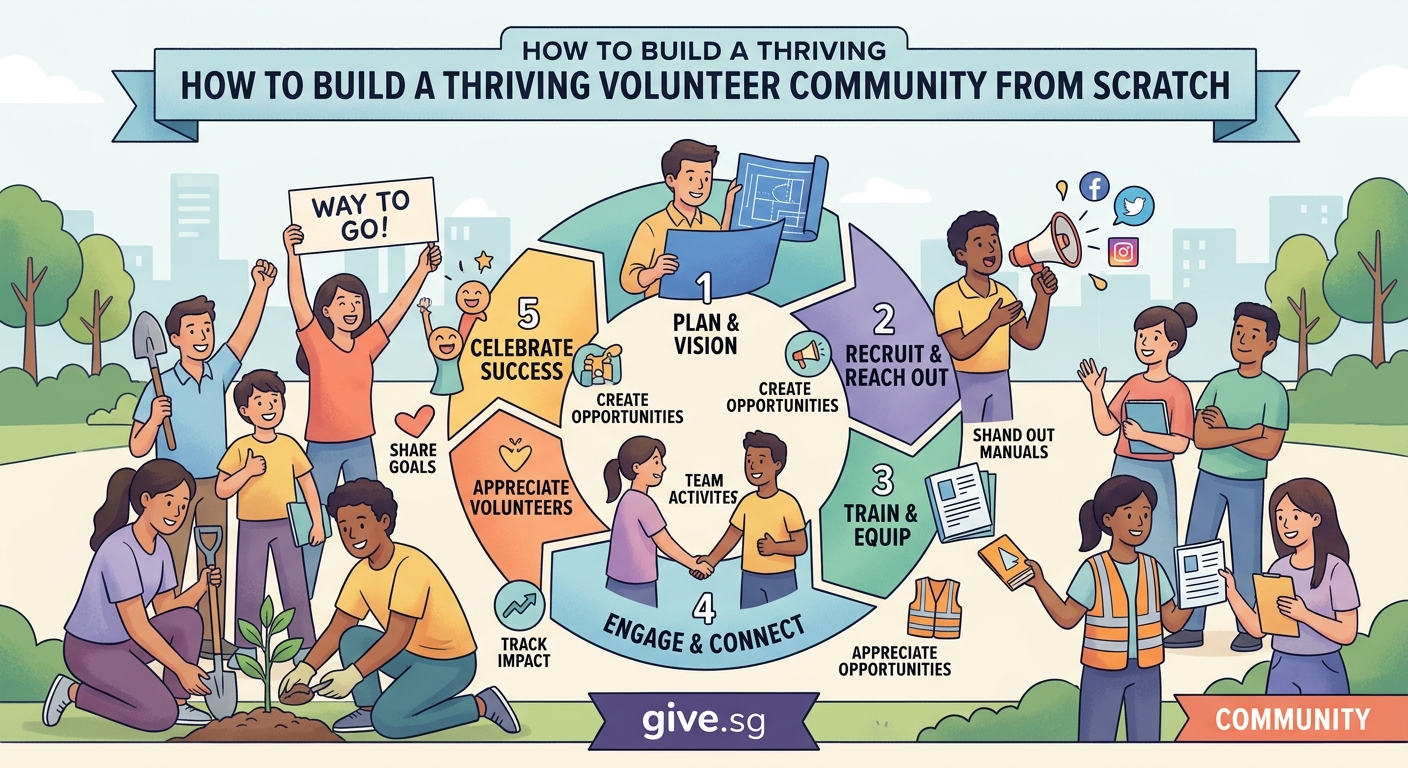
People don’t join communities by accident. They need a door to walk through.
Your entry points should match different commitment levels. Some people want to test the waters before diving in. Others are ready to commit immediately. Build paths for both.
Here are three entry points that work:
- One-time events: A single afternoon project with a clear start and end time. Perfect for people who want to experience your mission without a long-term commitment.
- Skill-based projects: Short-term opportunities that match specific talents. A graphic designer creates a poster. An accountant helps with budgeting. They contribute expertise and see immediate impact.
- Ongoing roles: Regular commitments for people ready to go deeper. Weekly tutoring sessions. Monthly food distribution. Consistent touchpoints that build relationships.
Make the first step embarrassingly easy. Complicated application processes kill momentum. If someone needs to fill out five forms, attend two orientations, and wait three weeks to volunteer, most will disappear.
Build connection before asking for work
The biggest mistake volunteer coordinators make? Treating volunteers like free labor instead of community members.
Connection comes first. Work comes second.
When someone joins your volunteer community, their first experience should introduce them to people, not tasks. Pair them with an existing volunteer. Create small group orientations where people share why they’re here. Host casual meetups before the formal work begins.
“Volunteers stay for the mission, but they come back for the people. If you don’t build relationships early, you’re just running a task distribution system, not a community.”
People volunteer for meaning and belonging. Give them both from day one.
Foster peer relationships intentionally
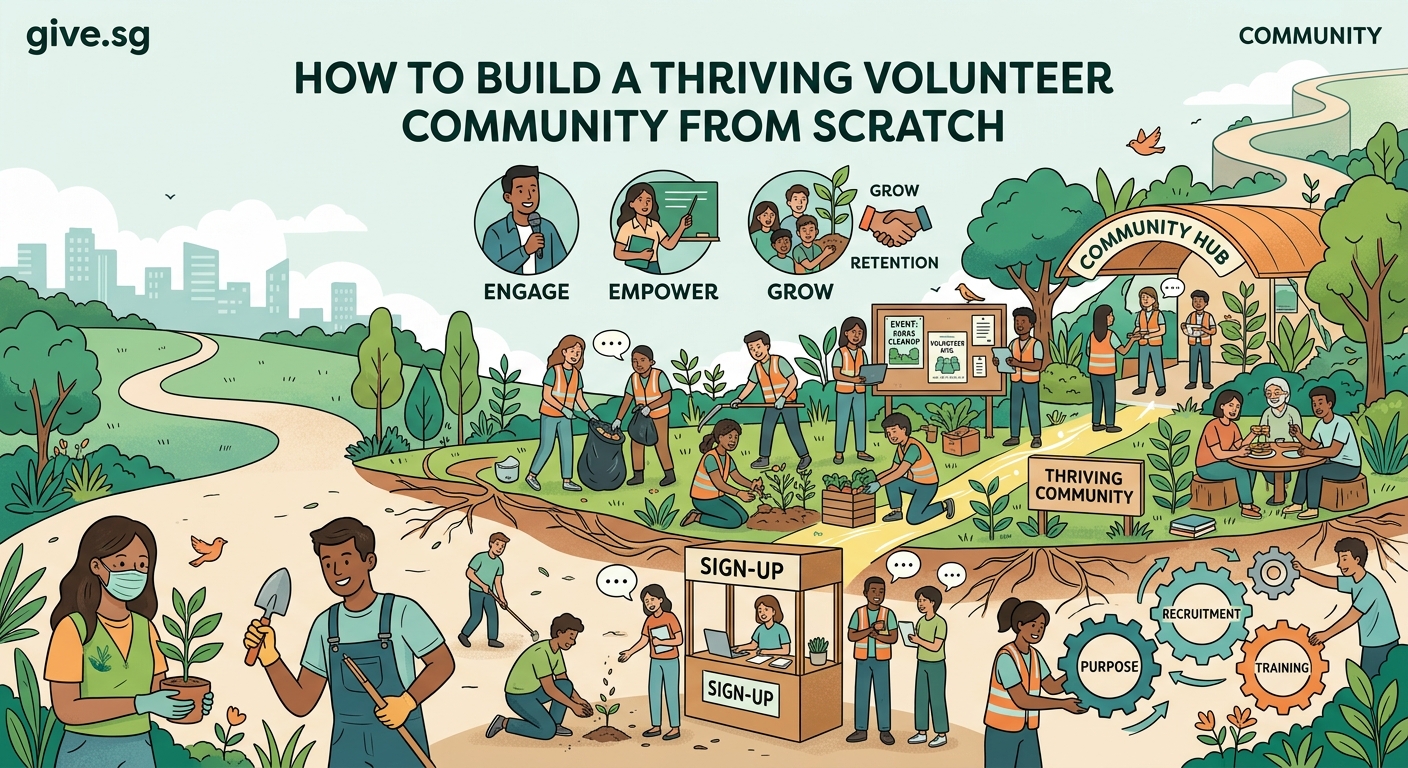
Volunteer communities collapse when the only relationship is between the coordinator and each individual volunteer. You become the hub holding everything together. When you’re unavailable, the whole system stops.
Strong communities have dense networks. Volunteers know each other. They communicate without you. They organize things on their own.
Here’s how to build those connections:
- Create volunteer buddy systems where experienced members welcome newcomers
- Form small teams that work together regularly instead of solo assignments
- Set up a communication channel where volunteers can chat, share stories, and ask questions
- Celebrate milestones together as a group, not just individually
- Rotate leadership of projects so different people step up
When volunteers become friends, retention skyrockets. They show up because they don’t want to let their team down. They recruit their own friends. The community starts to grow itself.
Recognize contributions in ways that matter
Recognition isn’t optional. It’s fuel.
But generic thank-you emails don’t cut it. Recognition needs to be specific, timely, and aligned with what actually motivates each person.
Some volunteers want public celebration. Others prefer private acknowledgment. Some care about impact metrics. Others want personal notes. Pay attention to what resonates.
Here’s a recognition framework:
| Recognition Type | When to Use | Example |
|---|---|---|
| Immediate verbal | During or right after volunteering | “The way you connected with that student today was incredible” |
| Written personal | Within 48 hours of contribution | Handwritten note mentioning specific impact |
| Public celebration | Monthly or quarterly | Feature volunteer stories in newsletters or social media |
| Milestone markers | After set hours or tenure | Certificates, small gifts, or special roles for long-term volunteers |
| Peer recognition | Ongoing | Create ways for volunteers to appreciate each other |
Track contributions so you can be specific. “Thank you for volunteering” is forgettable. “Your three hours sorting donations last Tuesday helped us serve 47 families this week” sticks.
Create feedback loops that actually work
Communities die in silence. If volunteers can’t tell you what’s working and what’s broken, you’re flying blind.
Build multiple feedback channels:
- Quick pulse surveys after events asking one or two questions
- Quarterly listening sessions where volunteers share ideas
- Anonymous suggestion boxes for sensitive topics
- One-on-one check-ins with long-term members
- Exit interviews when people leave
Then, and this is critical, close the loop. Tell people what you heard and what you’re changing. Even if you can’t implement every suggestion, acknowledging feedback shows you’re listening.
When volunteers see their input shape the community, they become invested. They shift from participants to co-creators.
Design for different commitment levels
Not everyone can give the same amount of time. Your community needs to work for the person who volunteers twice a year and the person who shows up every week.
Create a tiered structure:
- Core team: Regular volunteers who take on leadership and consistent responsibilities
- Active contributors: People who volunteer monthly or for specific projects
- Occasional participants: Those who join a few times a year for events or seasonal needs
- Community supporters: People who can’t volunteer time but want to stay connected
Each tier gets different communication, different asks, and different recognition. Don’t guilt the occasional volunteer for not doing more. Celebrate what they can give.
This structure prevents burnout in your core team and keeps casual volunteers engaged instead of overwhelmed.
Make onboarding an experience, not a checklist
First impressions determine whether someone becomes a one-time volunteer or a long-term community member.
Your onboarding should accomplish three goals:
- Help people understand the mission and their role in it
- Introduce them to other volunteers and build initial connections
- Set them up for success in their first contribution
Skip the information dump. Nobody remembers 45 minutes of policies and procedures. Instead, mix learning with doing. Teach the minimum needed to start, then let people experience the work alongside a buddy.
Share stories of impact early. Help new volunteers see the chain between their actions and real outcomes. When someone understands that their two hours tutoring helps a kid pass math class, which keeps them on track to graduate, which opens doors for their future, the work becomes meaningful.
Communicate with purpose and rhythm
Random, sporadic communication creates confusion. Predictable, purposeful communication builds trust.
Establish a communication rhythm:
- Weekly updates on upcoming opportunities and recent impact
- Monthly deeper stories featuring volunteers or beneficiaries
- Quarterly vision sharing about where the community is heading
- Annual celebrations and reflections
Match the channel to the message. Time-sensitive opportunities go in texts or instant messages. Stories and reflections fit newsletters. Community building happens in group chats or forums.
Don’t over-communicate. More messages don’t equal more engagement. They equal more ignoring. Be selective and valuable with every communication.
Handle conflicts before they spread
Where humans gather, conflict happens. Personality clashes. Disagreements about direction. Hurt feelings from miscommunication.
Ignoring conflict doesn’t make it disappear. It makes it fester.
Address issues early and directly:
- Create clear community guidelines everyone agrees to
- Train team leaders in basic conflict resolution
- Respond to complaints within 24 hours, even if you don’t have solutions yet
- Facilitate conversations between people in conflict rather than playing telephone
- Know when to part ways with someone who isn’t a fit
Healthy communities don’t avoid conflict. They navigate it with respect and move forward stronger.
Measure what actually matters
You need data, but not all metrics are created equal.
Vanity metrics feel good but don’t tell you much. Total volunteer hours sounds impressive but doesn’t show engagement or impact. Number of people at an event doesn’t reveal if they’ll come back.
Track metrics that indicate community health:
- Retention rate: What percentage of volunteers return after their first experience?
- Referral rate: How many new volunteers come from existing member recommendations?
- Participation distribution: Is the work spread across many people or concentrated in a few?
- Feedback scores: Do volunteers feel valued, connected, and clear on impact?
- Leadership pipeline: Are new volunteers stepping into coordination roles over time?
Review these monthly. Look for trends. When retention drops, investigate why. When referrals spike, figure out what you did right and repeat it.
Build systems that scale
What works for 10 volunteers breaks at 50. What works for 50 falls apart at 200.
As your community grows, systematize the repeatable parts so you can focus on relationships:
- Use scheduling software instead of endless email chains
- Create volunteer role descriptions so people know what to expect
- Document processes so knowledge doesn’t live in one person’s head
- Automate routine communications like confirmations and reminders
- Build a volunteer database that tracks skills, interests, and history
Systems free you to do the human work that actually builds community. You can’t automate connection, but you can automate coordination.
Empower volunteers to lead
The strongest volunteer communities distribute leadership widely.
Look for people who show initiative, connect well with others, and align with your mission. Invite them to take on more responsibility. Train them. Support them. Then step back.
Create pathways to leadership:
- Project leads who coordinate specific initiatives
- Team captains who support and mentor small groups
- Event organizers who plan and run volunteer activities
- Recruitment ambassadors who bring in new members
- Feedback champions who gather and synthesize volunteer input
When volunteers lead, they’re more invested. When they’re more invested, they stay longer and contribute more. The community becomes self-sustaining instead of dependent on you.
Celebrate the small wins together
Building a volunteer community is long work. Big milestones take time. If you only celebrate when you hit major goals, you’ll lose momentum.
Notice and name the small wins:
- The first time a volunteer brings a friend
- When someone moves from occasional to regular participation
- A particularly successful event where everything clicked
- A volunteer solving a problem without being asked
- Positive feedback from someone your community served
Share these moments with the whole community. Create rituals around celebration. Ring a bell. Share photos. Tell stories. Make winning together a regular experience.
Small celebrations compound. They remind everyone that their work matters and that progress is happening, even when the big goals still feel far away.
Growing something that outlasts you
The best volunteer communities don’t revolve around a single charismatic leader. They’re built on shared ownership, clear systems, and genuine relationships that persist through transitions.
Start small. Focus on building deep connections with your first 10 volunteers before trying to recruit 100. Create experiences that matter. Listen more than you talk. Recognize contributions. Build feedback into everything. Empower others to lead.
Your volunteer community won’t look like anyone else’s, and that’s exactly right. It should reflect your mission, your values, and the unique people who show up. Keep iterating. Stay focused on what actually brings people together and keeps them engaged. The community you’re building today can create impact for years to come.