 By chloe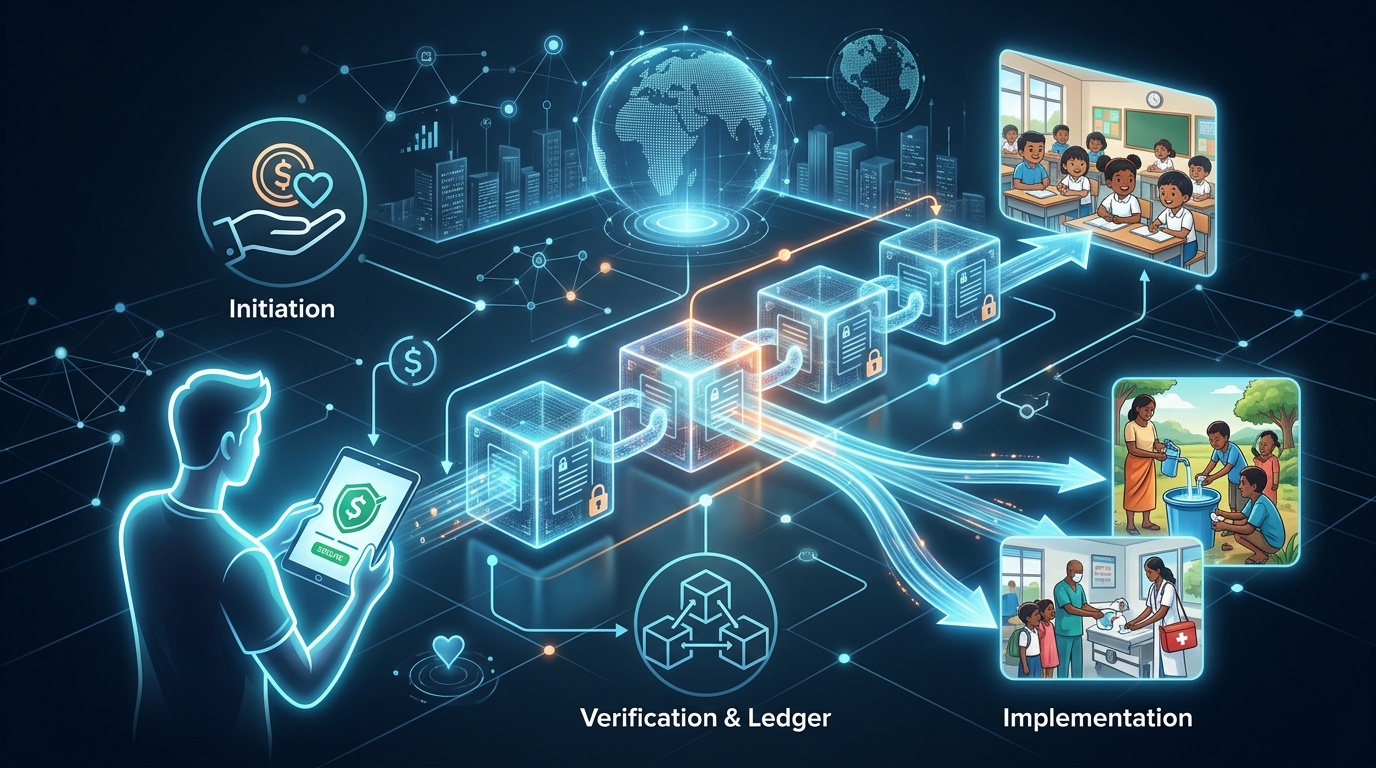
Every dollar you donate should reach the people who need it most. Yet traditional charity systems often leave donors wondering where their money actually goes. Paper receipts, delayed reports, and vague impact statements create a trust gap that costs the nonprofit sector billions in potential donations each year.
Blockchain donation transparency uses distributed ledger technology to create permanent, verifiable records of charitable transactions. Donors can track funds in real time from their wallet to the final beneficiary. Smart contracts automate fund distribution based on predefined conditions, eliminating intermediaries and reducing administrative costs while building unprecedented trust in philanthropic giving.
Understanding blockchain donation transparency
Blockchain technology creates an unchangeable digital ledger that records every transaction across multiple computers. When applied to charitable giving, this means every donation becomes a permanent entry that anyone can verify but no one can alter or delete.
Think of it like a shared Google Doc that tracks donations. But instead of one organization controlling the document, thousands of computers hold identical copies. If someone tries to change a record on one computer, the other copies immediately flag the discrepancy.
This architecture solves a fundamental problem in philanthropy. Traditional donation systems rely on organizations to self-report how they spend money. Audits happen months or years after donations arrive. Blockchain flips this model by making transparency the default setting rather than an optional add-on.
The technology works through three core components working together. First, the distributed ledger records every transaction with a timestamp and unique identifier. Second, cryptographic hashing ensures that once recorded, transaction data cannot be modified without detection. Third, consensus mechanisms require multiple network participants to verify each transaction before it becomes permanent.
For donors, this means watching your $100 donation move from your account to the nonprofit, then to a local partner organization, and finally to the family receiving aid. Each step appears on the blockchain within minutes, not months.
How smart contracts automate charitable giving
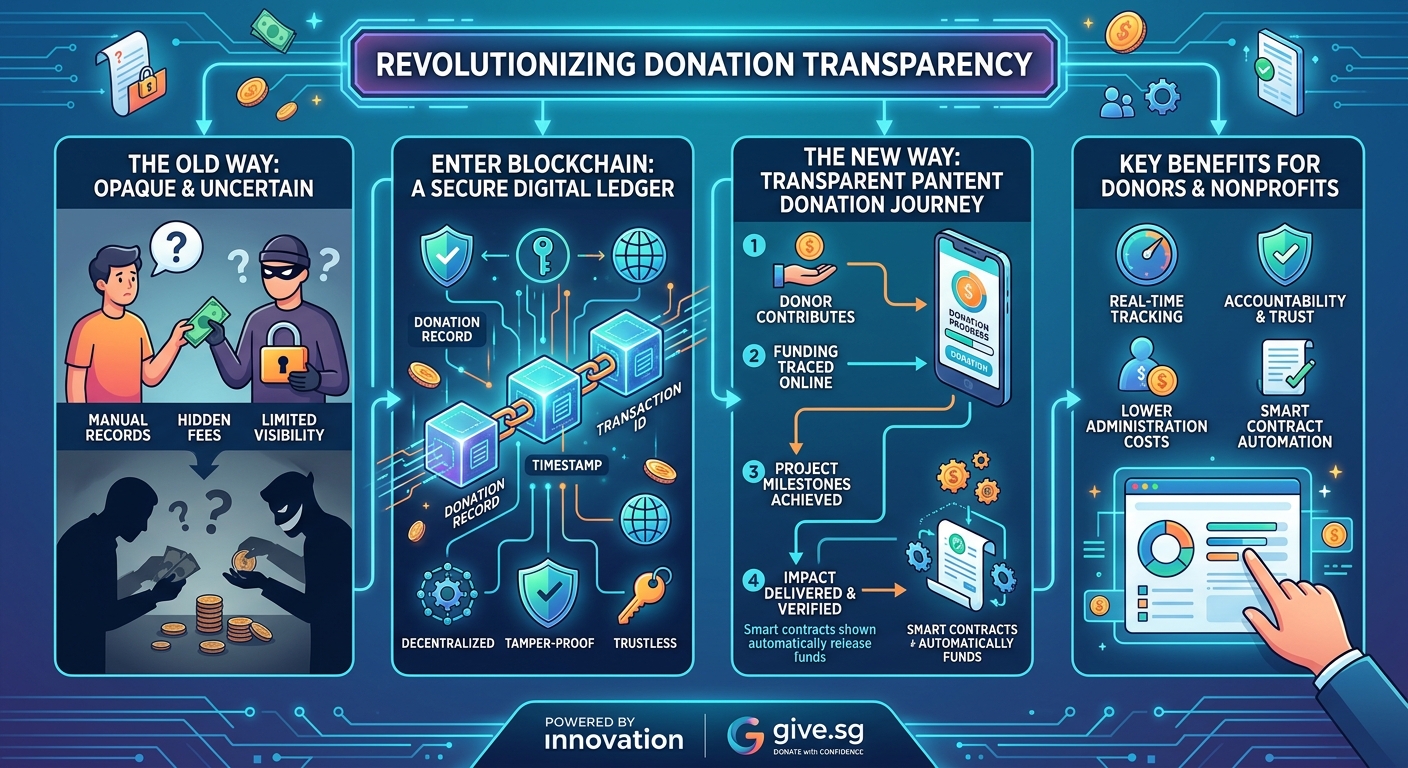
Smart contracts are self-executing agreements written in code that live on the blockchain. They automatically release funds when specific conditions are met, removing the need for intermediaries to manually approve each transaction.
A disaster relief organization might set up a smart contract that releases emergency funds automatically when earthquake sensors detect seismic activity above a certain threshold. The contract checks verified data sources, confirms the event meets predefined criteria, and transfers funds to local response teams without waiting for board approval or wire transfer processing.
Here’s how a typical smart contract donation flow works:
- A donor sends cryptocurrency or tokenized fiat currency to a smart contract address tied to a specific cause or project.
- The smart contract holds the funds in escrow until predefined milestones are achieved and verified through oracle data feeds or multi-signature approval from trusted validators.
- Once conditions are met, the contract automatically distributes funds to the next recipient in the chain, whether that’s a field office, implementing partner, or direct beneficiary.
- Each transaction generates an immutable record on the blockchain, creating a complete audit trail from donor to impact.
The efficiency gains are substantial. Traditional international transfers can take 3-7 business days and cost 5-10% in fees. Smart contracts execute in minutes with transaction costs often under $1, even for cross-border transfers.
Real-world applications transforming nonprofit operations
Several organizations are already using blockchain to rebuild donor trust through radical transparency. The United Nations World Food Programme launched Building Blocks in 2017, a blockchain-based system that serves over 100,000 Syrian refugees in Jordan. Beneficiaries receive cryptocurrency-based vouchers they can spend at participating stores. Every transaction records on a private blockchain, allowing WFP to track food distribution with unprecedented accuracy while reducing transaction fees by 98%.
UNICEF created the Cryptocurrency Fund in 2019, accepting and disbursing donations in Bitcoin and Ethereum. The fund supports open-source technology projects that benefit children worldwide. Donors can see exactly which projects received their contributions and track development milestones through public blockchain records.
GiveTrack, operated by BitGive Foundation, provides a donation tracking platform built on Bitcoin’s blockchain. Nonprofits create project pages showing real-time financial data, milestone updates, and impact metrics. Donors receive unique transaction IDs they can use to follow their specific donation through the entire lifecycle.
These implementations share common features that make blockchain donation transparency effective:
- Permanent transaction records that survive organizational changes or system failures
- Real-time visibility into fund movement and project status
- Reduced administrative overhead through automated reporting and compliance
- Enhanced security through cryptographic protection of financial data
- Direct donor-to-beneficiary connections that bypass multiple intermediary organizations
Comparing traditional and blockchain donation systems
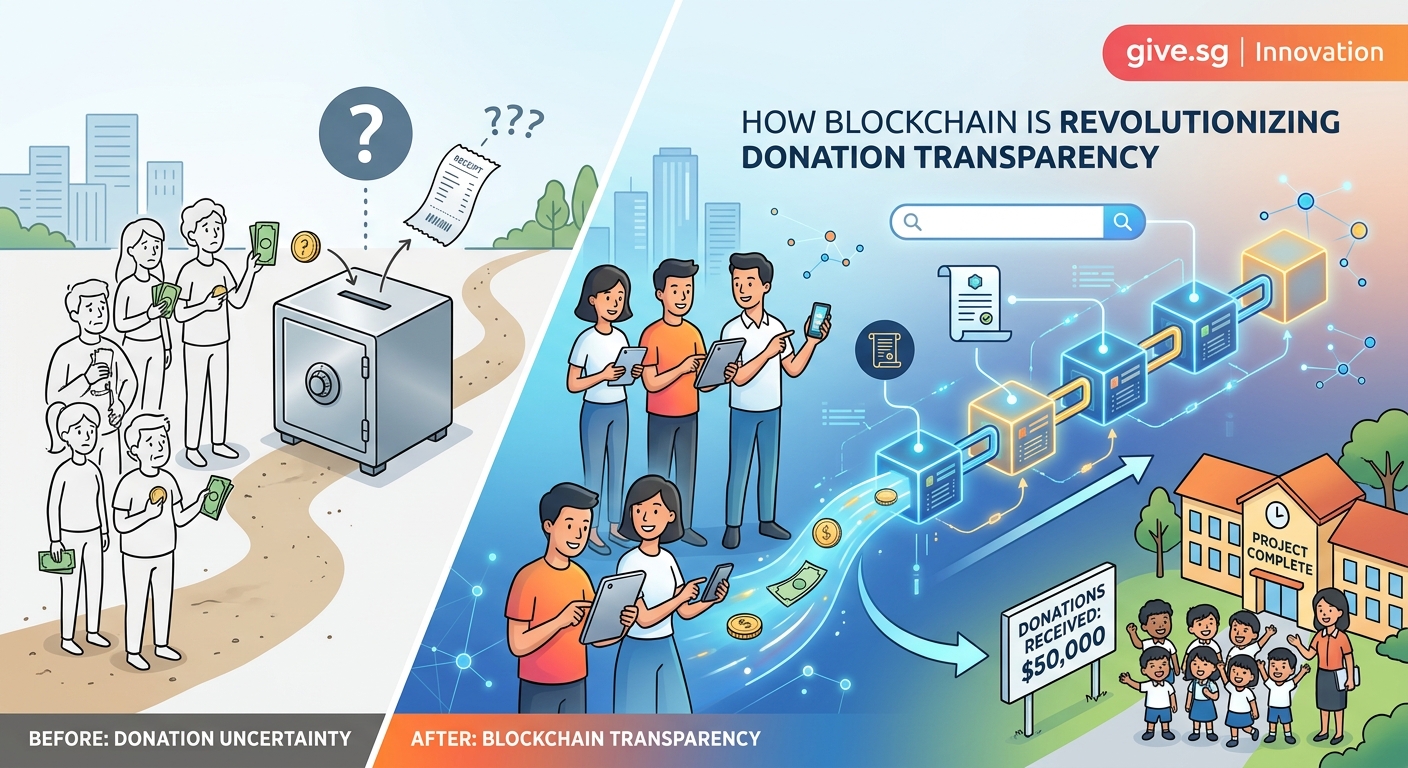
The differences between conventional and blockchain-based donation tracking become clear when examining specific operational elements:
| Aspect | Traditional System | Blockchain System |
|---|---|---|
| Transaction speed | 3-7 business days for international transfers | Minutes to hours regardless of geography |
| Transparency level | Annual reports and periodic updates | Real-time transaction visibility |
| Verification method | Third-party audits conducted annually | Continuous verification by network participants |
| Administrative costs | 15-30% of donations on average | 2-5% including technology infrastructure |
| Donor control | Limited to initial gift designation | Ongoing visibility and conditional release options |
| Record permanence | Dependent on organizational record-keeping | Immutable entries maintained indefinitely |
These differences create tangible benefits for both donors and nonprofits. A donor contributing to clean water projects in East Africa can watch their funds move from their wallet to the drilling company, verify equipment purchases through timestamped receipts, and see photo documentation of completed wells all linked to blockchain records.
For nonprofits, blockchain reduces the reporting burden that consumes staff time and donor dollars. Instead of compiling quarterly reports manually, organizations point donors to blockchain explorers where transaction data updates automatically.
Overcoming adoption barriers in the nonprofit sector
Despite clear advantages, blockchain adoption in charitable giving faces several obstacles. Technical complexity tops the list. Many nonprofit staff members lack cryptocurrency knowledge or blockchain literacy. Setting up wallets, managing private keys, and understanding gas fees creates friction that discourages experimentation.
Regulatory uncertainty compounds the challenge. Tax treatment of cryptocurrency donations varies by jurisdiction. Some countries offer favorable tax deductions for crypto gifts, while others treat them as property sales subject to capital gains calculations. Nonprofits must navigate these rules while ensuring compliance with anti-money laundering regulations.
Volatility concerns affect both donors and organizations. Cryptocurrency prices can swing 10-20% in a single day. A donation worth $10,000 on Monday might be worth $8,500 by Friday when the nonprofit converts it to operational currency. Some organizations immediately convert crypto donations to stablecoins or fiat currency, but this adds transaction steps and costs.
Infrastructure requirements present another hurdle. Implementing blockchain systems requires technical expertise, ongoing maintenance, and integration with existing financial systems. Smaller nonprofits often lack the resources for these investments, creating a digital divide where large organizations benefit from blockchain transparency while grassroots groups continue using traditional methods.
The real power of blockchain for nonprofits isn’t the technology itself, but the trust it rebuilds between donors and organizations. When people can verify that their money reaches intended recipients, they give more generously and more frequently. That trust dividend outweighs the technical challenges of implementation.
Practical steps for nonprofits considering blockchain
Organizations interested in blockchain donation transparency can start with manageable pilot projects rather than complete system overhauls. Here’s a phased approach that minimizes risk:
- Begin by accepting cryptocurrency donations through established platforms like The Giving Block or Engiven that handle technical complexity and provide immediate conversion to fiat currency if desired.
- Implement a blockchain tracking layer for a single program or campaign, allowing donors to follow specific projects while maintaining traditional systems for other operations.
- Partner with blockchain platforms that offer white-label solutions designed for nonprofits, reducing development costs and technical requirements.
- Train staff on blockchain basics through free online courses and nonprofit-specific workshops offered by industry organizations.
- Communicate transparently with donors about pilot programs, explaining both benefits and limitations of blockchain implementation.
The goal is building experience and demonstrating value before committing to enterprise-wide adoption. A refugee services organization might start by tracking supply chain donations of blankets and medical supplies, creating QR codes that link physical items to blockchain records showing their journey from manufacturer to distribution center to refugee camp.
Common mistakes that undermine blockchain transparency
Organizations implementing blockchain systems often stumble over preventable errors that compromise the transparency they’re trying to achieve:
- Using private blockchains with limited validator nodes that recreate centralized control under a decentralized facade
- Failing to verify off-chain data sources that feed smart contracts, allowing inaccurate information to trigger fund releases
- Neglecting user experience design that makes blockchain tracking accessible only to technically sophisticated donors
- Overlooking privacy considerations for beneficiaries whose transaction data becomes permanently public
- Implementing blockchain without addressing underlying operational inefficiencies that technology alone cannot fix
The last point deserves emphasis. Blockchain provides transparent records of what organizations actually do. If those underlying operations remain inefficient or ineffective, blockchain simply makes the problems more visible. Technology works best when paired with operational improvements that deserve transparency.
Building donor confidence through verifiable impact
The ultimate promise of blockchain donation transparency is shifting the conversation from “trust us” to “verify yourself.” Donors gain tools to independently confirm their money creates real change.
A wildlife conservation nonprofit using blockchain might link donation records to GPS collar data from protected elephants, satellite imagery showing habitat preservation, and ranger reports documenting anti-poaching patrols. Each data point connects to the blockchain through timestamped hashes, creating an auditable chain of evidence from donation to impact.
This verification capability changes donor psychology. Studies show people give more generously when they can see specific outcomes rather than aggregate statistics. A donor who watches their $500 contribution fund a specific microloan that helps a woman in Bangladesh start a tailoring business develops a personal connection that encourages repeat giving.
The technology also enables new giving models. Conditional donations release funds only when verified milestones are achieved. A donor supporting literacy programs might structure their gift so 25% releases upon curriculum development, 25% when teacher training completes, 25% when students enroll, and the final 25% when reading assessments show measurable improvement.
Addressing privacy while maintaining transparency
Complete transparency creates tension with beneficiary privacy. Publishing every transaction detail on a public blockchain could expose vulnerable populations to risk. A domestic violence shelter cannot broadcast the names of residents receiving services. A medical charity must protect patient health information.
Solutions exist that balance transparency with privacy. Zero-knowledge proofs allow verification that transactions occurred and met specified criteria without revealing underlying details. A donor can confirm their gift funded medical supplies for a clinic without seeing individual patient names or diagnoses.
Selective disclosure gives beneficiaries control over what information becomes public. A scholarship recipient might consent to sharing their field of study and graduation status while keeping their identity private. The blockchain records these approved data points while omitting protected information.
Tiered access systems grant different visibility levels to different stakeholders. Donors see aggregate program data and financial flows. Regulators access detailed compliance information. Beneficiaries control personal data sharing. All these access levels operate on the same underlying blockchain infrastructure.
The future landscape of transparent giving
Blockchain donation transparency is moving from experimental pilot to mainstream infrastructure. Major payment processors now support cryptocurrency donations. Accounting software integrates blockchain transaction tracking. Regulatory frameworks are emerging that provide clarity for tax treatment and compliance requirements.
The next evolution will likely involve greater interoperability between blockchain networks, allowing seamless fund transfers across different platforms without multiple conversion steps. Cross-chain bridges and unified standards will make blockchain donations as simple as traditional credit card transactions.
Artificial intelligence paired with blockchain will enable sophisticated impact verification. Machine learning algorithms could analyze satellite imagery, social media sentiment, economic indicators, and other data sources to automatically verify that funded projects achieve intended outcomes. These AI-verified results would record on the blockchain, creating a complete picture of donation impact.
Decentralized autonomous organizations (DAOs) represent another frontier. These blockchain-based entities allow donors to collectively govern how funds are allocated through token-based voting. Instead of trusting a traditional board of directors, donors become direct participants in organizational decision-making, with all votes and decisions recorded transparently on the blockchain.
Making blockchain work for your giving strategy
Whether you’re a donor evaluating organizations or a nonprofit leader considering implementation, blockchain donation transparency offers concrete advantages worth understanding. The technology isn’t perfect and won’t solve every challenge in charitable giving. But it provides tools for building trust through verification rather than relying solely on reputation.
Start by looking for organizations already using blockchain systems. Test the donor experience by making a small cryptocurrency contribution and tracking it through the system. Evaluate whether the transparency provided actually answers questions you care about. Does seeing transaction records increase your confidence? Does real-time tracking change how you think about your giving?
For nonprofits, begin with education before implementation. Understand what blockchain can and cannot do for your organization. Talk to peers who have implemented systems about unexpected challenges and surprising benefits. Consider whether your donors are asking for more transparency and whether blockchain addresses their specific concerns.
The charitable sector has always relied on trust between donors and organizations. Blockchain donation transparency doesn’t replace that trust. Instead, it provides the verification tools that allow trust to grow deeper and reach further, connecting generous people with meaningful causes through technology that makes every dollar count and every impact visible.