 By chloe
Finding the right donors feels like searching for needles in a haystack. You know they’re out there, but traditional methods leave you guessing who might actually care about your cause. Artificial intelligence changes that game completely by turning donor data into actionable insights that help you reach people who are genuinely ready to give.
AI for nonprofit donor identification uses [machine learning algorithms](https://en.wikipedia.org/wiki/Machine_learning) to analyze donor behavior patterns, predict giving likelihood, and segment audiences for targeted outreach. These tools help fundraising teams focus resources on prospects with the highest engagement potential while automating repetitive research tasks. The technology works best when paired with human relationship building and ethical data practices that respect donor privacy.
What AI Actually Does for Donor Identification
Most fundraising teams spend hours manually researching prospects. They comb through public records, social media profiles, and wealth screening databases trying to guess who might support their mission. AI accelerates this process by analyzing thousands of data points simultaneously.
The technology looks at giving history, engagement patterns, demographic information, and behavioral signals. It identifies correlations humans would miss. Someone who volunteers twice a year, opens 80% of your emails, and recently sold a business? That’s a pattern AI flags instantly.
Machine learning models get smarter over time. They learn which characteristics actually predict donations versus which ones just seem relevant. This means your targeting improves with every campaign you run.
The real power comes from predictive scoring. AI assigns each prospect a likelihood score based on their similarity to your best existing donors. You stop wasting time on cold leads and focus on warm prospects who already show signs of affinity.
How Nonprofits Build Better Prospect Lists
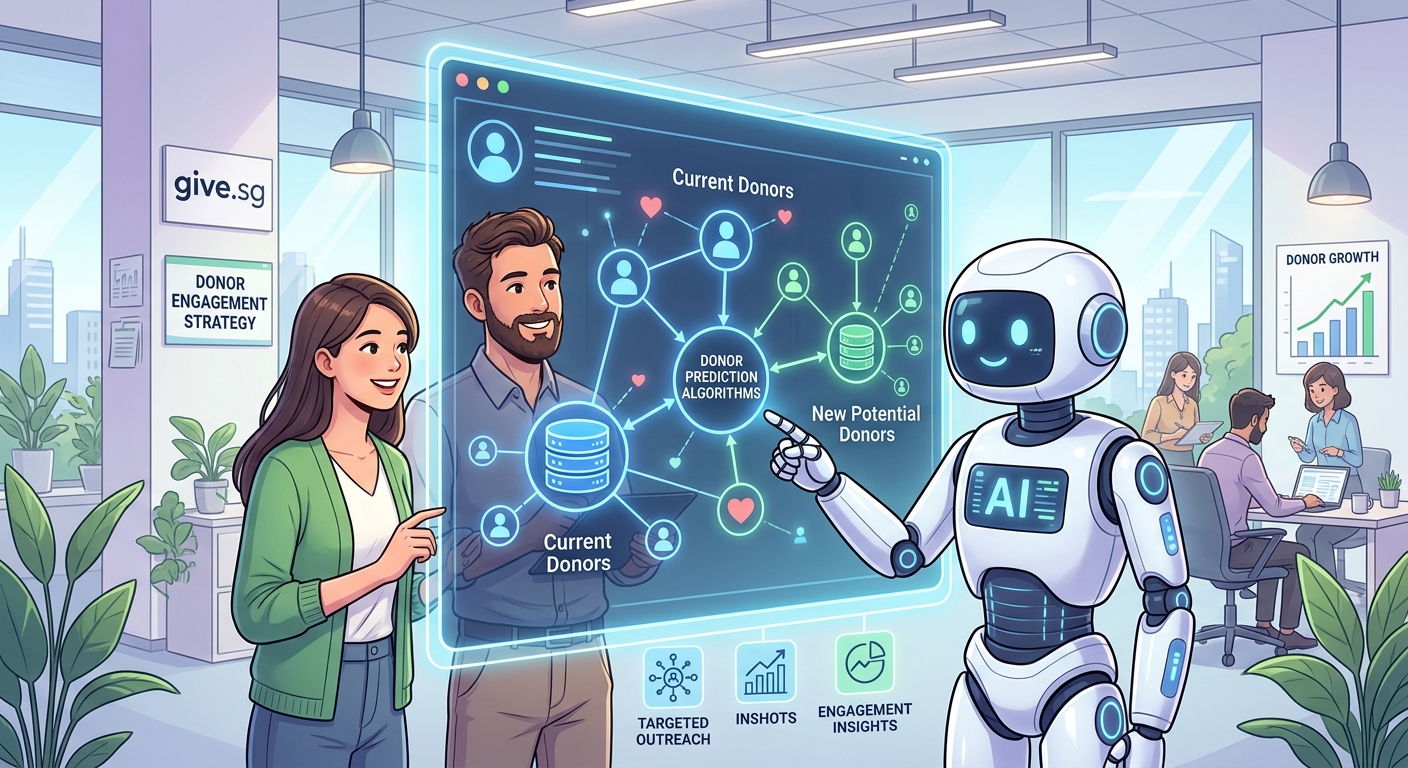
Traditional donor research relies heavily on wealth indicators. AI goes deeper by examining affinity markers that predict actual giving behavior.
Behavioral Pattern Recognition
AI systems track how people interact with your organization across multiple channels. Website visits, event attendance, email engagement, and social media interactions all feed into the model. Someone who reads your impact reports but never donates might score higher than a wealthy individual who ignores every communication.
The algorithms identify micro-behaviors that signal readiness to give. Clicking on specific program pages, downloading annual reports, or attending virtual events all indicate genuine interest. AI weighs these actions differently based on what historically leads to donations.
Lookalike Audience Modeling
Your best donors have characteristics in common. AI finds people who match those patterns but haven’t given yet. The technology analyzes demographics, psychographics, giving history to similar causes, and engagement behaviors.
This approach expands your prospect pool beyond obvious candidates. You might discover that teachers in suburban areas who follow environmental accounts donate consistently, even though they don’t fit traditional wealth profiles.
Network Analysis
AI maps connections between donors to identify potential supporters within their networks. If three board members all know the same person who gives to similar causes, that’s a warm introduction waiting to happen.
Social network analysis reveals influence patterns. Some donors are connectors who bring others into your community. AI helps you identify and cultivate these relationship hubs strategically.
Practical Steps to Implement AI Donor Identification
Getting started with AI doesn’t require a massive budget or technical expertise. Follow these steps to build an effective system.
-
Clean your existing data first. AI models are only as good as the information they process. Remove duplicates, standardize formats, and fill gaps in donor records before feeding anything into an algorithm.
-
Choose tools that integrate with your CRM. The best AI solutions connect directly to platforms you already use. Look for options that work with your donor management system rather than creating separate databases.
-
Start with predictive scoring on your current list. Before hunting for new prospects, use AI to prioritize existing contacts. This builds confidence in the technology and generates immediate results.
-
Define success metrics beyond donations. Track engagement improvements, meeting acceptance rates, and volunteer conversions. AI helps with the entire donor journey, not just the final gift.
-
Train your team on interpreting scores. A 90% likelihood score doesn’t guarantee a donation. Teach fundraisers to use AI insights as conversation starters, not certainties.
-
Test and refine regularly. Review which predictions proved accurate and adjust your model accordingly. AI improves through feedback loops.
Comparing AI Approaches to Donor Discovery
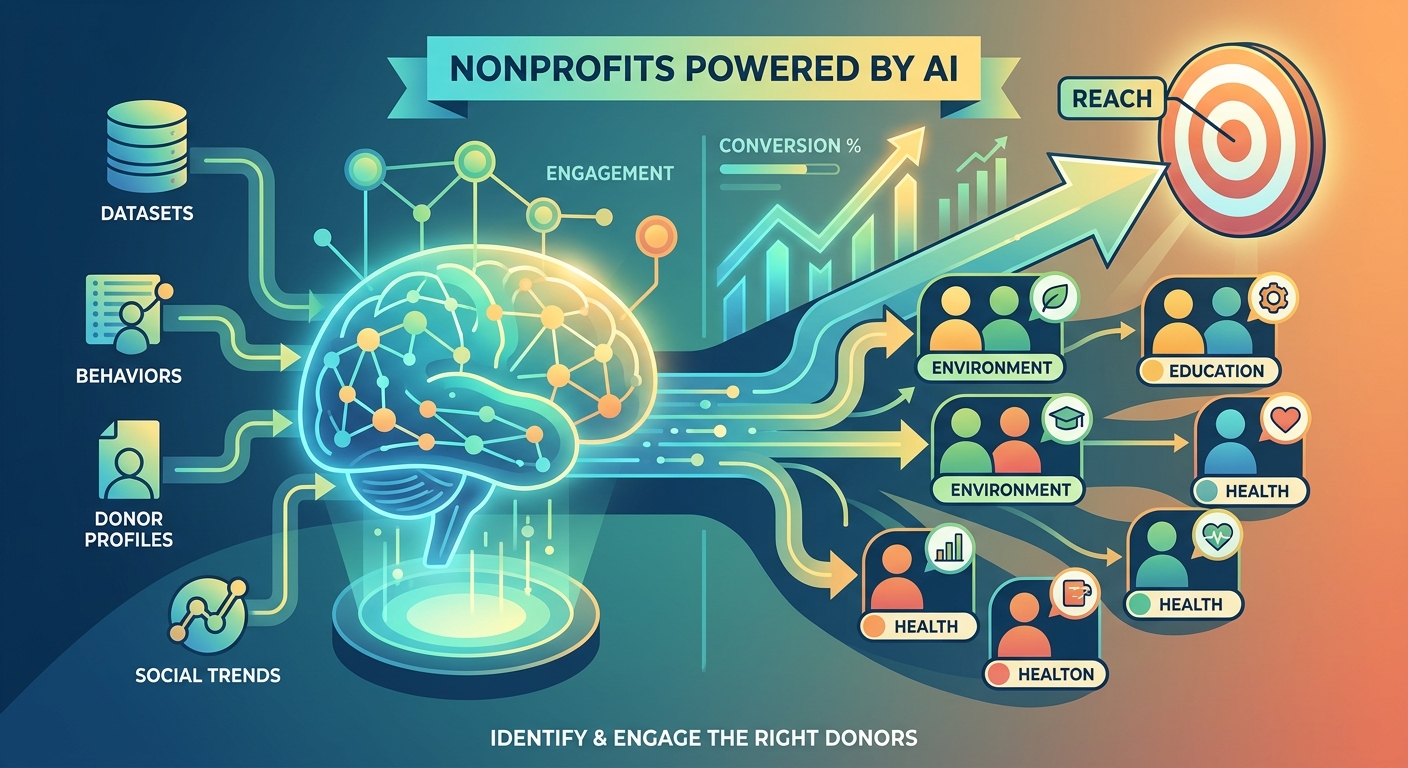
Different AI methods serve different organizational needs. Understanding the options helps you choose the right fit.
| Approach | Best For | Time to Results | Data Requirements |
|---|---|---|---|
| Predictive scoring | Prioritizing existing contacts | Immediate | Medium (500+ donor records) |
| Lookalike modeling | Finding new prospects | 2-4 weeks | High (1,000+ donors with detailed profiles) |
| Propensity analysis | Major gift identification | 1-3 months | High (wealth data + engagement history) |
| Network mapping | Relationship fundraising | 2-6 weeks | Medium (social connections + donor networks) |
| Behavioral clustering | Segmentation strategies | 1-2 weeks | Medium (multi-channel engagement data) |
Common Mistakes That Waste AI Potential
Even sophisticated AI tools fail when nonprofits make these errors.
Over-relying on wealth indicators. Capacity to give matters less than willingness to give. AI works best when you weight engagement signals heavily alongside financial data. Someone with moderate wealth but deep mission alignment often gives more consistently than a wealthy prospect with no connection.
Ignoring data quality. Garbage in, garbage out. If your CRM contains outdated addresses, merged duplicate records, or incomplete giving history, AI will generate flawed predictions. Invest in data hygiene before investing in algorithms.
Treating scores as certainties. A high likelihood score means “worth prioritizing,” not “guaranteed donor.” Human relationship building still matters. Use AI to identify who to call, then have genuine conversations.
Forgetting to update models. Donor behavior changes over time. Economic conditions, organizational reputation, and program focus all affect giving patterns. Retrain your AI models quarterly to maintain accuracy.
Neglecting privacy considerations. Donors notice when outreach feels invasive. Use publicly available information and disclosed preferences, but avoid crossing lines that damage trust. Just because AI can find information doesn’t mean you should use it.
Segmentation Strategies That Improve Response Rates
AI excels at creating nuanced audience segments that respond to different messaging.
Affinity-Based Groups
Rather than segmenting by demographics alone, AI identifies people who care about specific aspects of your work. Animal welfare organizations might find separate segments for wildlife conservation enthusiasts, pet adoption advocates, and veterinary care supporters.
Each group receives tailored content about the programs they care about most. This precision increases engagement rates significantly compared to generic appeals.
Engagement Level Tiers
AI categorizes prospects by their current relationship stage:
- Cold prospects who match donor profiles but haven’t engaged yet
- Warm leads who interact with content but haven’t given
- Active donors who give regularly
- Lapsed supporters who gave previously but stopped
- Major gift candidates who show capacity and affinity
Each tier needs different cultivation strategies. Cold prospects need awareness building. Warm leads need compelling reasons to take the first step. Active donors need appreciation and impact stories.
Giving Capacity Clusters
Beyond simple wealth screening, AI identifies giving patterns that reveal true capacity. Someone making frequent small donations might have higher lifetime value than someone who gave once years ago, even if wealth data suggests otherwise.
The algorithms spot patterns like consistent monthly giving, response to matching campaigns, or incremental gift increases. These behaviors predict future generosity better than static wealth indicators.
What Research Shows About AI Effectiveness
Nonprofits using AI for donor identification report measurable improvements across key metrics.
Organizations that implement predictive analytics for donor targeting see 15-25% increases in response rates and 20-30% improvements in average gift sizes, according to research from fundraising technology providers tracking thousands of campaigns.
The gains come from better resource allocation. Instead of spreading effort across everyone, teams focus on prospects most likely to respond. This efficiency matters especially for smaller nonprofits with limited staff.
Retention rates improve too. AI helps identify at-risk donors before they lapse, triggering intervention strategies that keep them engaged. Catching someone after three months of inactivity works better than trying to win them back after two years.
Major gift programs benefit significantly. AI surfaces hidden prospects in existing databases who have capacity and affinity but flew under the radar. Many organizations find their next six-figure donor was already in their system, just unrecognized.
Building Donor Relationships AI Can’t Replace
Technology identifies prospects, but humans build relationships. The most successful programs use AI to inform strategy while keeping authentic connection at the center.
Personal outreach still matters most. A handwritten note from a board member, a phone call from someone who shares the prospect’s interests, or a coffee meeting to discuss shared values. These interactions convert prospects into donors.
AI tells you who to contact and when. It suggests which programs to mention based on engagement history. It flags the right moment to upgrade an ask. But the actual conversation requires emotional intelligence no algorithm possesses.
Storytelling remains your most powerful tool. AI can identify someone interested in education programs, but a compelling story about a student whose life changed through your work closes the gift. Use technology to target the right people, then use narrative to inspire action.
Transparency builds trust. Some donors appreciate knowing you use data strategically to match them with relevant opportunities. Others prefer not to think about the mechanics. Read the room and adjust your approach accordingly.
Privacy and Ethics in AI Donor Research
Using AI responsibly means respecting boundaries and maintaining donor trust.
Only use data people have consented to share or that’s genuinely public. Scraping social media for personal details feels invasive even when technically legal. Stick to information donors provide directly or that appears in public databases they know exist.
Be transparent about your methods. If someone asks how you identified them, have a clear answer. “We noticed you attended two events and engage with our environmental content regularly” sounds reasonable. “We bought data about your home value and investment portfolio” sounds creepy.
Give people control over their information. Make it easy to update preferences, opt out of certain communications, or request data deletion. Respecting these choices builds long-term relationships worth more than any single gift.
Consider equity implications. AI models trained on historical data can perpetuate existing biases. If your donor base skews toward certain demographics, lookalike modeling might exclude diverse prospects. Actively work to expand your training data and test for bias regularly.
Measuring What Actually Matters
Track metrics that reflect genuine progress, not vanity numbers.
Conversion rates by segment show whether your AI targeting actually works. If high-scoring prospects convert at similar rates to low-scoring ones, your model needs adjustment.
Cost per acquired donor reveals efficiency gains. AI should reduce the resources needed to bring in each new supporter by helping you focus on better prospects.
Donor lifetime value by acquisition source indicates long-term impact. Donors identified through AI should ideally show stronger retention and giving growth than those acquired through other methods.
Staff time saved on research matters for small teams. If AI cuts prospect research from 10 hours to 2 hours per week, that’s time redirected to relationship building.
Diversity of donor base ensures you’re expanding reach, not just finding more people who look like current supporters. Monitor demographic changes in your prospect pool and donor community.
Technology That Grows With Your Organization
Start simple and scale as you learn what works.
Small nonprofits with limited budgets can begin with built-in AI features in platforms like donor management systems. Many CRMs now include basic predictive scoring without requiring separate tools.
Mid-sized organizations benefit from dedicated AI platforms that integrate with existing systems. These tools offer more sophisticated modeling while remaining accessible to non-technical staff.
Large nonprofits with substantial databases might invest in custom AI solutions tailored to their specific needs. These systems handle complex multi-channel data and provide the deepest insights.
Regardless of scale, focus on tools that explain their predictions. “Black box” AI that provides scores without reasoning makes it hard to improve your strategy. Choose platforms that show which factors influenced each prediction.
Making AI Work for Your Mission
The goal isn’t to automate fundraising. It’s to spend more time with the right people having meaningful conversations about impact.
AI removes guesswork from prospect identification. It surfaces opportunities you’d otherwise miss. It helps small teams compete with larger organizations by making them smarter, not just busier.
But technology serves your mission, not the other way around. Use AI to find people who genuinely care about your work, then build authentic relationships that inspire lasting support. That combination of smart targeting and human connection creates sustainable fundraising success.
Start with one application. Maybe that’s scoring your current database to prioritize outreach. Or finding lookalike audiences for your best donors. Pick the approach that addresses your biggest current challenge, measure results, and build from there. AI for nonprofit donor identification works best as an evolving practice, not a one-time implementation.